The Kotak Junior Scholarship has selected 1,000 students from the Mumbai Metropolitan Region.
The scholarship pairs funding with academic and personal support
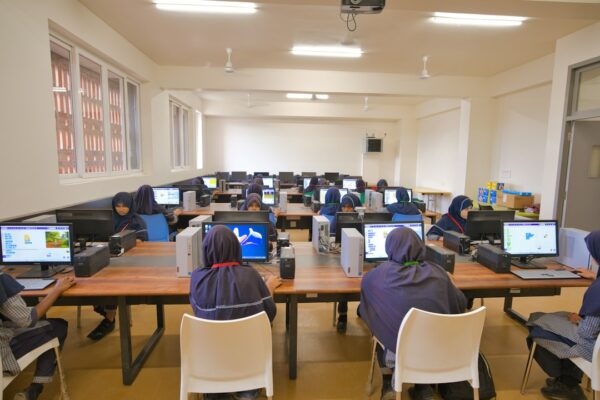
The Kotak Junior Scholarship has selected 1,000 students from the Mumbai Metropolitan Region (MMR). Each selected student will receive ₹73,500 over 21 months. The programme also includes mentoring, academic assistance, entrance examination preparation and exposure visits; home visits and academic reviews are part of the support structure. The award and services are listed together, giving the programme both a financial component and a range of support activities. The available details do not assign an outcome to any one part of that package.¹
Eligibility rests on three conditions. Students must have secured at least 85% in their Class 10 examinations, be enrolled in Class 11 at a college in the MMR, and belong to a family with an annual income below ₹3.2 lakh. The criteria describe prior academic attainment, current enrolment and household income. They define who the initiative targets; the stated support package describes what selected students receive. The programme details provide these requirements as thresholds rather than a broader account of how applications are assessed.¹
That places the student award within KEF’s stated education work for the group.
Kotak Education Foundation runs the programme
Kotak Education Foundation (KEF) implements the scholarship. The foundation undertakes education-related corporate social responsibility programmes for the Kotak Mahindra Group under the Kotak Karma initiative. That places the student award within KEF’s stated education work for the group. The scholarship information identifies the implementer and the initiative under which this work is carried out, while separately setting out the students’ eligibility conditions and the services included in the programme.¹²
 Education & University Insights
Canada-EU Alliance Opens Student Exchange Talks
The alliance builds on existing youth mobility arrangements and Erasmus Mundus scholarships, while widening cooperation on research and trade.
Read More →KEF’s scholarship programmes have benefited more than 7,909 scholars, and over 1,469 funded scholars have graduated. These are two different measures: one records scholars who benefited from the programmes, while the other records funded scholars who graduated. The figures describe the foundation’s scholarship activity across its programmes; they do not specify how many of those scholars belonged to the Junior Scholarship cohort. Nor do they connect graduation outcomes to any one service, such as mentoring or academic assistance.¹²
KEF’s stated plan for 2026 is to support more than 5,655 scholars across five programmes. That figure covers the foundation’s planned support across the programmes, rather than giving a separate total for the Kotak Junior Scholarship. The plan identifies both a scholar count and the number of programmes included. It adds a forward-looking measure of the foundation’s activity, distinct from the recorded totals of scholars who benefited and funded scholars who graduated.¹²

A student example records an outcome without explaining its cause
Aysat Orujova is an education consultant and mentor coordinator at Echos Education. She has a BA in History and International Relations from King’s College London and an MA in Creative Writing from Royal Holloway. Her role links her to education consulting and mentor coordination, while her qualifications span history, international relations and creative writing. These details identify her work and education; they do not establish that she was involved in the student example described separately.²
Last year, a student who at first met only the minimum level subject requirement graduated top of his foundation class. The example records a change between the student’s initial subject standing and his final class position. It does not identify what support he received or say that mentoring produced the result. The distinction matters when reading the outcome alongside descriptions of mentoring programmes: the example documents the student’s achievement, but does not explain its cause or connect it to the Kotak Junior Scholarship.¹²
Check what a scholarship's support actually includes
 Education & University Insights
German Universities Link International Recruitment with Retention
At The PIE Live Germany in Berlin on October 30, university leaders discussed recruiting international students and retaining international talent.
Read More →If you are a Class 11 student in the Mumbai Metropolitan Region with at least 85% in Class 10 and family income below ₹3.2 lakh, this programme offers ₹73,500 over 21 months. But the real career point is that the package bundles mentoring, academic assistance, entrance exam preparation, exposure visits, home visits, and academic reviews. When you compare offers, treat the total support as the value, not just the cash. The ledger does not show which service drives outcomes, so you should ask any programme for its own breakdown of what each component delivers.¹²
These details identify her work and education; they do not establish that she was involved in the student example described separately.²
The foundation's record shows more than 7,909 scholars have benefited and over 1,469 funded scholars have graduated, but those figures do not isolate the Junior Scholarship cohort or tie graduation to mentoring or academic help. For your own planning, this means you cannot assume a specific service caused a result. The example of a student who rose from minimum subject level to top of his foundation class last year proves improvement happens, yet the cause is unstated. Use this to set realistic expectations: when you enter any funded programme, track your own progress against the services you actually receive, not against the programme's marketing.¹²
Sources
Written by Career Ahead AI. AI can make mistakes, so verify key facts. Report errors to support@careeraheadonline.com