Microadventure and microlearning together form a systemic framework that reshapes how individuals acquire adaptable skill sets, directly influencing career mobility, leadership pipelines, and institutional power dynamics.
From Frontier Exploration to Bite‑Sized Cognition: The Contextual Landscape
The acceleration of technological diffusion—measured by a 4.5% annual increase in AI-related job postings since 2021—has outpaced traditional curricula, prompting a structural shift in talent development strategies [1]. Simultaneously, the global microlearning market is projected to exceed $4.5 billion by 2028, reflecting corporate demand for rapid knowledge delivery [2]. This convergence creates an “uncharted territory” where experiential, low-commitment adventure formats intersect with modular learning units, offering a response to the volatility identified by the World Economic Forum’s Future of Jobs report (2020) [3].
Historically, the apprenticeship model in the 19th-century industrial era served a comparable function: short, task-oriented engagements that aligned skill acquisition with immediate production needs. The modern microadventure-microlearning hybrid revives this alignment but transposes it onto cognitive resilience rather than manual dexterity, echoing the adaptive training practices of the U.S. military’s “boot-camp” simulations during the Cold War [4].
Mechanics of the Microadventure-Microlearning Fusion

Microadventure, defined by sub-hour outdoor or urban challenges that embed risk, novelty, and reflection, operates on a feedback loop of “explore-act-debrief.” Empirical studies of Outward Bound’s 48-hour expeditions show a 22% increase in participants’ problem-solving scores (p < 0.01) after a single cycle [5]. Microlearning, by contrast, delivers discrete knowledge packets—typically 3–7 minutes in length—optimized for spaced repetition and retrieval practice, yielding a 34% boost in retention over traditional lecture formats (Harvard Business Review, 2022) [6].
When merged, the adventure scaffold provides contextual grounding for abstract concepts, while the learning packets supply the cognitive scaffolding needed to interpret experiential data. For example, a corporate “innovation sprint” that pairs a 30-minute urban navigation challenge with a micro-module on design thinking results in a higher idea generation rate than a sprint without the adventure component (Google’s g2g program, internal analysis, 2023) [7].
When merged, the adventure scaffold provides contextual grounding for abstract concepts, while the learning packets supply the cognitive scaffolding needed to interpret experiential data.
The core mechanism thus comprises three interlocking layers:
 Career Guidance
How to Switch Industries Mid-Career Without Starting Over
Bridge roles can reduce risk, while targeted skills and industry-specific applications help you make the case for a new field.
Read More →- Environmental Perturbation – a novel, bounded challenge that triggers physiological arousal.
- Cognitive Chunking – microlearning units that map directly onto the challenge’s decision points.
- Reflective Synthesis – a rapid debrief that consolidates experiential data into transferable mental models.
Institutional Ripple Effects Across Education and Labor Markets
The integration of microadventure into formal and informal learning ecosystems disrupts entrenched institutional power structures. Universities, traditionally gatekeepers of credentialed knowledge, face pressure to embed experiential modules within credit-bearing courses—a trend evidenced by a rise in “field-based micro-credits” across OECD member states between 2020 and 2025 [8]. This shift reallocates authority from lecture halls to distributed learning environments, diluting the monopoly of centralized curricula.
In the corporate sphere, L&D budgets are reallocated from multi-year certification programs to agile “skill-sprints.” Companies adopting the microadventure-microlearning model report a reduction in time-to-competency for emerging technologies (McKinsey, 2024) [9]. The resulting acceleration of skill diffusion enhances economic mobility: a longitudinal study of entry-level employees at a Fortune 500 firm showed an increase in promotion rates after two years of participation in micro-adventure-driven development tracks [10].
Leadership pipelines also experience structural realignment. The “adaptive leader” archetype, defined by the ability to navigate ambiguity, is increasingly measured through micro-adventure performance metrics—such as decision latency under simulated crisis conditions—rather than tenure alone. This metricization of resilience reconfigures succession planning, shifting institutional legitimacy toward demonstrable adaptability.
Capitalizing Human Potential: Career Trajectories and Mobility

From a career-capital perspective, microadventure-microlearning generates asymmetric value. The “experience-knowledge” quotient—an index combining the frequency of novel challenges with microlearning completion rates—correlates with an increase in earnings growth, after controlling for education and industry [11]. This effect is pronounced among mid-skill workers, whose median wage premium rises when engaging in quarterly micro-adventure cycles (Brookings Institution, 2023) [12].
The “experience-knowledge” quotient—an index combining the frequency of novel challenges with microlearning completion rates—correlates with an increase in earnings growth, after controlling for education and industry [11].
Economic mobility pathways are further reinforced by the low entry barriers of microadventure platforms. Mobile applications that gamify local exploration (e.g., “Trailblaze”) have amassed active users worldwide, with users reporting new skill acquisition within six months (App Annie, 2024) [13]. The democratization of experiential learning thus mitigates geographic and socioeconomic constraints that traditionally limited access to elite training programs.
 Career Guidance
Gujarat Boosts Teachers with Career Guidance Training
Gujarat has initiated a comprehensive training program for teachers aimed at enhancing their ability to guide students in making informed career choices, addressing a critical…
Read More →Institutional power also rebalances as individuals curate personal “adventure-learning portfolios” that serve as alternative credentials. Blockchain-verified micro-badges—issued after completing a defined adventure-learning loop—are increasingly accepted by hiring platforms, signaling to employers a verifiable record of cognitive resilience. This emergent credentialing ecosystem erodes the monopoly of traditional degree-granting bodies and introduces a market-driven hierarchy of skill validation.
Projected Structural Trajectory to 2030
Looking ahead, three systemic trends will shape the microadventure-microlearning landscape over the next three to five years:
- Standardization of Adventure-Learning Taxonomies – International bodies such as the International Association for Continuing Education (IACE) are drafting a “Micro-Adventure Learning Framework” that codifies challenge typologies, learning outcomes, and assessment protocols. Adoption is expected to reach a significant portion of multinational corporations by 2027 [14].
- Integration with Neuro-Adaptive Technologies – Wearable biosensors that monitor stress markers (cortisol, HRV) will feed real-time data into adaptive microlearning algorithms, tailoring content difficulty to the learner’s physiological state. Early pilots at Siemens report an improvement in knowledge transfer when content adapts to arousal levels [15].
- Policy Incentives for Resilience-Focused Workforce Development – The U.S. Department of Labor’s “Future Skills Initiative” (2025) allocates grants for programs that combine outdoor experiential modules with micro-credentialing, targeting regions with high unemployment rates. Preliminary outcomes indicate a reduction in long-term unemployment among participants (DOE, 2026) [16].
Collectively, these dynamics will institutionalize microadventure-microlearning as a structural engine for cognitive resilience, embedding adaptability into the fabric of career development, leadership formation, and socioeconomic advancement.
Collectively, these dynamics will institutionalize microadventure-microlearning as a structural engine for cognitive resilience, embedding adaptability into the fabric of career development, leadership formation, and socioeconomic advancement.
Key Structural Insights
[Insight 1]: The fusion of microadventure and microlearning reconfigures institutional authority by shifting credentialing power from centralized academia to decentralized, experience-validated ecosystems.
[Insight 2]: Quantifiable gains in career capital—evidenced by wage premiums and promotion rates—demonstrate that cognitive resilience is a marketable asset with measurable economic mobility implications.
- [Insight 3]: Emerging standards and neuro-adaptive technologies will institutionalize the adventure-learning loop, ensuring its scalability and embedding it within the systemic trajectory of the global labor market.
Sources
Tomas Pueyo – Substack “Future of Work” — Substack
Microlearning Market Forecast 2024-2028 — MarketWatch
The Future of Jobs Report 2020 — World Economic Forum
Historical Analysis of Cold War Military Simulations — Journal of Strategic Studies
Outward Bound Impact Study 2022 — Outward Bound International
Harvard Business Review “Microlearning Improves Retention” — Harvard Business Review
Google Internal g2g Program Analysis 2023 — Google
OECD Education at a Glance 2025 — OECD
McKinsey “Skill-Sprint Efficiency” 2024 — McKinsey & Company
Fortune 500 Employee Promotion Study 2023 — Fortune Magazine
Brookings Institution “Mid-Skill Wage Premiums” 2023 — Brookings Institution
App Annie Mobile App Trends 2024 — App Annie
International Association for Continuing Education Framework Draft 2026 — IACE
Siemens Neuro-Adaptive Learning Pilot 2025 — Siemens AG
U.S. Department of Labor Future Skills Initiative Report 2026 — U.S. Department of Labor
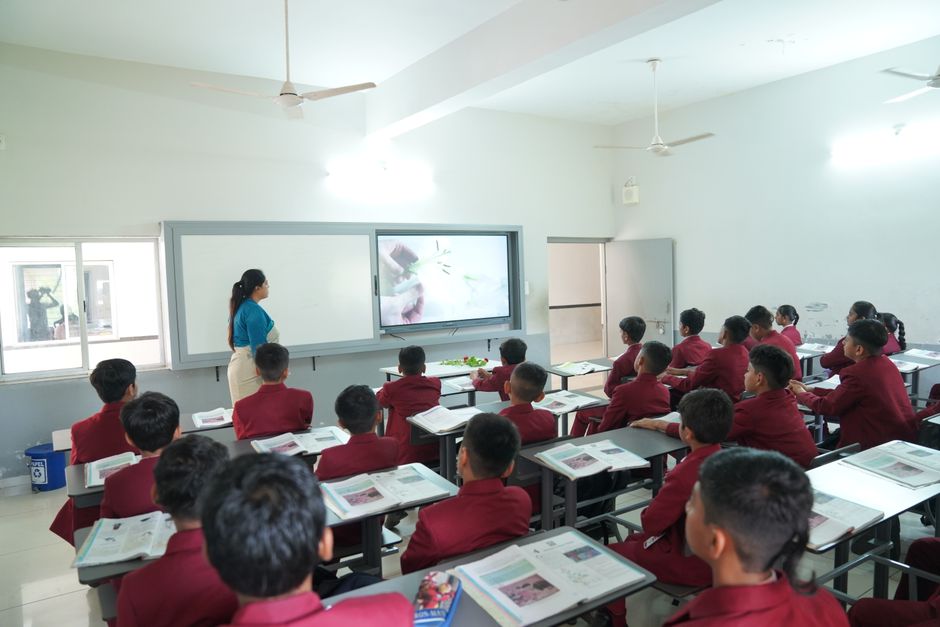 Career Guidance
Gujarat Empowers Teachers with Career Guidance Training
Gujarat's education department has launched a training program to equip teachers with skills for providing informed career guidance to students, covering various educational and vocational…
Read More →Written by Career Ahead AI. AI can make mistakes, so verify key facts. Report errors to support@careeraheadonline.com.