

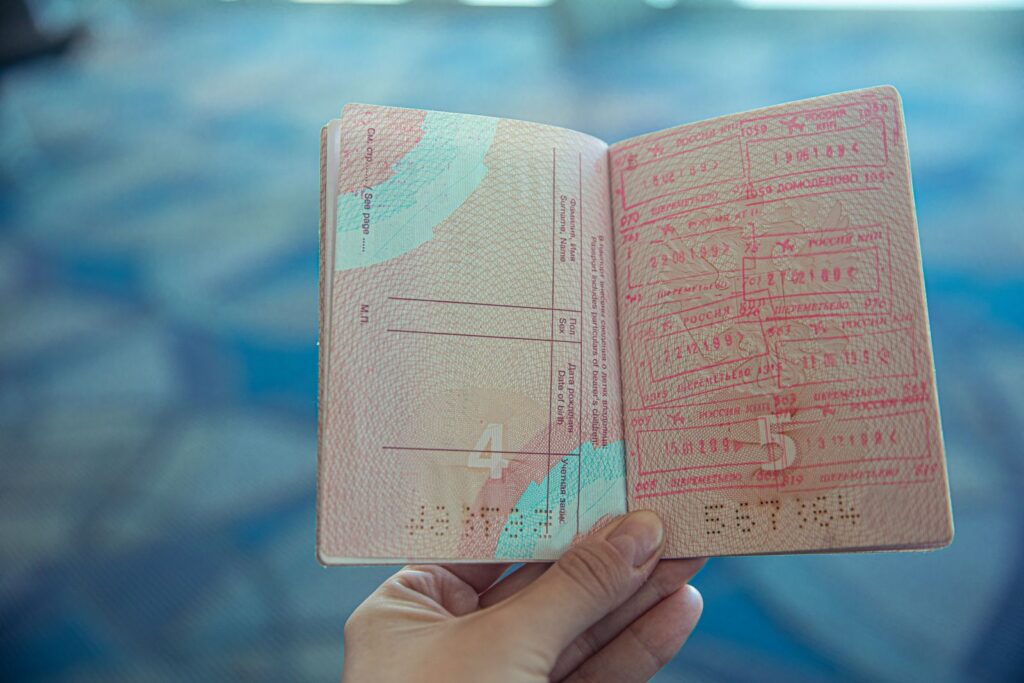
Your tax residency, bank accounts and treaty paperwork all change when you leave. Here is what the Income Tax Department and the RBI say you need to do.
Section 6 of the Income Tax Act, 2025 sets your tax residency by a day count, and the first decision is whether you face the 182 day test alone or the 60 day plus 365 day test as well [1]. A citizen of India who leaves India for employment outside India, or as crew of an Indian ship, is resident only if present in India 182 days or more in the tax year [1]. The 60 plus 365 test does not apply to that person [1].
This guide covers the money steps around that decision: the bank designation, the difference between NRE and NRO accounts, the Form 41 filing for treaty benefits, and the items to review each year. It is general information, not tax advice. Confirm your position with a chartered accountant or your bank before you act.
Your tax residency is a day count, not a visa stamp
The basic test makes you resident if you are in India 182 days or more in the tax year, or 60 days or more in that year plus 365 days or more in the preceding four years [1]. Those rules match section 6(1) of the 1961 Act [1]. The 2025 Act governs tax years beginning on or after April 1, 2026, while earlier years stay under the 1961 Act [1].
Two other tests can change the result. A visiting Indian citizen or Person of Indian Origin with income over Rs 15 lakh, other than foreign-source income, reads the 60 day figure as 120 days, still with 365 days in the preceding four years [1]. Separately, an Indian citizen with total income over Rs 15 lakh, other than foreign sources, who is not liable to tax in any other country by reason of domicile or residence is deemed resident, and days in India become irrelevant [1].
The day count is not the only gate. Deemed residency can catch a mover who spends few days in India but is not taxed in the new country [1]. Residency is also assessed separately for each tax year, so a status that fits your first year may not fit your third [1].
Not Ordinarily Resident status applies if you are non-resident in nine of the ten preceding years, or in India 729 days or less in the preceding seven years [1].
Deemed residency can catch a mover who spends few days in India but is not taxed in the new country [1].
Tell your bank: resident accounts must become NRO
When a person resident in India leaves for a country other than Nepal or Bhutan for employment, business, or any purpose showing an intention to stay outside India for an uncertain period, the existing account should be designated as a Non-Resident (Ordinary) account [2]. Ask the bank to confirm the designation in writing. Do this before the first salary credit or remittance.
 Government & Policy
From Government Corridors to Corporate Boardrooms: The Craft of Public Policy
Nitin Saluja draws on nearly two decades in public policy to show what the work involves: listening, timing, translating regulation into strategy and earning trust.
Read More →An NRO account can pay local expenses and remit current income abroad, such as rent, dividend, pension and interest [2]. It can also remit up to USD 1 million per financial year, April to March, for an NRI, subject to tax, and transfer to an NRE account within that same USD 1 million ceiling [2].
The limit has a second layer. NRO balances are not repatriable except current income and up to USD 1 million per financial year for NRIs and PIOs under the Foreign Exchange Management (Remittance of Assets) Regulations, 2016 [3]. NRE accounts are repatriable [3].

NRE vs NRO, and what you can send abroad
The practical difference is repatriation: NRE accounts are repatriable, and NRO balances are not, apart from current income and the USD 1 million annual limit [3]. When you return to India, NRE accounts are redesignated as resident accounts or moved to RFC accounts [3].
Above USD 1,000,000 per financial year, an NRI or PIO needs RBI prior approval for remittances from NRO balances, sale proceeds of assets, or inherited assets [4]. The bank also obtains an undertaking that NRO remittances come from legitimate receivables, not borrowing [4]. Plan large transfers early and keep the paper trail for the bank.
Avoid paying tax twice: DTAA, TRC and Form 41
Form 41, formerly Form 10F, is a mandatory self-declaration for a non-resident claiming benefits under a Double Taxation Avoidance Agreement [5]. It sits under section 159(8) of the Income-tax Act, 2025 and is filed online on the e-filing portal [5]. File it once per tax year when you claim treaty benefits [5].
You need a Tax Residency Certificate from your country of residence and the foreign Tax Identification Number [5]. The form can be filed without a PAN, but it cannot be edited after submission [5]. Without it, the DTAA benefit is not available and tax is deducted at the normal rate [5].
You need a Tax Residency Certificate from your country of residence and the foreign Tax Identification Number [5].
Get the certificate before you file, and check the tax identification number against the foreign document. Because the form cannot be edited after submission, check every detail before you submit [5].
Loans, insurance, nominations and paperwork
Handle the admin before the move, while you can still visit branches and sign in person.
 Government & Policy
Crosby Removes Lawyer Oversight from Some AI Legal Tasks
Crosby’s policy covers paralegal work such as answering document questions, reformatting files and applying legal playbook rules.
Read More →- Tell your lender about the move and confirm how the loan will be repaid from abroad.
- Tell your insurer about the move and confirm the policy’s territorial coverage.
- Update your address, email and phone number with every institution.
- Check the nomination on bank accounts, demat accounts, insurance policies and provident fund accounts.
- Keep digital and physical copies of passports, visas, tickets, bank letters and tax documents.
- Confirm auto-debit and standing instructions will still work from your new account.
What to check every year
Recheck residency for each tax year rather than assuming the first answer holds [1]. Check whether your NRE interest exemption still applies, and remember that eligibility depends on non-resident status under FEMA, not on tax residency [1]. If your income is only investment income or long-term capital gains with tax deducted at source, you may not need to file a return under section 216 of the 2025 Act, formerly section 115G [1].
Track the USD 1 million financial year ceiling, April to March, if you remit from an NRO account [2]. File Form 41 again in any year you claim treaty benefits, with a current Tax Residency Certificate and foreign tax identification number [5].
Next step: before you fly, ask your bank in writing to designate the existing account as NRO, and ask your chartered accountant to confirm your residency under both the day count and the deemed residency test for the year of departure [1][2].
Related reading on Career Ahead
- UK-India Young Professionals Scheme 2025: Your Ticket to Work and Live in the UK
- Australia MATES Program: A Game-Changing Opportunity for Indian Graduates to Work Abroad
- Bonds, Bans, and the H-1B Squeeze: How U.S. Visa Shifts Are Rewriting Global Mobility
- EPFO’s ₹2.5 Lakh VPF Taxation Rule Explained
Frequently asked questions
Does the 60 day plus 365 day test apply if I leave India for a job?
No. A citizen of India leaving India for employment outside India, or as crew of an Indian ship, is resident only if in India 182 days or more, and the 60 plus 365 test does not apply [1].
Related reading on Career Ahead UK-India Young Professionals Scheme 2025: Your Ticket to Work and Live in the UK Australia MATES Program: A Game-Changing Opportunity for Indian Graduates to Work Abroad Bonds, Bans, and the H-1B Squeeze: How U.S.
Can I keep my resident savings account after I move?
The existing account should be designated as a Non-Resident (Ordinary) account when you leave for a country other than Nepal or Bhutan for employment, business or a purpose indicating an intention to stay outside India for an uncertain period [2]. Ask the bank to confirm the change in writing.
How much can I send abroad from my NRO account each year?
NRO balances can remit current income and up to USD 1 million per financial year for NRIs and PIOs under the 2016 regulations [3]. Above USD 1,000,000 per financial year, RBI prior approval is needed [4].
Do I need Form 41 to claim DTAA benefits?
Yes. Form 41, formerly Form 10F, is a mandatory self-declaration for a non-resident claiming DTAA benefits, filed online once per tax year with a Tax Residency Certificate and foreign tax identification number [5]. Without it, the DTAA benefit is not available and tax is deducted at the normal rate [5].
Sources
- Income Tax Department, “Non Resident FAQs” (Income Tax Act, 2025), accessed November 16, 2026. https://www.incometax.gov.in/iec/foportal/help/all-topics/e-filing-services/non-resident
- Reserve Bank of India, Master Circular on non-resident deposit accounts (NRO account, change of residential status). https://www.rbi.org.in/scripts/BS_ViewMasCirculardetails.aspx?id=9885
- Reserve Bank of India, FAQs: Accounts in India by non-residents. https://www.rbi.org.in/commonPerson/english/Scripts/FAQs.aspx?Id=3
- Reserve Bank of India, FAQs: Remittance of assets. https://www.rbi.org.in/commonperson/english/Scripts/FAQs.aspx?Id=17
- Income Tax Department, “Form 41 (formerly Form 10F): Frequently Asked Questions”. https://www.incometaxindia.gov.in/documents/d/guest/form-41-faqs
 Featured
Colorado Sued, Blocked, and Rewrote Its AI Law: The Hiring Rulebook Keeps Moving
In April 2026, xAI sued Colorado to stop the first comprehensive US AI law from taking effect. A federal court blocked it, and the legislature…
Read More →This article was prepared with AI assistance and edited and fact-checked by Poornima Singh, Career Ahead.