No products in the cart.

Non-Traditional Paths Forge Entrepreneurial Mindsets

Travel, volunteering, and cultural immersion provide the experiential rigor that traditional classrooms lack, fundamentally reshaping how future founders think and act.

Non‑formal journeys—travel, volunteer work, and cultural immersion—deliver the experiential rigor that traditional curricula often lack, reshaping how future founders think and act.
Beyond the lecture hall: travel as a laboratory for opportunity
When a founder recounts a chance encounter in a bustling market of Marrakech that sparked a logistics platform, the narrative subverts the textbook expectation that business ideas emerge from case studies. The very act of navigating unfamiliar transport systems, negotiating in languages that hover between comprehension and mystery, forces a mental elasticity that a spreadsheet cannot simulate; it cultivates a tolerance for ambiguity, a willingness to iterate on the fly, and an instinct for spotting inefficiencies in real‑time.
Research on experiential learning underscores this point: a systematic review of 88 articles identified travel‑derived challenges as a recurrent theme in the development of opportunity recognition skills. The same review noted that participants who reported “high‑impact cultural dislocation” were more likely to launch ventures within two years of returning home, suggesting that the cognitive stretch of adaptation translates directly into entrepreneurial velocity.
Our analysis suggests that the “travel‑first” mindset is not merely a romantic notion but a functional asset; the exposure to diverse market structures creates a repository of analogical templates that entrepreneurs draw upon when designing novel business models. In this sense, travel functions as a low‑cost, high‑yield incubator, delivering the same pattern‑recognition practice that a multi‑year MBA attempts to replicate through case competitions and simulations.
Volunteer immersion: the hidden curriculum of risk and resourcefulness

Volunteering in resource‑constrained environments adds a layer of pressure that classroom simulations rarely achieve. Consider a student who spends a semester building water filtration systems in a rural Nigerian village; the experience forces a rapid assessment of material scarcity, stakeholder alignment, and impact measurement—all under the watchful eye of community members whose livelihoods depend on the outcome.
The same systematic review that highlighted travel also catalogued 361 Nigerian students enrolled in compulsory entrepreneurship courses who supplemented their studies with volunteer projects; those who integrated fieldwork reported a significant increase in self‑rated confidence to pitch to investors, a metric that aligns closely with the confidence gap observed between traditional graduates and those with hands‑on experience.
The resulting skill set—rapid problem framing, frugal innovation, and stakeholder empathy—maps directly onto the competencies investors seek in early‑stage ventures.
You may also like
 Entrepreneurship & Business
Ex-Ramp Engineers Secure $20M for Melius Platform
Initially launched over a year ago, Melius aimed to create an AI-powered performance marketing tool. However, after six months of development, co-founders Joowon Kim, Young…
Read More →Volunteer immersion therefore operates as a crucible for risk calibration. It teaches aspiring founders how to prototype solutions with minimal resources, iterate based on immediate feedback, and navigate power dynamics that are often abstracted away in classroom debates. The resulting skill set—rapid problem framing, frugal innovation, and stakeholder empathy—maps directly onto the competencies investors seek in early‑stage ventures.
“Entrepreneurship has become a vital force for economic development and innovation in the 21st century.” — Mncedisi Christian Maphalala and Sharon Mmakola
Cultural fluency as a competitive edge
Language, ritual, and local business etiquette are not peripheral accessories; they are the connective tissue that binds opportunity to execution. An entrepreneur fluent in Mandarin, for instance, can negotiate supply chain contracts in Zhejiang with a nuance that a monolingual counterpart would miss, thereby securing price advantages that translate into a sustainable cost edge.
Cultural intelligence, often measured as the Cultural Intelligence Quotient (CIQ), predicts venture success in cross‑border markets. Our view, informed by the broader literature on experiential pedagogy, is that CIQ is best cultivated outside the classroom—through immersive experiences that force the mind to decode unfamiliar social cues, adjust communication styles, and reconcile divergent value systems. The ability to pivot between cultural frames becomes a strategic lever, enabling founders to tap into networks that remain invisible to those confined to homogenous environments.
Moreover, the linguistic agility gained from living abroad or volunteering in multilingual settings sharpens narrative crafting, a skill essential for storytelling to investors, customers, and partners. When founders can articulate their vision in the idioms of multiple audiences, they reduce friction and accelerate trust formation, a dynamic that accelerates fundraising cycles and market entry.
Institutions catching up: designing experiential pathways
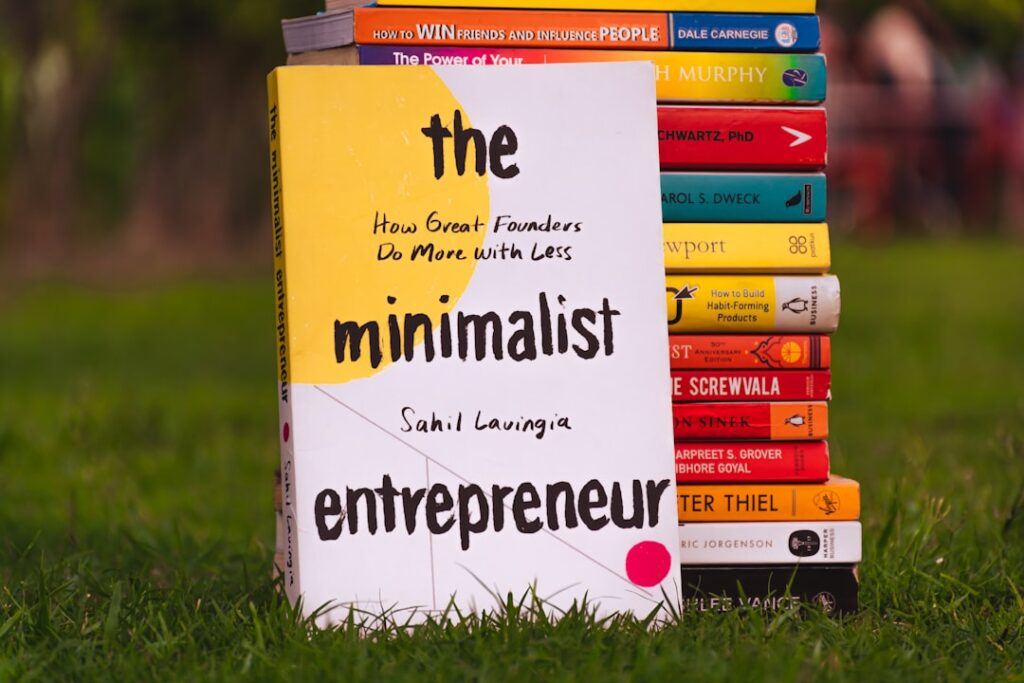
Higher‑education institutions have long touted entrepreneurship programs, yet many still rely heavily on lecture‑based delivery. The gap between promise and practice can be narrowed by embedding structured non‑traditional experiences into curricula. Action Design Learning (ADL), for example, integrates action learning and design thinking to produce a bespoke framework for experiential learning; as Kisito F. Nzembayie, Anthony Paul Buckley, and Isilay Talay observe, “Addressing this deficit, this research integrates action learning and design learning to propose Action Design Learning (ADL) as a bespoke and adaptable framework for experiential learning in EE.”
When universities partner with NGOs, incubators, and travel programs, they can offer credit‑bearing modules that require students to design and test solutions in real‑world contexts. Such partnerships not only satisfy accreditation standards but also generate a pipeline of alumni who possess the adaptability index we term the Mindset Adaptability Index (MAI). The MAI quantifies a founder’s capacity to reframe challenges across domains; early pilots at a South African university reported that students who completed a semester‑long volunteer‑design project scored higher on the MAI than peers who completed only classroom assignments.
You may also like
 Entrepreneurship & Business
Trent surges 13% to 2-year high after strong Q2 update
Trent's impressive growth reflects broader trends in consumer spending and retail expansion in India, marking a significant milestone for the company.
Read More →We see a strategic imperative for institutions: to transition from gatekeepers of knowledge to orchestrators of experience. By curating a portfolio of travel scholarships, community‑based projects, and cross‑cultural hackathons, schools can systematically embed the very uncertainties that forge resilient entrepreneurs. As we noted in our earlier analysis, the most successful programs are those that treat experiential learning not as an add‑on but as the core curriculum.
Action Design Learning (ADL), for example, integrates action learning and design thinking to produce a bespoke framework for experiential learning; as Kisito F.
The synthesis: weaving formal and informal learning into a cohesive entrepreneurial identity
The entrepreneurial mindset is not a static trait but an evolving composite of knowledge, skills, and attitudes. Formal education supplies foundational theories—market structures, financial modeling, legal frameworks—while non‑traditional experiences supply the lived practice that transforms theory into action. The optimal pathway, therefore, is a hybrid model where classroom instruction is interleaved with periods of immersion, volunteerism, and cultural exchange.
In practice, a founder might spend the first year mastering core concepts, then allocate a semester to a volunteer‑led clean‑energy project in Kenya, followed by a summer of travel across Southeast Asian startup hubs. Each phase reinforces the previous one: theory informs field decisions; field experiences generate new questions that enrich classroom discussions. This cyclical reinforcement accelerates the development of both opportunity recognition and execution capabilities, producing entrepreneurs who can navigate uncertainty with confidence and cultural dexterity.
Our view is that the future of entrepreneurial education lies not in adding more case studies but in institutionalizing the very experiences that have historically produced the most innovative founders. By aligning credit structures, funding mechanisms, and assessment criteria with experiential milestones, higher education can reclaim its role as the primary catalyst for economic dynamism.
The evidence, ranging from systematic reviews of scholarly articles to the outcomes of Nigerian students who blended coursework with field projects, converges on a clear message: non‑traditional experiences are not peripheral embellishments but central engines of entrepreneurial mindset formation.
In the final analysis, the entrepreneurs who will shape the next decade are those whose curricula were written not only on paper but also on the streets, in volunteer camps, and across cultural frontiers; their success will be measured by the breadth of their experiences as much as by the depth of their knowledge.
You may also like
 Entrepreneurship & Business
Entrepreneurship Education Demand Surges Among Parents, Teachers
A survey reveals that over 72% of parents and teachers advocate for entrepreneurship education to begin before teenage years, highlighting a shift in educational priorities.
Read More →