No products in the cart.

OpenAI Consults Elite Mathematicians for Future Success
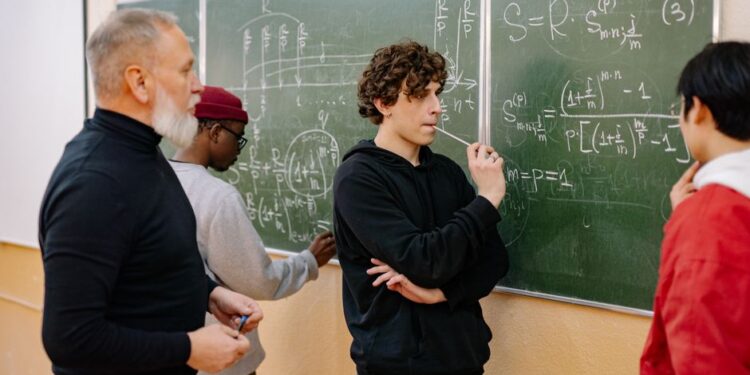
OpenAI has launched the Advisory Group on Mathematics and Artificial Intelligence (AGMAI) to enhance its AI development practices through collaboration with elite mathematicians, addressing past criticisms regarding mathematical rigor in AI research.

OpenAI has established the Advisory Group on Mathematics and Artificial Intelligence (AGMAI), an independent panel of elite mathematicians aimed at improving the company’s AI development practices. This initiative comes in response to recent criticisms regarding the mathematical rigor of OpenAI’s research and its communication of findings, which have raised concerns within the academic community.
The AGMAI comprises nine distinguished mathematicians from prestigious institutions such as Stanford, Harvard, and Oxford. Their collective expertise is expected to guide OpenAI in navigating the complexities of mathematical research and its implications for artificial intelligence. Many in the mathematics community view this initiative with cautious optimism, recognizing it as a potential bridge between AI development and the rigorous standards of mathematical inquiry.
New Collaboration Opportunities in AI
The formation of AGMAI opens up new avenues for collaboration between elite mathematicians and AI companies. Historically, the tech industry has often overlooked the critical role of mathematics in AI development. By engaging with top mathematicians, OpenAI aims to integrate deeper mathematical insights into its AI models, which could lead to more robust and reliable outcomes.
Experts suggest that this collaboration could foster the development of new mathematical frameworks that enhance AI capabilities. For instance, mathematicians can contribute to creating algorithms that are not only efficient but also transparent and interpretable. This is particularly important as AI systems grow in complexity, necessitating that their decision-making processes be understandable to users and regulators alike. According to reports from Startup Fortune, the mathematicians involved are expected to refine AI research methodologies, ensuring that the mathematical foundations are sound and reliable.
Moreover, the advisory group will influence how OpenAI communicates its research findings. By ensuring effective communication of mathematical results, AGMAI can help mitigate the risk of misinterpretation or misrepresentation of AI capabilities, which is crucial for maintaining trust between the AI community and the public. This initiative is particularly significant given the backlash OpenAI faced over its handling of important mathematical results, which some critics claimed did not meet acceptable academic standards, as noted by The AI Insider.
Experts suggest that this collaboration could foster the development of new mathematical frameworks that enhance AI capabilities.
Commitment to Mathematical Rigor
OpenAI’s initiative reflects a broader recognition of the necessity for mathematical rigor in AI research methodologies. The establishment of AGMAI directly addresses criticisms regarding the company’s previous handling of significant mathematical results. The group’s independence is a key feature, allowing it to provide unbiased advice and feedback to OpenAI. Members are not beholden to the company, fostering an environment conducive to critical discussions about AI’s impact on mathematics.
This independence may also encourage more mathematicians to engage with AI research, knowing their voices will be heard and valued. The formation of AGMAI is a strategic move to align OpenAI’s research practices with the expectations of the mathematical community, thereby enhancing credibility and fostering collaboration.
Additionally, the group will focus on how OpenAI’s tools can support mathematical research and education. By collaborating with mathematicians, OpenAI can develop applications that not only advance AI technology but also contribute positively to the mathematical community. This dual focus could lead to innovative solutions that benefit both fields, emphasizing the importance of strong mathematical foundations in AI development.

Future Prospects and Community Engagement
The AGMAI initiative represents a pivotal moment for OpenAI and the mathematical community. By fostering collaboration and emphasizing rigor, OpenAI is taking steps to correct past mistakes and build a more responsible AI future. The success of this initiative will depend on how effectively the advisory group can influence OpenAI’s practices and restore trust within the mathematics community.
As OpenAI prepares to release new AI models claiming to solve complex mathematical problems, the advisory group’s role will be critical in ensuring these claims are substantiated and communicated effectively. The ongoing dialogue between AI developers and mathematicians will shape the future of AI research, potentially leading to breakthroughs that were once unimaginable.
The success of this initiative will depend on how effectively the advisory group can influence OpenAI’s practices and restore trust within the mathematics community.
Frequently Asked Questions
What role do elite mathematicians play in AI development?
Elite mathematicians provide crucial insights that enhance the mathematical foundations of AI models. Their expertise helps ensure that AI research meets rigorous standards and that results are communicated effectively.
How can I get involved in AI research as a mathematician?
Mathematicians can engage in AI research by collaborating with AI companies, joining advisory groups like AGMAI, or contributing to academic research that intersects with AI technology. Participating in discussions about AI’s impact within the mathematical community is also beneficial.
What should elite mathematicians consider when collaborating with AI companies?
Elite mathematicians should consider the ethical implications of their work, the transparency of AI models, and the importance of maintaining academic integrity in research dissemination. Their influence can help shape responsible AI practices.
Written by Career Ahead AI. AI can make mistakes, so verify key facts. Report errors to support@careeraheadonline.com.