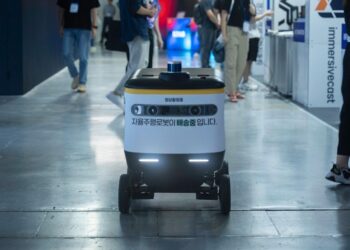
Walmart is leading a transformative shift in retail by integrating artificial intelligence (AI) to enhance its workforce. This 'people-led, tech-powered' strategy aims to empower employees while streamlining operations, potentially setting a new standard in the industry.
Walmart is leading a transformative shift in retail by integrating artificial intelligence (AI) to enhance its workforce rather than replace it. This ‘people-led, tech-powered’ strategy aims to empower employees while streamlining operations, potentially setting a new standard in the industry.
The retail giant’s strategy involves integrating AI tools across its operations, focusing on augmenting employee roles. This is not merely about automating tasks but enhancing human capabilities through technology. Donna Morris, Walmart’s Chief People Officer, emphasizes that the goal is to free associates from repetitive tasks, allowing them to focus on more complex and fulfilling work. This shift is crucial as the retail landscape evolves, driven by changing consumer expectations and technological advancements.
According to a recent podcast featuring Morris, AI will play a vital role in areas like scheduling, demand forecasting, and inventory management. These tools are designed to support associates, making their jobs easier and more efficient. For instance, AI-driven scheduling can optimize shifts based on store traffic patterns, ensuring that employees are available when needed most. This not only improves customer service but also enhances job satisfaction among workers, who can rely on more predictable schedules. Morris noted, “By leveraging AI, we can ensure that our associates are where they need to be, when they need to be there, thus improving both employee morale and customer satisfaction.”
AI Integration and Workforce Dynamics
The integration of AI at Walmart represents a broader trend within the retail industry, where technology is reshaping workforce dynamics. As retailers face pressure to improve efficiency and reduce costs, many are turning to AI as a solution. However, Walmart’s approach stands out because it prioritizes the human element in this transition. Rather than viewing AI as a replacement for human labor, the company sees it as a tool to empower employees.
For example, research from the Harvard Business Review highlights that organizations prioritizing workforce development can achieve higher employee engagement and retention rates.
The PearX program is renowned for its selective nature, capping its cohorts at just 20 startups. This approach facilitates focused mentorship and investment opportunities from…
This perspective is supported by various studies indicating that companies that invest in employee training and development during technological transitions tend to perform better. For example, research from the Harvard Business Review highlights that organizations prioritizing workforce development can achieve higher employee engagement and retention rates. This is particularly relevant in the current labor market, where skilled workers are in high demand. Furthermore, Walmart is not just automating existing positions but creating new opportunities, such as AI agent-builders, which require a blend of technical skills and interpersonal abilities. This shift emphasizes the importance of adaptability and communication in the modern workplace.
Challenges and Critiques of AI Implementation
While Walmart’s AI strategy is ambitious, it is not without its challenges and criticisms. Some experts argue that the rapid integration of AI could lead to job displacement, particularly for lower-skilled positions. Critics point out that while AI can enhance efficiency, it may also exacerbate inequalities in the workforce if not managed carefully. The concern is that workers in roles that are easily automated may find themselves at a disadvantage if they lack the skills to transition into new positions. A report from Knowledge at Wharton emphasizes that without adequate training and support, the risk of job loss could outweigh the benefits of AI integration.
Additionally, there is an ongoing debate about the effectiveness of AI in improving customer experience. While some studies suggest that AI can enhance service delivery, others warn that over-reliance on technology could lead to impersonal interactions, potentially alienating customers. As Walmart navigates this delicate balance, it must remain vigilant about the human touch that defines successful retail experiences. Morris has acknowledged this concern, stating, “We must ensure that while we embrace technology, we do not lose the personal connection that our customers value.” This highlights the need for a balanced approach that combines technological advancements with the essential human elements of retail.
Future Skills for a Tech-Driven Workforce
The implications of Walmart’s AI job shift extend beyond the company itself. For young professionals and job seekers, understanding this transition is crucial. As the demand for technical skills grows, so does the need for soft skills like adaptability and communication. Those entering the workforce should consider how they can cultivate these abilities, positioning themselves as valuable assets in an increasingly automated landscape.
Future Skills for a Tech-Driven Workforce
The implications of Walmart’s AI job shift extend beyond the company itself.
Furthermore, the emergence of new roles related to AI indicates a shift in career opportunities within the retail sector. As companies like Walmart continue to innovate, there will be a growing need for individuals who can bridge the gap between technology and human interaction. This trend highlights the importance of continuous learning and skill development, making it essential for workers to stay informed about industry changes.
Walmart’s Model as an Industry Benchmark
Walmart’s approach to integrating AI into its workforce exemplifies a forward-thinking strategy that prioritizes employee empowerment. As the retail landscape evolves, the company’s commitment to a people-led, tech-powered model may serve as a blueprint for others navigating similar challenges. The future of work will depend on how effectively organizations can balance the benefits of technology with the invaluable contributions of their employees.


Entrepreneurship & Business

Entrepreneurship & Business