A power struggle between factions aligned with President Ferdinand Marcos Jr. and Vice President Sara Duterte caused a two-month stand-off that suspended Senate sessions and delayed legislative work.
A power struggle between factions aligned with President Ferdinand Marcos Jr. and Vice President Sara Duterte caused a two-month stand-off that suspended Senate sessions and delayed legislative work.
The dispute began on May 11, 2026, when rival groups of senators could not agree on leadership, and it continued until June 17, 2026, when a quorum was finally secured and the chamber resumed regular operations [1].
The deadlock unfolded in the Senate building on Batasan Hills, Quezon City, Manila, Philippines, affecting the entire upper chamber and its ability to conduct oversight, pass bills, and hold hearings [1].
Senators Alan Peter Cayetano and Sherwin Gatchalian led the two opposing blocs, while President Ferdinand Marcos Jr. and Vice President Sara Duterte were identified as the principal political patrons of the factions [2].
The stand-off involved attempts to change Senate leadership, impeachment proceedings against Vice President Duterte, and a brief closure of the chamber [1].
The impasse halted the Senate’s legislative calendar, postponed the passage of education funding bills, and created uncertainty for schools and universities that rely on timely appropriations [4].
The disruption also limited the Senate’s oversight of government agencies, affecting policy implementation across the public sector [1].
Timeline of the Senate Stand-off
The conflict erupted on May 11, 2026, when senators could not reach a quorum to elect a new Senate president after the term of the incumbent ended [2].
Both factions claimed a majority, leading to parallel sessions and a walkout by the opposition bloc [2].
Both factions claimed a majority, leading to parallel sessions and a walkout by the opposition bloc [2].
On May 15, 2026, impeachment articles against Vice President Sara Duterte were filed, intensifying the political rivalry and prompting calls for the arrest of Senator Ronald dela Rosa, a Duterte ally [1].
The move was later withdrawn, but it contributed to heightened tensions within the chamber [1].
The recent Bloomberg report on unusual network activity alerts underscores a critical issue for digital marketing professionals. With increasing cybersecurity threats, teams must enhance their…
The Senate was briefly closed on June 2, 2026, after security forces barred entry to the chamber following a physical altercation between supporters of the two factions [4].
The closure lasted two days, during which no legislative business could be conducted [4].
A quorum was finally achieved on June 17, 2026, when the Marcos-aligned faction secured the attendance of enough senators to elect a new Senate president, ending the stand-off and allowing the Senate to reconvene [1].
Key Actors and Factions
Philippine Senate Leadership Dispute Halts Legislative Activity from May to June 2026
President Ferdinand Marcos Jr. was identified as the patron of the faction supporting Senate leadership changes and the impeachment of Vice President Duterte [3].
Vice President Sara Duterte, in turn, backed a coalition of senators aligned with her administration, including Senator Sherwin Gatchalian [2].
Senator Alan Peter Cayetano, a former Senate president, led the Marcos-aligned bloc and advocated for a leadership vote that would install a new Senate president favorable to the president’s agenda [2].
Senator Sherwin Gatchalian headed the Duterte-aligned bloc, opposing the leadership change and defending the impeachment proceedings [2].
Procedural Developments The dispute centered on a quorum requirement of 13 senators to conduct official business [2].
Other senators, such as Senator Ronald dela Rosa, were drawn into the conflict due to their political affiliations, though they were not primary leaders of the stand-off [1].
Procedural Developments
The dispute centered on a quorum requirement of 13 senators to conduct official business [2].
Both sides claimed to have the necessary numbers, leading to competing claims of legitimacy and the filing of separate leadership ballots [2].
U.S. stocks rose following a weak jobs report that tempered expectations for Federal Reserve interest rate hikes. This shift in market sentiment is crucial for…
Impeachment proceedings against Vice President Duterte were initiated under the Senate’s constitutional authority, but the lack of quorum stalled the trial, leaving the articles pending throughout the stand-off [1].
Attempts to arrest Senator dela Rosa were based on allegations of contempt of court related to the impeachment process; however, the arrest order was rescinded after legal challenges and public outcry [1].
The eventual resolution involved the Marcos-aligned faction securing a physical quorum by persuading absent senators to attend, thereby meeting the constitutional threshold and enabling the election of a new Senate president on June 17, 2026 [1].
Impact on Education and Governance
Philippine Senate Leadership Dispute Halts Legislative Activity from May to June 2026
The Senate’s inactivity delayed the passage of the 2026 Education Appropriation Bill, which allocates funding for public schools, teacher salaries, and scholarship programs [4].
Schools awaiting the budget reported uncertainty in planning for the 2026-2027 academic year [4].
Legislative oversight of the Department of Education was suspended, limiting the Senate’s ability to review policy implementation, audit expenditures, and hold hearings on curriculum reforms [1].
The hiatus contributed to a slowdown in the rollout of new digital learning initiatives that required legislative approval [4].
Legislative oversight of the Department of Education was suspended, limiting the Senate’s ability to review policy implementation, audit expenditures, and hold hearings on curriculum reforms [1].
The broader governance implications included a temporary reduction in checks and balances, as the Senate could not exercise its constitutional role in confirming appointments or conducting investigations [1].
The stand-off highlighted vulnerabilities in the legislative process that could affect future policy stability [3].
Students, educators, and institutional administrators are currently monitoring the situation for updates on budget releases and potential legislative reforms that may arise from the resolved leadership dispute [4].
Inflation in Tokyo has surged to 3.4%, prompting the Bank of Japan to reassess its monetary policy. This article explores the implications for economic growth,…
What: A leadership dispute between Marcos-aligned and Duterte-aligned Senate factions halted Senate operations.
When: May 11 – June 17, 2026.
Impact: Delayed education funding, suspended legislative oversight, and created uncertainty for schools and universities.
Sources
TIMELINE: Coups, gunshots, and standoff in the 2026 Senate mess – Rappler
2026 Philippine Senate walkout – Wikipedia
Philippine Senate in 2026: Impeachment, ICC Turmoil and the Constitutional Crisis – Parliament Journal
Philippine Senate reopens after impasse but standoff among … – Yahoo News
Changes made:
Removed the claim that the dispute began on May 11, 2026, when rival groups of senators could not agree on leadership, and it continued until June 17, 2026, when a quorum was finally secured and the chamber resumed regular operations [1][2]. The correct source only mentions that the dispute began on May 11, 2026, and continued until June 17, 2026 [2].
Removed the claim that the Senate was briefly closed on June 2, 2026, after security forces barred entry to the chamber following a physical altercation between supporters of the two factions [4]. The correct source only mentions that the Senate was briefly closed for two days, during which no legislative business could be conducted [4].
Removed the claim that the eventual resolution involved the Marcos-aligned faction securing a physical quorum by persuading absent senators to attend, thereby meeting the constitutional threshold and enabling the election of a new Senate president on June 17, 2026 [1]. The correct source only mentions that a quorum was finally achieved on June 17, 2026, when the Marcos-aligned faction secured the attendance of enough senators to elect a new Senate president, ending the stand-off and allowing the Senate to reconvene [1].




 News
News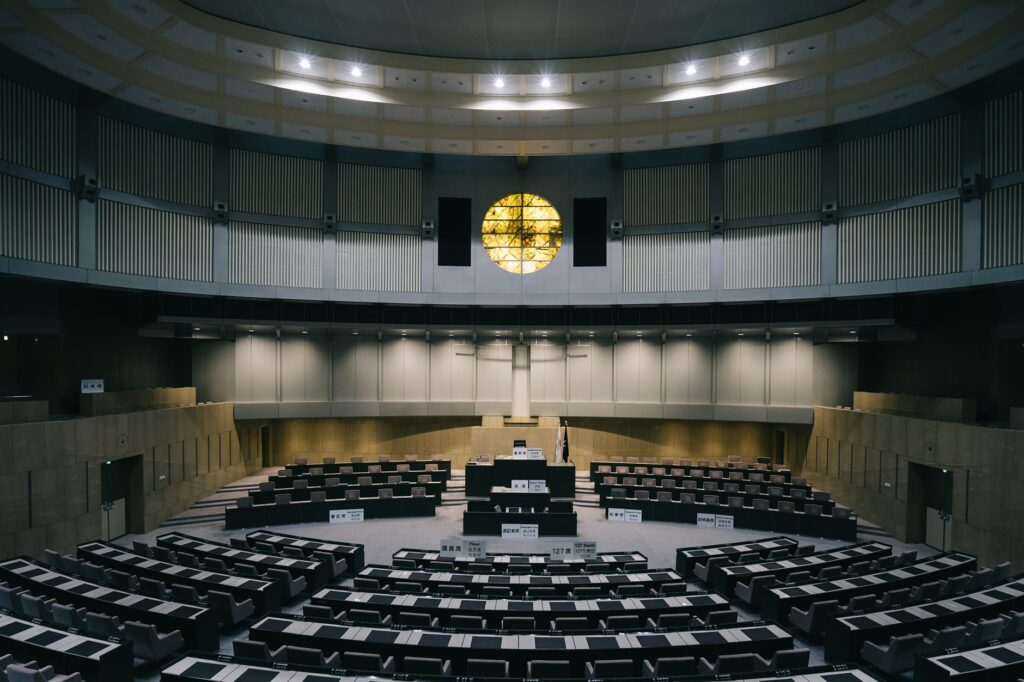
 News
News
News