No products in the cart.

Physical AI Drives Robotics Revolution
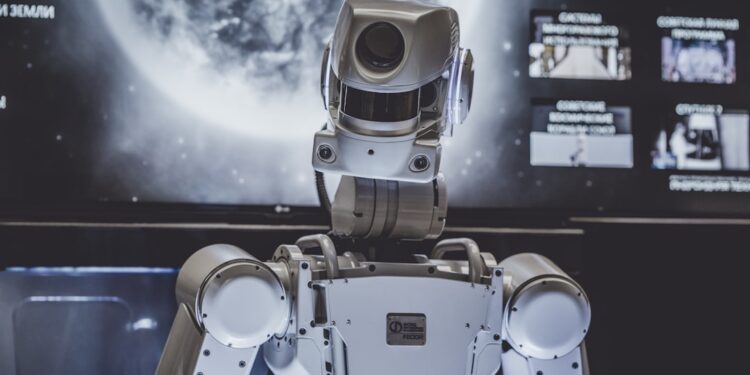
This article delves into the rapid growth of Physical AI in robotics, highlighting its implications for various sectors and the job market.

The Rise of Physical AI in Robotics
Robotics is at a crucial juncture, driven by advancements in what is termed Physical AI. This concept merges sensor-rich perception with real-time analytics and autonomous decision-making. The sector is experiencing significant changes, with implications that affect not just technology but also the workforce.
Physical AI is redefining how machines interact with the world. With enhanced capabilities, robots can perform tasks that were once thought to require human intelligence. This evolution is not merely a technological upgrade; it represents a fundamental change in operational efficiency and productivity. As robots become more capable, their roles in workplaces are expanding, leading to a re-evaluation of job functions.
Big Ideas Driving the Shift
The transition to Physical AI is fueled by several key factors. First, the cost of advanced robotics is decreasing, making them accessible to a broader range of businesses. As reported by ifr.org, global robot sales are expected to increase significantly, reflecting a growing acceptance of automation in everyday operations. This trend is particularly evident in sectors like healthcare and logistics, where efficiency is paramount.
Second, the need for improved productivity is pushing companies to adopt these technologies. In a competitive market, businesses are seeking ways to streamline operations and reduce costs. According to www.bcg.com, companies that integrate robotics into their workflows often see substantial gains in output and quality. This economic pressure is a driving force behind the rapid adoption of Physical AI.
Finally, labor shortages in many regions are influencing the shift toward robotics. With fewer workers available, businesses are turning to robotics to help maintain production levels.
This shift necessitates a focus on retraining and upskilling workers to prepare them for future opportunities.
Multi-Angle Analysis: Data, Policy, and Global Context
The implications of Physical AI extend beyond immediate business benefits. On a macroeconomic level, the integration of robotics into various sectors is reshaping labor markets. While some jobs may be displaced, new roles are emerging that require different skill sets. This shift necessitates a focus on retraining and upskilling workers to prepare them for future opportunities.
You may also like
 Entrepreneurship & Business
AI Funding Surge Sparks Uneven Exit Values
AI funding surged to $505 billion in 2025, but the premium on startup exits stalled. We unpack why cash inflows don’t guarantee higher exit values…
Read More →Policy responses are also crucial in this context. Governments must consider how to support workers affected by automation while fostering an environment conducive to technological advancement. Policies that encourage investment in education and training programs will be essential to ensure that the workforce is equipped to thrive in an increasingly automated world.
Moreover, the global context of this shift cannot be overlooked. Analysts suggest that countries that embrace robotics and AI may gain a competitive edge in the global market. Nations such as Germany and Japan are leading the way in robotics integration, setting benchmarks for others to follow. As the race to scale continues, the strategic decisions made by governments and businesses will have long-lasting effects on economic standings worldwide.
Contradictions and Active Debates in Robotics
Despite the clear benefits of Physical AI, there are significant debates surrounding its implementation. One major concern is the potential for job displacement. Critics argue that as robots take over more tasks, many workers may find themselves without jobs or facing reduced hours. This fear is particularly pronounced in sectors with high automation potential, such as manufacturing and retail.
However, proponents of robotics argue that the technology will create more jobs than it displaces. According to www.bcg.com, while some positions may become obsolete, new opportunities will arise in fields such as robot maintenance, programming, and oversight. The challenge lies in ensuring that workers have access to the necessary training to transition into these new roles.
The challenge lies in ensuring that workers have access to the necessary training to transition into these new roles.
Another point of contention is the ethical implications of using robots in sensitive areas like healthcare. Questions arise about the reliability of machines in making critical decisions and the potential for bias in algorithms. Establishing ethical guidelines for the deployment of AI and robotics will be vital to address these concerns and build public trust.
Future Outlook: Embracing Change
You may also like
 Entrepreneurship & Business
Atoms Hires Ex-Uber CFO for Financial Leadership
Gupta's appointment is part of a broader strategy by Kalanick to assemble a team of former Uber executives at Atoms, aiming to leverage their collective…
Read More →The future of Physical AI in robotics appears bright, with continued advancements expected in the coming years. As technology evolves, robots will become even more capable, leading to broader applications across industries. The integration of AI with robotics will likely enhance decision-making processes, allowing machines to learn from their environments and improve over time.
Moreover, the collaboration between humans and robots is set to increase. As robots take on more routine tasks, human workers can focus on higher-level responsibilities that require creativity and critical thinking. This shift could lead to more fulfilling work experiences and a redefinition of job roles across sectors.

However, this optimistic outlook is contingent upon proactive measures to address workforce challenges. Investment in education and training will be crucial to prepare the next generation for a world where collaboration with robots is the norm. As businesses and governments navigate this transition, the emphasis must be on creating a balanced approach that maximizes the benefits of robotics while minimizing disruption.
Career Relevance in a Robotics-Driven Future
The rise of Physical AI presents both challenges and opportunities for today’s workforce. For young professionals, the ability to adapt and learn new skills will be paramount. As industries evolve, those who embrace continuous learning and upskilling will find themselves well-positioned in the job market.
Career Relevance in a Robotics-Driven Future The rise of Physical AI presents both challenges and opportunities for today’s workforce.
Moreover, careers in technology, robotics, and AI are likely to see significant growth. Fields such as data analysis, software development, and robotics engineering are expected to be in high demand. By aligning educational pursuits with these trends, individuals can secure their place in an increasingly automated future.
You may also like
 Entrepreneurship & Business
Four Top Google A.I. Researchers Form New Start-Up
The formation of Discovery Loop comes at a time when the AI industry is witnessing rapid advancements and increasing competition.
Read More →In conclusion, the robotics tipping point driven by Physical AI is reshaping industries and labor markets. Understanding these changes and preparing for the future will be essential for anyone looking to thrive in this new landscape.