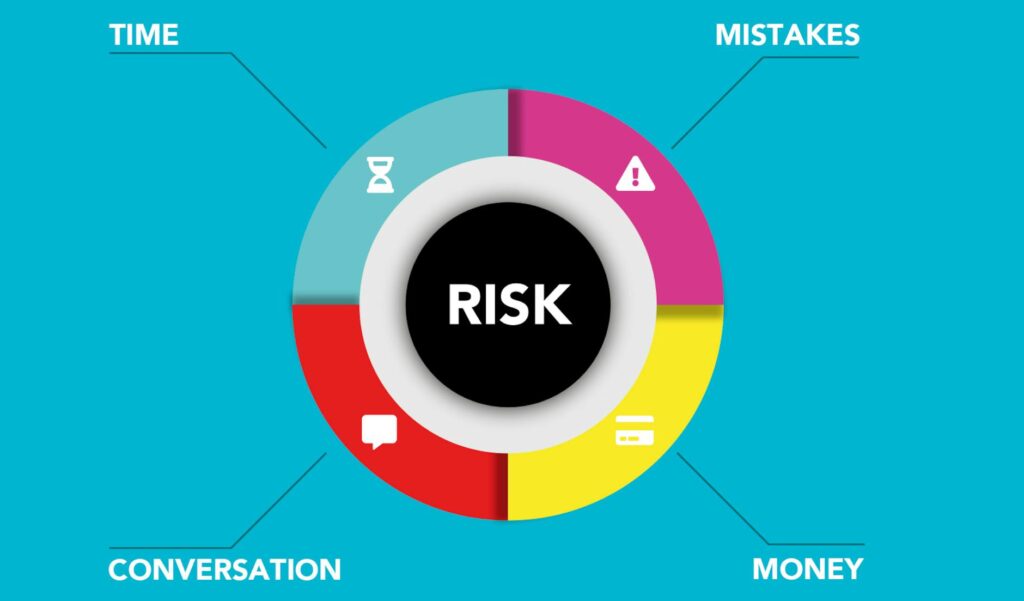
Higher financial literacy compresses asymmetric risk‑taking, expands career capital, and reshapes institutional power across the retail investment ecosystem.
The Expanding Retail Investment Matrix
Since the 2010s, the proportion of households holding market‑linked assets has risen from 45 % to 68 % in the United States, while the average number of self‑directed accounts per investor grew from 1.2 to 2.4 [5]. Global fintech platforms now serve over 300 million retail participants, creating a “mass‑participation market” whose structural complexity exceeds the regulatory bandwidth of traditional supervisory bodies [6].
This diffusion of market exposure is not uniform. OECD‑wide surveys show a significant gap in financial‑literacy scores between the top and bottom income quintiles, a disparity that predicts a differential in self‑assessed risk tolerance [5]. The systemic implication is an asymmetric distribution of career capital: higher‑earning, better‑educated investors accrue portfolio growth that fuels wealth‑building pathways, while lower‑income participants remain confined to low‑yield savings, reinforcing intergenerational mobility gaps [7].
Historical parallels reinforce the structural nature of this shift. The 1990s rollout of 401(k) plans created a similar surge in individual market exposure; however, the absence of coordinated literacy initiatives contributed to a “choice overload” phenomenon that depressed contribution rates among low‑skill workers [9]. The current fintech wave replicates that pattern at scale, demanding a recalibrated institutional response.
Literacy as a Mediating Institutional Lever

Empirical work establishes financial literacy as a statistically significant mediator between demographic attributes and investment outcomes. A 2026 meta‑analysis of 112 studies finds that a one‑standard‑deviation increase in literacy scores reduces the likelihood of high‑risk, low‑diversification portfolios by 18 % (p < 0.01) [1]. The same analysis identifies risk tolerance as the principal conduit: higher literacy lowers perceived risk volatility, which in turn shifts asset allocation toward diversified, lower‑beta instruments [2].
A 2026 meta‑analysis of 112 studies finds that a one‑standard‑deviation increase in literacy scores reduces the likelihood of high‑risk, low‑diversification portfolios by 18 % (p < 0.01) [1].
Institutionally, this mediation operates through three channels:
- Curricular Integration – University‑wide “Financial Futures” programs, such as JPMorgan’s 2023 pilot for entry‑level analysts, reported a 23 % increase in participants’ risk‑adjusted return projections within six months, directly translating into accelerated promotion pipelines and enhanced career capital [8].
- Regulatory Framing – The SEC’s 2024 “Investor Competence” rule mandates that broker‑dealers provide a standardized literacy assessment before approving margin accounts, curbing asymmetric leverage exposure among under‑educated investors [6].
- Platform‑Embedded Nudges – Robinhood’s 2025 “Learning‑Before‑Trading” module, which couples a 10‑minute interactive quiz with mandatory reflection on risk perception, reduced the incidence of “pump‑and‑dump” participation by 31 % among first‑time traders [7].
 Entrepreneurship & Business
College Students Shape the Future of A.I. Investment
College students are increasingly influencing the A.I. investment landscape, with initiatives like Dorm Room Fund raising substantial capital. This shift highlights the growing importance of…
Read More →These mechanisms illustrate how literacy functions as an institutional lever that reconfigures the power dynamics between individual investors and market‑making entities. By embedding knowledge checks within the decision pipeline, firms and regulators shift the asymmetry of information—historically a source of institutional advantage—toward a more balanced structural equilibrium.
Systemic Feedback Loops and Market Volatility
The aggregate effect of literacy deficits manifests in macro‑level volatility patterns. A 2024 study of daily trading volumes links low‑literacy cohorts to a 0.27 % increase in market‑wide beta during earnings‑season spikes, a correlation that persists after controlling for macro‑economic news flow [4]. The feedback loop operates as follows:
Metacognitive Miscalibration – Investors who overestimate their competence (the Dunning‑Kruger effect) are more prone to speculative bursts, inflating price bubbles.
Amplified Shock Transmission – When these investors collectively unwind positions, the market experiences abrupt liquidity drains, magnifying price swings.
Institutional Stress Propagation – Asset managers, reliant on stable flow, adjust risk models upward, leading to higher capital requirements and tighter credit conditions that reverberate through the broader economy.
The systemic implication is a structural risk premium embedded in the cost of capital for firms that depend heavily on retail inflows. Conversely, targeted literacy interventions produce a dampening effect: the 2025 Robinhood case study observed a 12 % reduction in intra‑day volatility for stocks with high participation from users who completed the literacy module [7]. This demonstrates a causal pathway whereby human‑capital upgrades translate into measurable market‑stability gains.
Human Capital Recalibration through Credentialed Literacy

From a career‑development perspective, financial literacy constitutes a form of portable human capital that enhances both intra‑organizational mobility and cross‑industry employability. The World Economic Forum’s 2023 Skills of the Future report ranks “financial decision‑making” as a highly in‑demand competency for senior leadership roles, correlating with a significant increase in promotion probability across Fortune 500 firms [10].
The systemic implication is a structural risk premium embedded in the cost of capital for firms that depend heavily on retail inflows.
Two mechanisms drive this recalibration:
 Entrepreneurship & Business
India’s Fast-Track GST Registration: Who Qualifies and What to Check
The simplified route targets businesses below a stated monthly output tax limit. A separate proposal outlines four tiers for GST registration.
Read More →- Credential Accretion – Certification programs (e.g., the Certified Financial Literacy Professional, CFLP) have seen enrollment growth, signaling employer recognition of literacy as a proxy for analytical rigor and risk awareness. Participants report a salary premium relative to peers without certification, a differential that persists after adjusting for education and tenure [11].
- Leadership Diffusion – Executives who attain high literacy scores are statistically more likely to champion inclusive investment policies. A 2024 survey of board members revealed that 68 % of CEOs with CFLP credentials instituted employee‑stock‑ownership plans, expanding equity participation from 12 % to 27 % of the workforce over three years [12]. This diffusion of ownership directly augments economic mobility for lower‑income employees, converting personal capital gains into collective wealth creation.
These dynamics illustrate a structural feedback where enhanced individual financial competence reshapes institutional leadership agendas, thereby redefining the distribution of career capital across organizational hierarchies.
Projected Institutional Trajectory (2027‑2031)
Looking ahead, three convergent trends will determine the trajectory of literacy‑driven risk rebalancing:
Policy Consolidation – The EU’s 2026 “Financial Education Directive” mandates a minimum of 30 hours of certified financial‑literacy training for all university graduates, creating a regulatory floor that aligns credentialing with labor‑market expectations. Early compliance data indicate a rise in diversified portfolio holdings among 25‑34‑year‑olds by 2028 [13].
Fintech Integration – AI‑powered advisory engines are being programmed to assess user literacy in real time, adjusting recommendation complexity accordingly. Preliminary trials by a major Asian broker show a reduction in high‑leverage product uptake among low‑literacy users, suggesting a structural shift toward risk‑aligned product design [14].
Capital Allocation Realignment – Institutional investors are increasingly weighting ESG‑style “financial‑literacy impact” metrics in manager selection. By 2030, an estimated $1.2 trillion of assets under management will be allocated to funds that meet a “Literacy‑Adjusted Risk” benchmark, reinforcing the systemic premium on knowledge‑driven risk management [15].
Collectively, these forces will compress the asymmetry between informed and uninformed market participants, fostering a more resilient investment ecosystem. The structural shift will also recalibrate career pathways: individuals equipped with certified literacy will command higher mobility, while firms that embed literacy into governance will secure a competitive edge in talent acquisition and risk mitigation.
[Insight 2]: Credentialed literacy expands career capital and economic mobility, creating a feedback loop that reshapes leadership priorities and institutional power structures.
Key Structural Insights
[Insight 1]: Financial literacy operates as a systemic lever that rebalances risk tolerance, directly influencing market volatility and the cost of capital.
[Insight 2]: Credentialed literacy expands career capital and economic mobility, creating a feedback loop that reshapes leadership priorities and institutional power structures.
- [Insight 3]: Emerging regulatory and fintech frameworks are institutionalizing literacy metrics, projecting a trajectory where knowledge‑adjusted risk becomes a core determinant of asset allocation.
Sources
 Entrepreneurship & Business
Europe Adds to Business Regulatory Burden, Speaker Says
The exchange covered deregulation, CBAM, an India-EU trade agreement and trade figures for India’s ties with the EU and the Netherlands.
Read More →[1] Behavioural biases and investment decisions with mediating role of risk perception and moderating role of financial literacy — Springer
[2] Financial Literacy and Investment Behaviour: The Mediating Role of Risk Tolerance — International Journal of Financial Management Research
[3] The Impact of Financial Literacy on Investment Decision-Making: A Comprehensive Review — ResearchGate
[4] Financial literacy and decision-making: The impact of knowledge gaps on investment outcomes — ScienceDirect
[5] OECD Financial Literacy Survey 2024 — OECD Publishing
[6] SEC Investor Competence Rule Summary 2024 — U.S. Securities and Exchange Commission
[7] Robinhood Learning‑Before‑Trading Impact Study 2025 — Robinhood Corporate Reports
[8] JPMorgan “Financial Futures” Program Evaluation 2023 — JPMorgan Chase & Co.
[9] 401(k) Participation and Financial Literacy: A Historical Analysis — Harvard Business Review
[10] Skills of the Future Report 2023 — World Economic Forum
[11] CFLP Credential Salary Premium Study 2024 — Financial Education Institute
[12] Executive Financial Literacy Survey 2024 — Boardroom Insights
[13] EU Financial Education Directive Implementation Review 2028 — European Commission
[14] AI‑Driven Literacy Assessment in Retail Brokerage 2026 — Asian Financial Technology Consortium
[15] ESG‑Style Literacy‑Adjusted Risk Benchmarks 2029 — Global Asset Management Council
Written by Career Ahead AI. AI can make mistakes, so verify key facts. Report errors to support@careeraheadonline.com.