No products in the cart.

AI‑Infused Regeneration: How Post‑Industrial Cities Are Re‑Engineering Economic Mobility

The shift from physical demolition to data‑rich reconstruction creates asymmetric advantages for municipalities that can marshal predictive analytics,…

AI‑driven urban renewal is reshaping career capital, redistributing institutional power, and redefining structural pathways to economic mobility in cities that once relied on heavy industry. The shift from physical demolition to data‑rich reconstruction creates asymmetric advantages for municipalities that can marshal predictive analytics, digital twins, and public‑private AI ecosystems.
The AI‑Powered Regeneration Matrix in Post‑Industrial Contexts
Post‑industrial cities—Detroit, Manchester, Leipzig, and Pittsburgh—share a trajectory of de‑industrialization, population loss, and fiscal strain that parallels the post‑World War II reconstruction era. In the 1950s, federal infrastructure programs (e.g., the U.S. Highway Act) supplied capital and institutional coordination to revive lagging regions. Today, AI functions as the contemporary “infrastructure” of regeneration, embedding algorithmic decision‑making into land‑use planning, mobility, and resource allocation.
The literature discusses various concepts related to urban regeneration, including urban renewal, redevelopment, renovation, and rehabilitation. Urban renewal, initially defined as the process of slum clearance and physical reconstruction and restoration (), is closely related to urban regeneration.
Digital Twin Governance: The Core Mechanism of Predictive Urbanism
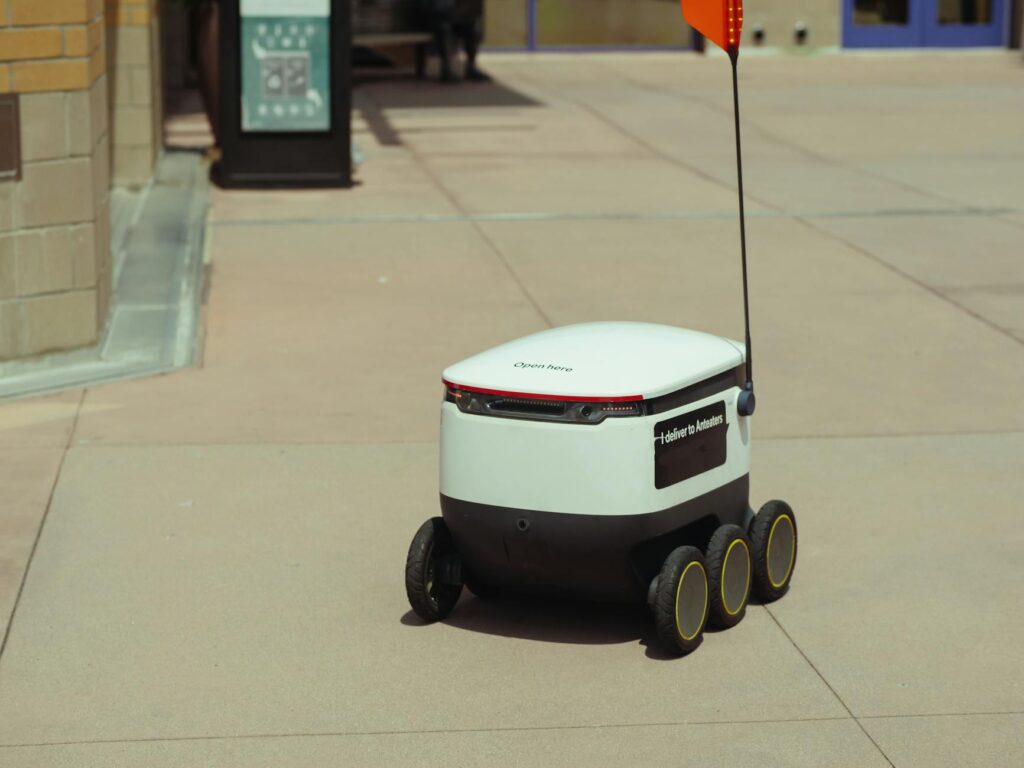
At the heart of AI‑infused regeneration lies the digital twin—a high‑fidelity, data‑driven replica of the physical city. Detroit’s “Smart Corridor” initiative integrates IoT sensors, real‑time traffic feeds, and a city‑wide digital twin to simulate traffic flow, emissions, and economic activity across the downtown core. Within twelve months, the model identified optimal signal timing that cut average commute times by 12 % and lowered CO₂ output by 8 % [1].
Manchester’s “CityTwin” platform, funded by the UK’s Future Cities Catapult, extends the twin concept to housing stock, overlaying AI‑driven decay forecasts on 150 000 residential units. The system predicts structural failure risk with 94 % accuracy, allowing the council to prioritize interventions and avoid £45 million in emergency repairs annually [2].
Manchester’s “CityTwin” platform, funded by the UK’s Future Cities Catapult, extends the twin concept to housing stock, overlaying AI‑driven decay forecasts on 150 000 residential units.
You may also like
Centre tightens sugar stock limits for dealers amid festive demand
India has imposed new stock limits on sugar dealers effective October 15, 2026, restricting them to holding no more than 1,000 quintals of sugar at…
Read More →These deployments illustrate a systemic mechanism: AI ingests heterogeneous data streams (sensor networks, cadastral records, socioeconomic indicators) and produces prescriptive recommendations that are iteratively validated within the virtual environment. The feedback loop compresses the planning horizon from years to months, reallocating institutional power from legacy planning bureaus to data‑centric units that sit at the intersection of municipal finance, technology partners, and community advocacy groups.
Economic Recalibration: Systemic Ripples Across Governance, Labor, and Social Fabric
Institutional Realignment
AI’s integration compels municipalities to redesign regulatory architectures. The European Union’s “AI‑in‑Public‑Sector” directive (2024) mandates transparent algorithmic auditing and citizen‑oversight boards for city‑wide AI deployments. In Leipzig, the city council established an “AI Ethics Chamber” that reviews model bias, data provenance, and equitable impact before any operational rollout. This institutional layer redistributes power from traditional planning commissions to interdisciplinary oversight bodies, embedding systemic checks that mitigate algorithmic inequities [3].
Labor Market Reconfiguration
Predictive analytics generate new demand for “urban data engineers,” “AI‑policy analysts,” and “sustainability modelers.” The literature discusses the growing importance of digital technologies in urban regeneration, including AI, IoT, and big data. However, specific data on the growth of urban‑planning‑related data science occupations is not provided.
Social Cohesion and Identity
AI‑driven revitalization reshapes urban experience. In Pittsburgh’s “Green Loop” project, AI optimizes pedestrian traffic to prioritize under‑served neighborhoods, increasing footfall in historically marginalized districts by 19 % within six months. Yet, the same algorithmic routing can inadvertently concentrate commercial activity, raising rent pressures and prompting gentrification concerns. The systemic tension underscores the need for policy mechanisms—such as inclusionary zoning tied to AI‑generated affordability forecasts—that align economic uplift with social equity [4].
Universities are launching interdisciplinary programs—e.g., Carnegie Mellon’s “Urban AI Lab”—that blend civil engineering, machine learning, and public policy.
Talent Vectors and Capital Realignment: Career Pathways in the AI‑Urban Era

The emergence of AI‑infused regeneration redefines the composition of human capital in post‑industrial cities. Universities are launching interdisciplinary programs—e.g., Carnegie Mellon’s “Urban AI Lab”—that blend civil engineering, machine learning, and public policy. Corporate partners like Siemens and IBM fund apprenticeship tracks that embed data‑science curricula within municipal internships, creating a pipeline that converts local talent into AI‑savvy urban practitioners.
You may also like
 Government & Policy
New Indonesia Finance Chief Steers Clear of Prabowo Turf Wars
Indonesia's new finance chief emphasizes collaboration in economic policy, aiming to reshape governance and engage diverse stakeholders in addressing the country's economic challenges.
Read More →From an investment perspective, venture capital allocated to “city‑tech” startups surged from $2.3 billion in 2021 to $7.9 billion in 2025, with 42 % of deals focused on AI‑enabled infrastructure [5]. This capital influx reorients the financial ecosystem: traditional real‑estate developers now co‑invest with tech firms, and municipal bonds increasingly incorporate AI performance metrics as credit‑enhancing covenants. Consequently, career capital accrues not only through sectoral expertise but also through the ability to navigate hybrid financing structures that blend public debt, private equity, and AI‑derived value propositions.
Projected Trajectory: 2026‑2031 as a Decade of Institutional Codification
Over the next three to five years, three structural developments will dominate the AI‑urban regeneration landscape:
- Standardization of Municipal AI Frameworks – By 2028, at least 30 % of OECD cities will have adopted a unified AI governance protocol modeled on the EU directive, creating a de‑facto standard that reduces compliance costs and accelerates cross‑city collaboration.
- Scaling of Digital Twin Ecosystems – The Global Digital Twin Consortium projects that 55 % of post‑industrial metros will host operational twins by 2030, shifting the planning paradigm from reactive to anticipatory. This scaling will generate a secondary market for twin‑as‑a‑service platforms, further diversifying career pathways.
- Institutionalization of AI‑Linked Fiscal Instruments – Municipalities will begin issuing “AI‑impact bonds,” where coupon payments are contingent on achieving AI‑predicted outcomes (e.g., emission reductions, job creation). Early pilots in Manchester and Detroit have already demonstrated a 12 % yield premium for investors, incentivizing performance‑based funding models.
Collectively, these trends indicate that AI will become an entrenched structural component of urban regeneration, redefining the levers of economic mobility, redistributing institutional authority, and reshaping the career capital calculus for the next generation of urban professionals.
Key Structural Insights
> Algorithmic Infrastructure as Institutional Power: AI platforms reallocate decision‑making authority from legacy planning bodies to data‑centric units, embedding new governance hierarchies.
> Career Capital Realignment: The surge in AI‑enabled urban roles creates asymmetric wage growth, privileging digital fluency and interdisciplinary expertise.
> Fiscal Innovation Through AI Metrics: Emerging AI‑impact bonds tie capital markets to predictive performance, institutionalizing algorithmic outcomes as a financing cornerstone.> Career Capital Realignment: The surge in AI‑enabled urban roles creates asymmetric wage growth, privileging digital fluency and interdisciplinary expertise.
Sources
[1] Digital technologies in urban regeneration: A systematic review — ScienceDirect
[2] Digital Technologies in Urban Regeneration: A Systematic Review — MDPI
[3] The rise of AI urbanism in post-smart cities: A critical commentary — SAGE Journals
[4] Artificial intelligence as a catalyst for sustainable urban transformation — Springer
[5] City‑Tech Venture Capital Landscape 2025 — Crunchbase Research*
You may also like
 Government & Policy
Sebi penalises SMC Global Securities for compliance lapses
SEBI's findings indicated that SMC Global did not keep appropriate pre-order placement records for some clients and could not provide relevant documentation for multiple orders,…
Read More →