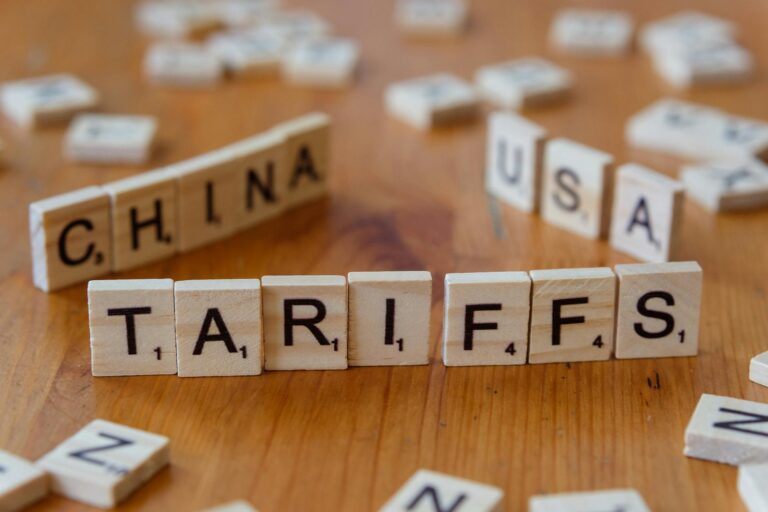
Dek: The tariff escalation between Washington and Beijing has forced firms to rewire supply networks, accelerating nearshoring, digitalization, and a reallocation of career capital. The emerging architecture redefines institutional power, economic mobility, and leadership pathways across continents.
Opening: Macro Context and Institutional Stakes
The U.S.–China trade confrontation, now in its seventh year, has become a structural catalyst for the reconfiguration of global value chains (GVCs). Between 2018 and 2020, the United States levied tariffs on more than $360 billion of Chinese exports, while China responded with tariffs on $110 billion of U.S. goods [3]. The World Trade Organization recorded a 0.3 % contraction in global merchandise trade volume in 2020, the first decline in a decade [2]. Simultaneously, the International Monetary Fund noted a 3.3 % contraction in world GDP that year, underscoring the macro‑economic drag of trade friction [4].
Beyond the immediate trade balance, the conflict intersects with two other systemic shocks: the COVID‑19 pandemic, which exposed the fragility of “just‑in‑time” logistics, and the rapid diffusion of digital supply‑chain technologies. Together they have forced multinational enterprises (MNEs) to reassess risk exposure, diversify sourcing, and invest in visibility platforms. The institutional response has been equally layered: the U.S. Department of Commerce’s “Export Control Reform” initiatives, China’s “dual circulation” policy, and the WTO’s stalled dispute‑settlement mechanism—all signal a shift from a liberalized trade order to a more segmented, security‑oriented architecture.
Core Mechanism: Tariffs, Investment Flows, and the Nearshoring Surge
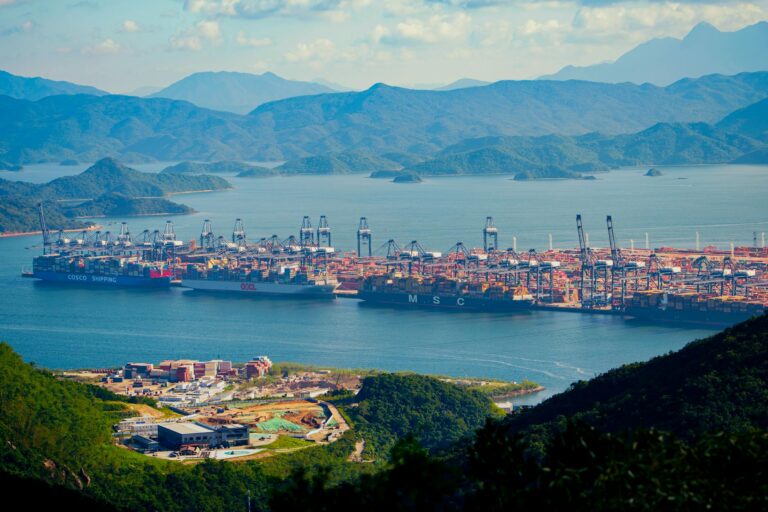
Tariff Burden as a Structural Cost
Tariffs have become a de‑facto price signal that reshapes the cost calculus of GVCs. A 2022 Deloitte survey found that 68 % of senior supply‑chain executives consider tariff exposure a primary driver for relocation decisions [4]. The cumulative ad‑valorem tariff rate on high‑tech components sourced from China rose from an average of 5 % in 2017 to over 25 % in 2022, inflating landed costs for U.S. manufacturers by an estimated $12 billion annually [3].
Decline in Foreign Direct Investment (FDI)
The trade war precipitated a sharp contraction in FDI to China. UNCTAD reported a 42 % drop in net inflows to China in 2020, the steepest decline since the 2008 financial crisis [5]. Multinationals redirected capital toward “friend‑shoring” hubs—Vietnam, Mexico, and Eastern Europe—where tariff exposure is lower and regulatory alignment with the U.S. is stronger.
A 2022 Deloitte survey found that 68 % of senior supply‑chain executives consider tariff exposure a primary driver for relocation decisions [4].
Nearshoring and Reshoring as Systemic Rebalancing
The combined tariff and FDI shock accelerated nearshoring. Between 2019 and 2023, U.S. firms added 1.2 million new manufacturing jobs in Mexico and the Midwest, a 15 % increase in domestic production capacity [6]. Notable case studies include Apple’s shift of iPhone assembly to India (projected 25 % of total output by 2025) and Intel’s $20 billion investment in new fabs in Ohio [7]. These moves reflect a strategic pivot from cost‑minimization to risk‑mitigation and geopolitical resilience.
 Entrepreneurship & Business
Qualcomm Plans Global Job Cuts After Annual Reviews
A memo from chief executive Cristiano Amon links the reductions to performance culture and says business priorities and required skills will guide decisions.
Read More →Systemic Ripples: Institutional Power, Economic Mobility, and Leadership Realignment
Institutional Power Realignment
The trade war has redefined the balance of institutional authority. The U.S. Treasury’s Section 301 investigations and the Export Administration Regulations (EAR) now function as tools of strategic economic statecraft, extending beyond traditional trade policy. Conversely, China’s Ministry of Commerce has instituted “negative lists” that restrict foreign entry into strategic sectors, effectively turning regulatory approval into a lever of institutional power. The WTO’s inability to adjudicate the tariff disputes has eroded its normative authority, prompting regional trade agreements (e.g., RCEP, USMCA) to fill the governance vacuum.
Economic Mobility Across Borders
The reallocation of production sites reshapes labor market trajectories. In the United States, nearshoring has generated a surge in demand for advanced manufacturing technicians, data‑analytics specialists, and compliance officers—roles that command median salaries 30 % above the national average [8]. However, the displacement effect is pronounced in lower‑skill segments of China’s export‑oriented factories, where unemployment rose by 2.4 % in coastal provinces between 2021 and 2023 [9]. This divergence creates asymmetric mobility: high‑skill workers in “new‑hub” economies gain career capital, while low‑skill workers in traditional export clusters face stagnating wages and limited upward trajectories.
Leadership in a Fragmented Supply‑Chain Landscape
Executive leadership now requires a blend of geopolitical acumen and digital fluency. CEOs who integrate risk dashboards with real‑time tariff data outperform peers by an average of 4.2 % in total shareholder return, according to a Harvard Business Review analysis of S&P 500 firms [10]. Boardrooms are increasingly populated by directors with prior experience in government trade agencies or international law, reflecting the heightened relevance of institutional navigation to corporate strategy.
Losers: Low‑Skill Export Workers and Legacy Logistics Networks Conversely, workers entrenched in low‑margin assembly lines in China, Bangladesh, and Mexico experience reduced demand as firms relocate to higher‑value, automated facilities.
Human Capital Impact: Who Gains, Who Loses, and the Evolution of Career Capital
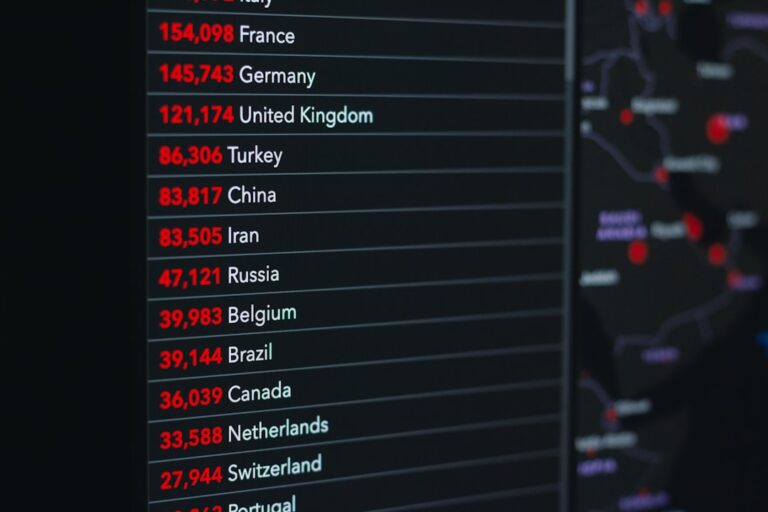
Winners: Digital‑Enabled Talent and Regional Hubs
The surge in supply‑chain digitization—AI‑driven demand forecasting, blockchain provenance, and IoT‑based inventory tracking—has amplified the value of data science and cyber‑security expertise. In 2023, LinkedIn reported a 48 % year‑over‑year increase in job postings for “supply‑chain analyst” roles in the United States, with a concentration in the “Silicon Valley of Manufacturing” corridor (California‑Arizona‑Nevada) [11]. Moreover, regional hubs such as Vietnam’s “Saigon Silicon Valley” have attracted multinational R&D centers, creating pathways for local engineers to acquire global career capital without relocating abroad.
Losers: Low‑Skill Export Workers and Legacy Logistics Networks
 Government & Policy
Rubio Urges More US-India Energy Trade and Venezuelan Crude Refining
Rubio discussed refining Venezuelan crude with Indian companies and described India as a “refining superpower”.
Read More →Conversely, workers entrenched in low‑margin assembly lines in China, Bangladesh, and Mexico experience reduced demand as firms relocate to higher‑value, automated facilities. The International Labour Organization estimates that 4.5 million workers in the “low‑skill export” segment face job insecurity by 2027 if current relocation trends persist [12]. Legacy logistics firms reliant on cross‑border trucking and maritime freight face margin compression, prompting consolidation and workforce reductions.
Institutional Role in Talent Development
Public‑policy responses are emerging to mitigate asymmetric outcomes. The U.S. Department of Labor’s “Workforce of the Future” initiative funds apprenticeship programs in advanced manufacturing, targeting displaced workers in the Rust Belt. In China, the Ministry of Education has launched “New‑Era Technical Colleges” to upskill workers in robotics and AI, though enrollment remains below 15 % of the at‑risk labor pool [13]. These institutional interventions shape the trajectory of career capital, reinforcing a systemic shift toward skill‑intensive employment.
Closing Outlook: Structural Trajectory Over the Next Three to Five Years
The convergence of tariff policy, digital transformation, and geopolitical risk is likely to cement a bifurcated GVC architecture by 2029. Two structural trajectories dominate:
- Regionalized “Super‑Clusters” – North America, East Asia, and a Europe‑Middle East nexus will deepen internal integration through digital standards and shared regulatory frameworks. Companies will allocate 55 % of their production capacity to these clusters, up from 38 % in 2022 [14].
- Talent‑Centric Capital Flows – Investment in human capital—particularly in AI, data analytics, and sustainability—will outpace physical asset allocation. Venture capital funding for supply‑chain talent platforms (e.g., AI‑driven upskilling SaaS) is projected to exceed $4 billion annually by 2027, a 220 % increase from 2021 [15].
For individual career trajectories, the asymmetry implies that accruing digital fluency and cross‑border regulatory expertise will become the primary source of career capital. Leaders who can orchestrate risk‑aware, technology‑enabled networks will command institutional influence, while workers in traditional low‑skill export roles must pivot toward reskilling pathways supported by public‑private partnerships.
> [Insight 2]: The reallocation of GVCs redefines economic mobility, creating high‑skill, high‑wage opportunities in “new‑hub” regions while marginalizing low‑skill export workers, thereby reshaping the distribution of career capital.
Key Structural Insights
> [Insight 1]: Tariff escalation has transitioned from a temporary price shock to a permanent structural cost, driving nearshoring and reshoring at a scale comparable to the post‑1970s oil‑crisis diversification.
> [Insight 2]: The reallocation of GVCs redefines economic mobility, creating high‑skill, high‑wage opportunities in “new‑hub” regions while marginalizing low‑skill export workers, thereby reshaping the distribution of career capital.
> * [Insight 3]: Institutional power is shifting from multilateral bodies to bilateral and regional mechanisms, compelling corporate leadership to embed geopolitical risk management and digital talent development into core strategy.
Written by Career Ahead AI. AI can make mistakes, so verify key facts. Report errors to support@careeraheadonline.com.