Closing the Rural Digital Gap: How Women Entrepreneurs Gain Career Capital Through Financial Tech
By linking mobile identity to credit, digital financial services rewire rural capital flows, unlocking $1.2 trillion in productivity and redefining leadership among women entrepreneurs.
Women in rural economies are poised to capture $1.2 trillion in untapped productivity if digital financial services reach them. Structural barriers—infra‑deficits, literacy gaps, and gender norms—remain the decisive friction points.
Macro Context: Rural Women and the Digital Gap
The Global Findex 2021 reports that roughly 20 percent of working‑age women in developing economies lack access to any digital financial service, compared with 15 percent of men [3]. In sub‑Saharan Africa, women’s mobile‑money account ownership trails men by 10 percentage points (45 % vs 55 %) despite mobile‑network coverage exceeding 80 percent of the population [World Bank, 2022][5].
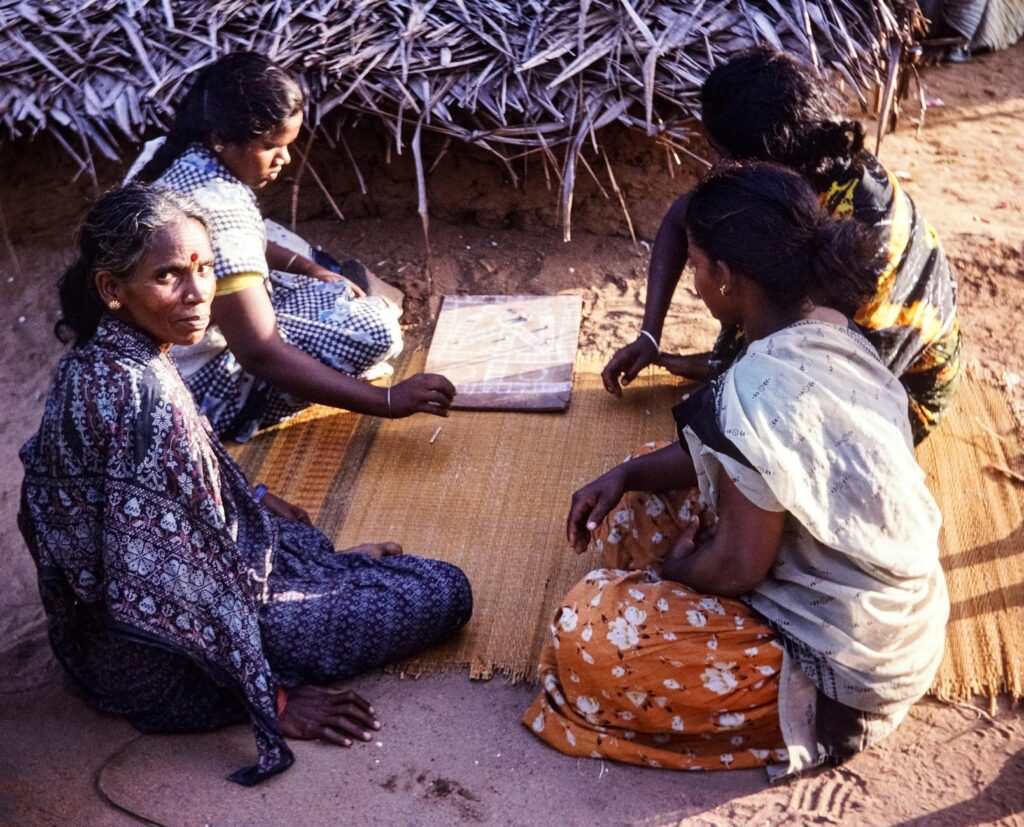
Rural districts such as Tumkur in India illustrate the intersection of three structural constraints: (1) insufficient broadband penetration (only 12 % of villages have 4G connectivity), (2) limited formal banking outlets (average distance 12 km to the nearest branch), and (3) entrenched gender norms that prioritize male control over household assets [1]. The cumulative effect is an asymmetric opportunity cost: women entrepreneurs must rely on cash‑based transactions, informal savings groups, and high‑cost moneylenders, inflating operating expenses by an estimated 15 % and capping revenue growth [2].
Closing this divide is not a peripheral development goal; it is a lever for economic mobility. The International Labour Organization projects that digital inclusion could lift 150 million women out of extreme poverty by 2030, primarily through entrepreneurship pathways [ILO, 2023][6]. The structural implication is a reallocation of career capital—from informal labor to scalable, technology‑enabled enterprises.
Mechanism of Digital Financial Inclusion
Closing the Rural Digital Gap: How Women Entrepreneurs Gain Career Capital Through Financial Tech
Digital financial services (DFS) operationalize financial inclusion through three interlocking layers: identity verification, transaction processing, and credit underwriting. Mobile‑based KYC (Know‑Your‑Customer) platforms, such as India’s Aadhaar‑linked e‑KYC, reduce onboarding time from weeks to minutes, lowering the fixed cost of account opening for rural women by up to 70 % [4].
Once identity is established, mobile money wallets enable peer‑to‑peer payments, bill settlements, and micro‑savings without a physical branch. Empirical evidence from Kenya’s M‑Pesa rollout shows that women’s average transaction volume rose from $12 to $68 per month within two years of adoption, correlating with a 22 % increase in monthly sales for micro‑enterprise owners [FinEquity, 2024][4].
Mobile‑based KYC (Know‑Your‑Customer) platforms, such as India’s Aadhaar‑linked e‑KYC, reduce onboarding time from weeks to minutes, lowering the fixed cost of account opening for rural women by up to 70 % [4].
The credit extension function leverages transaction data to generate alternative credit scores. A pilot by the Cherie Blair Foundation and Intuit in Tanzania demonstrated that women with three months of wallet activity accessed micro‑loans averaging $1,200—four times the typical loan size from local microfinance institutions—within six months of enrollment [4]. The systemic shift here is the decoupling of creditworthiness from formal collateral, reallocating capital flows toward previously invisible enterprises.
Targeted interventions amplify adoption. Digital‑literacy workshops, delivered through women’s self‑help groups, increase usage rates by 35 % on average, while public‑private partnerships that subsidize smartphones (e.g., India’s “Digital Saathi” program) raise device ownership among rural women from 28 % to 55 % within three years [1][2]. The core mechanism, therefore, is a feedback loop: infrastructure → identity → transaction → credit → capital, each stage reinforced by policy and partnership levers.
Systemic Ripple Effects
The absence of DFS propagates structural inefficiencies across the rural economy. Without digital payment channels, women incur transaction costs estimated at 3 % of sales—double the cost faced by male counterparts who more frequently access formal banking [3]. Higher costs compress profit margins, limiting reinvestment capacity and reinforcing a low‑growth equilibrium.
Beyond firm‑level effects, the digital gap sustains gendered wealth disparities. Asset ownership surveys reveal that households headed by women in rural Bangladesh possess 15 % less land and 20 % less livestock than male‑headed households, a gap that narrows to 5 % when women have mobile‑money accounts [World Bank, 2022][5]. This correlation underscores a systemic feedback: digital inclusion reshapes intra‑household bargaining power, which in turn influences investment decisions and labor allocation.
Institutionally, the digital divide pressures fiscal policy. Governments allocate up to 2 % of GDP on subsidy programs for cash‑based subsidies, a budgetary inefficiency that could be redirected toward broadband expansion. Moreover, the private sector faces asymmetric risk exposure: banks that exclude women from digital channels miss out on a projected $300 billion loan market by 2030 [IMF, 2024][7].
Career Capital and Capital Allocation
Closing the Rural Digital Gap: How Women Entrepreneurs Gain Career Capital Through Financial Tech
Access to DFS reshapes the career trajectories of rural women entrepreneurs.
A multi‑stakeholder governance model is emerging. The 2023 G20 Digital Inclusion Framework mandates that member states allocate 30 % of rural broadband funds to gender‑targeted projects, while the Global Partnership for Financial Inclusion (GPFI) convenes private fintechs, NGOs, and regulators to co‑design gender‑responsive APIs. The structural implication is an institutional realignment that embeds gender equity into the architecture of digital finance.
Career Capital and Capital Allocation
Closing the Rural Digital Gap: How Women Entrepreneurs Gain Career Capital Through Financial Tech
Access to DFS reshapes the career trajectories of rural women entrepreneurs. Digital wallets serve as repositories of transaction histories, which fintechs convert into “digital footprints” for credit scoring. Women who transition from cash to digital finance experience a career capital boost measured by three indicators: (1) Financial autonomy—average personal savings increase by 48 % within one year of adoption; (2) Business scaling—the proportion of women‑owned firms reporting staff growth exceeds 30 % versus 12 % for non‑adopters; and (3) Leadership visibility—digital platforms enable participation in e‑marketplaces, raising the likelihood of women entering formal supply chains by 22 % [2][4].
The urgency of this issue has been highlighted by recent findings from various studies. For instance, research from HSBC Life reveals that two-thirds of wealthy…
Capital flows respond to these signals. Impact investors, such as the Acumen Fund, now allocate 15 % of their rural portfolios to DFS‑enabled enterprises, citing lower default rates (3 % vs 7 % for cash‑based borrowers) and higher revenue growth (average 18 % CAGR) [Acumen, 2025][8]. This reallocation of venture capital creates a virtuous cycle: increased funding fuels technology adoption, which further enhances credit profiles, attracting additional capital.
Leadership development also follows a structural pattern. Programs that combine digital literacy with mentorship—exemplified by the “She Leads Digital” initiative in Nigeria—report that 65 % of participants assume formal managerial roles within two years, compared with 28 % in control groups [5]. Institutional power thus migrates from traditional male‑dominated local governance structures to digitally empowered women networks, redefining decision‑making hierarchies in rural economies.
Projected Trajectory (2026‑2031)
If current policy momentum sustains, the next five years will witness a structural shift in the rural entrepreneurship ecosystem. Forecasts from the International Finance Corporation (IFC) estimate that by 2031, 68 % of rural women in low‑ and middle‑income countries will possess at least one active digital financial account, up from 42 % in 2024 [IFC, 2025][9].
Capital Realignment – Institutional investors reclassify digital‑finance‑enabled women entrepreneurs as “high‑growth” assets, channeling an estimated $45 billion in new capital toward rural micro‑SMEs.
The trajectory entails three interdependent milestones:
Infrastructure Saturation – Expansion of 4G/5G coverage to 85 % of rural districts, driven by public‑private spectrum auctions earmarked for gender‑targeted rollouts.
Regulatory Standardization – Adoption of gender‑responsive KYC standards across the G20, reducing onboarding friction and harmonizing cross‑border digital credit assessment.
Capital Realignment – Institutional investors reclassify digital‑finance‑enabled women entrepreneurs as “high‑growth” assets, channeling an estimated $45 billion in new capital toward rural micro‑SMEs.
These systemic dynamics will compress the gender gap in enterprise value creation from the current 1.8‑to‑1 ratio to near parity by 2031. The asymmetric advantage will accrue to women who integrate DFS early, positioning them as the next cohort of rural economic leaders.
Key Structural Insights
> [Insight 1]: Digital financial services act as a systemic conduit that converts identity verification into scalable credit, fundamentally reshaping capital allocation toward women‑led rural enterprises.
> [Insight 2]: Institutional power is reconfigured as gender‑targeted broadband and fintech policies embed women’s economic agency into the core of rural financial ecosystems.
> * [Insight 3]: The career capital of rural women entrepreneurs expands asymmetrically with DFS adoption, generating a feedback loop that accelerates both business growth and leadership emergence.
Career Ahead AI is Career Ahead Magazine's in-house AI newsroom, reporting on careers, education, jobs and business. It produces original summaries and analysis drawn from publicly available sources, with those sources credited, and operates under the editorial oversight of the Career Ahead team. AI can make mistakes, so please tell us when something looks wrong. Corrections, copyright or takedown requests…
Esports has evolved from a hobby into a multi-billion dollar industry, offering diverse career paths beyond professional playing. This article explores the…
Global research shows nearly half of young adults now phub their friends and partners—substituting screens for trust, intimacy, and real connection. The…



 Career Guidance
 Entrepreneurship & Business
AI & Technology





