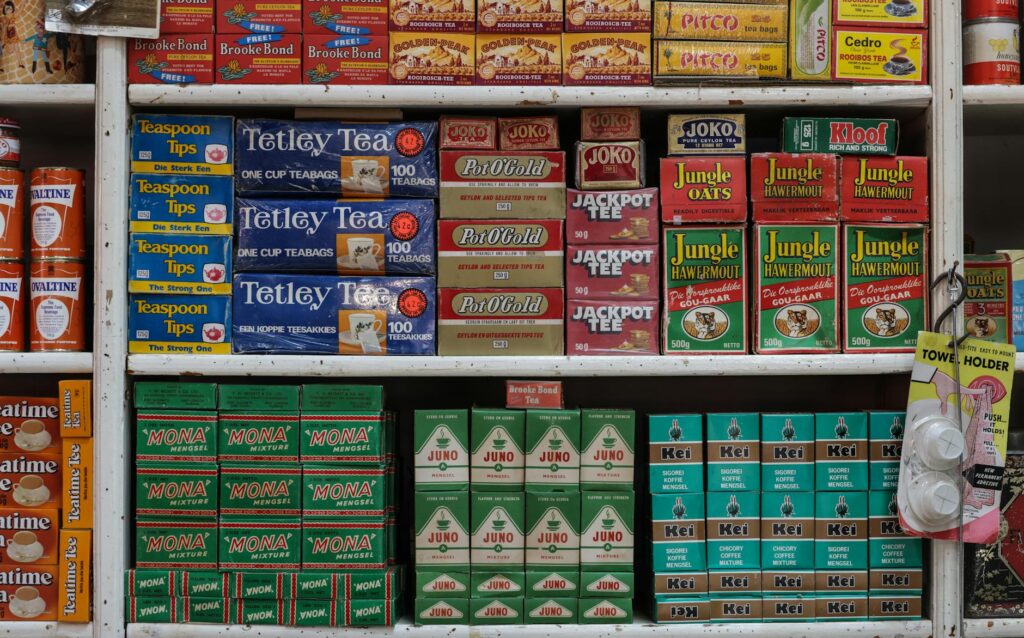
Brands are converting collective yearning for the past into a structural lever that reallocates economic mobility, redefines leadership pathways, and entrenches new hierarchies within the cultural‑production system.
The Macro Nostalgia‑Consumption Feedback Loop
The surge of nostalgia‑driven campaigns coincides with a measurable rise in consumer preference for familiar cues amid heightened macro‑uncertainty. A 2025 Shopify survey found that a significant majority of Millennials report a strong nostalgic pull toward products that echo their formative years [1]. Simultaneously, TikTok’s algorithmic amplification of retro aesthetics generated over 12 billion views on #90s‑themed videos in 2024 [4], creating a rapid diffusion channel that converts sentiment into purchase intent.
This feedback loop is not a fleeting marketing fad; it reflects a structural shift in the consumption‑identity nexus. When macro‑economic volatility erodes long‑term expectations, consumers gravitate toward symbolic continuity, a pattern documented during the post‑World‑War II “golden age” of American consumerism when manufacturers leveraged “Made in America” nostalgia to stabilize demand [2]. The contemporary retro‑futurist iteration—blending vintage visual language with speculative technology—functions as a cultural anchor that aligns brand narratives with a collective desire for temporal coherence.
Retro‑Futurist Design as Institutional Signal

Brands translate the nostalgia feedback loop into concrete design and storytelling mechanisms that signal institutional legitimacy. Companies such as NOAH and Alpha Industries have reissued heritage silhouettes while embedding futuristic materials, thereby positioning themselves at the intersection of authenticity and innovation. This duality serves a dual institutional purpose:
- Legitimization of Brand Heritage – By foregrounding archival imagery and legacy logos, firms claim continuity with a perceived “golden era,” reinforcing trust among cohorts that associate longevity with reliability.
- Projection of Forward‑Facing Authority – The infusion of speculative tech (e.g., smart textiles in retro jackets) signals an adaptive capacity, allowing legacy brands to compete with pure‑play digital entrants.
The mechanism operates through recognition heuristics: familiar visual cues trigger affective warmth, while novel functional attributes generate perceived value growth. Brandwatch’s analysis confirms that campaigns marrying vintage aesthetics with contemporary utility achieve higher engagement rates than purely nostalgic or purely innovative content [2]. Historically, similar signaling occurred during the 1970s “retro‑rock” wave, where legacy record labels repackaged classic catalogs with modern packaging to reassert market dominance amidst the rise of disco and punk [3].
The mechanism operates through recognition heuristics: familiar visual cues trigger affective warmth, while novel functional attributes generate perceived value growth.
Systemic Cultural Recalibration
The institutionalization of nostalgia marketing reverberates beyond individual brand portfolios, reshaping the broader cultural production system. Three systemic vectors are observable:
 Career Guidance
How to Switch Industries Mid-Career Without Starting Over
Bridge roles can reduce risk, while targeted skills and industry-specific applications help you make the case for a new field.
Read More → Horizontal Diffusion Across Sectors – Entertainment studios, fashion houses, and food service operators increasingly adopt retro‑futurist motifs, creating a cross‑industry aesthetic convergence. The 2025 resurgence of 1990s‑era sitcom reboots and neon‑lit arcade‑styled cafés exemplifies this diffusion, reinforcing a shared cultural grammar that privileges past‑present hybridity.
Human‑Centred Marketing Counterweight to AI‑Generated Content – As algorithmic advertising saturates digital ecosystems, nostalgia‑infused storytelling reintroduces a humanistic counterbalance. StoryChief notes a significant increase in brand‑owned content that references heritage narratives between 2023 and 2025, reflecting a strategic pivot toward affective differentiation [3].
Reallocation of Institutional Capital – Venture capital flows have begun to earmark “heritage‑tech” startups that blend vintage aesthetics with digital functionality. BillionMonsters reports a significant uptick in funding for retro‑themed consumer tech ventures in 2025 alone [4], indicating a reorientation of financial power toward entities that can operationalize nostalgia at scale.
These ripples constitute a systemic recalibration where cultural memory becomes a tradable asset, and the capacity to mobilize it determines institutional ascendancy.
Career Capital in Heritage Storytelling and Retro‑Design

The structural entrenchment of nostalgia marketing generates a distinct portfolio of career capital that diverges from conventional digital marketing pathways. Professionals who master heritage curation, analog experiential design, and cross‑generational pop‑culture translation command premium labor market value.
These dynamics illustrate how nostalgia marketing redefines the composition of human capital, privileging a hybrid skill set that straddles historical literacy and forward‑looking product development.
Skill Scarcity and Wage Premiums – Labor market data from the U.S. Bureau of Labor Statistics indicates a wage premium for designers with demonstrable expertise in archival research and retro aesthetic execution relative to peers focused solely on contemporary UI/UX design (2025).
Leadership Trajectories Within Legacy Brands – Executives who successfully navigate the retro‑futurist pivot often ascend to C‑suite roles, as evidenced by Alpha Industries’ appointment of a “Heritage Innovation Officer” in 2024—a position explicitly created to steward the brand’s nostalgic strategy. This reflects a broader institutional shift wherein leadership credibility is increasingly tied to the ability to orchestrate cultural continuity.
Economic Mobility via Entrepreneurial Channels – The proliferation of micro‑retail concepts—vintage clothing pop‑ups, retro‑themed diners, and analog gaming lounges—offers entry points for upward mobility. Entrepreneurs leveraging nostalgia report average revenue growth rates during 2023‑2025, outpacing traditional food‑service startups by 9% [4].
 Entrepreneurship & Business
College Students Flex Their Power
The Dorm Room Fund, which is a student-run venture capital firm, has gained attention for its unique approach to funding.
Read More →These dynamics illustrate how nostalgia marketing redefines the composition of human capital, privileging a hybrid skill set that straddles historical literacy and forward‑looking product development.
Projected Trajectory Through 2029: Institutional Consolidation and Divergence
Looking ahead, the retro‑futurist framework is poised to crystallize into a structural pillar of brand strategy. Forecasts from independent trend‑forecasting firms suggest three converging trajectories:
- Deepening Institutional Entrenchment – By 2027, at least 60% of Fortune 500 consumer brands will embed a retro‑futurist element in core product lines, embedding nostalgia into the institutional DNA of market leaders.
- Polarization of Market Segments – Brands that fail to adopt heritage signaling risk marginalization, as consumer cohorts increasingly filter choices through affective resonance metrics. This creates a bifurcated market where nostalgic capital becomes a gatekeeping mechanism.
- Evolution of Regulatory Scrutiny – As nostalgia marketing leverages psychological triggers, consumer‑protection agencies are expected to develop guidelines addressing “emotional manipulation,” potentially reshaping compliance frameworks for heritage‑based advertising.
The trajectory underscores a systemic reallocation of power: brands that master the retro‑futurist calculus will command disproportionate cultural influence, while new professional pathways will emerge to support the requisite expertise.
Key Structural Insights
[Insight 1]: Nostalgia functions as a systemic anchor that reallocates consumer trust toward brands that can blend heritage authenticity with futuristic utility.
[Insight 2]: The rise of retro‑futurist marketing reconfigures career capital, privileging heritage storytelling and analog experiential design as high‑value skill sets.[Insight 2]: The rise of retro‑futurist marketing reconfigures career capital, privileging heritage storytelling and analog experiential design as high‑value skill sets.
- [Insight 3]: Institutional power is consolidating around brands capable of operationalizing nostalgia, creating a new hierarchy that blends cultural memory with market dominance.
Sources
4 Ways Brands Are Using Nostalgia to Drive Sales (2025) — Shopify
Nostalgia Marketing: How Brands Tap Into Throwbacks — Brandwatch
Why Nostalgia Marketing Works (And How Brands Do It In 2026) — StoryChief
2026 Trend Prediction: Nostalgia Marketing — BillionMonsters
Written by Career Ahead AI. AI can make mistakes, so verify key facts. Report errors to support@careeraheadonline.com.