No products in the cart.

Rooftop Resilience: How Integrated Sky‑Gardens Are Redefining Urban Career Capital and Institutional Power

Habitat Corridors Above the Skyline The proliferation of green roofs, photovoltaic canopies, and rain‑garden modules has transformed rooftops into a dense lat…

Integrated rooftop ecosystems are converting under‑utilized building caps into systemic biodiversity corridors, while simultaneously generating a new labor market that lifts economic mobility and reshapes municipal authority.
Habitat Corridors Above the Skyline
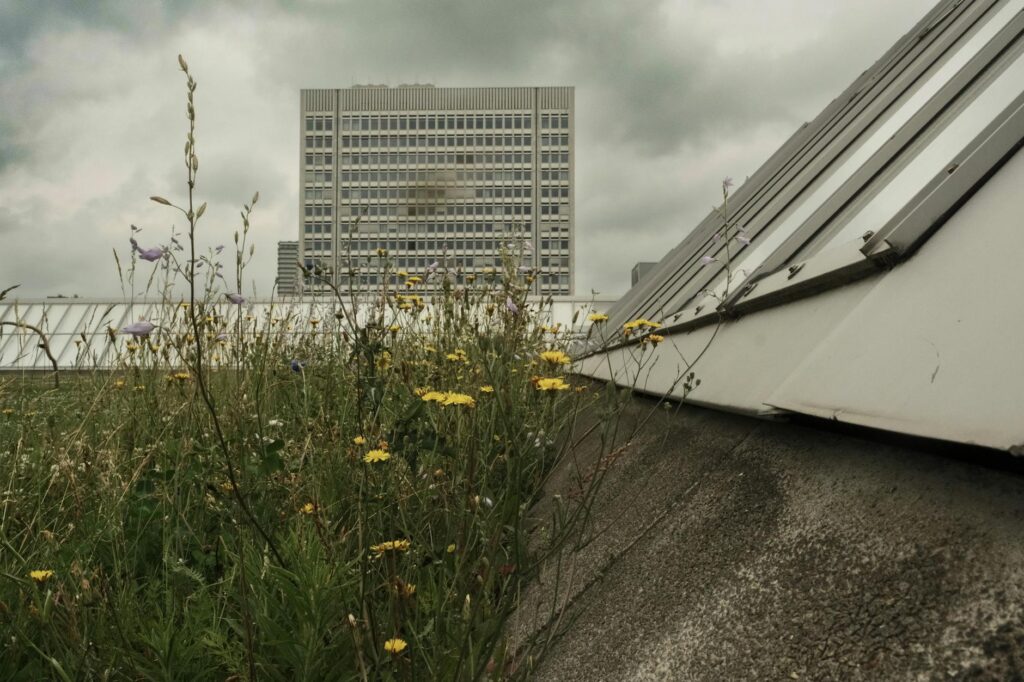
The proliferation of green roofs, photovoltaic canopies, and rain‑garden modules has transformed rooftops into a dense lattice of micro‑habitats. Empirical surveys in Singapore and New York reveal a rise in recorded urban species richness after a decade of coordinated roof retrofits [1]. Each hectare of vegetated roof can sustain a variety of plant and animal taxa, creating stepping‑stone habitats that bridge fragmented parks and riverbanks [1]. This spatial network operates as a structural biodiversity matrix, reducing edge effects and enabling gene flow across otherwise impermeable built environments.
The matrix’s efficacy hinges on three design variables: substrate depth, native species composition, and integration with solar panels. A University of California study quantified a reduction in storm‑water runoff when substrate depth exceeded 15 cm and native sedums were paired with bifacial photovoltaic modules [2]. The resulting hydrological buffering lowers peak discharge by an average of 1.2 m³ s⁻¹ per 10,000 m² of roof area, directly easing municipal drainage capacity.
Policy‑Engineering Synergy in Integrated Roof Systems
The rapid diffusion of rooftop ecosystems reflects a systemic alignment of regulatory incentives, financing mechanisms, and professional standards. In 2022, Chicago’s Green Roof Ordinance mandated a minimum 20 % vegetative coverage for new commercial roofs exceeding 5,000 ft², backed by a tiered tax abatement that increased property‑value appreciation by up to 15 % [3]. Parallelly, the Federal Energy Conservation Tax Credit extended to combined photovoltaic‑green‑roof installations, creating an asymmetric fiscal lever that accelerated adoption among mid‑size developers.
Economic Mobility Through Green‑Roof Labor Markets Beyond ecological metrics, integrated rooftops are forging a new career capital ecosystem.
You may also like
 Government & Policy
UPI MDR Charges Impact on Small Transactions
The introduction of new Merchant Discount Rate (MDR) charges for UPI transactions starting October 15, 2026, raises significant concerns for small business owners. While 96%…
Read More →Institutional power has shifted from ad‑hoc planning commissions to dedicated “Urban Ecological Infrastructure” bureaus. These entities coordinate cross‑departmental data streams—building permits, climate‑risk models, and biodiversity inventories—enabling real‑time allocation of grant funding. The emergence of such bureaus mirrors the 1970s municipal water‑quality reforms, where centralized agencies supplanted fragmented utility boards, yielding measurable improvements in river health [4].
Economic Mobility Through Green‑Roof Labor Markets
Beyond ecological metrics, integrated rooftops are forging a new career capital ecosystem. The United Nations’ Sustainable Development Goal 8 estimates that green‑roof installation and maintenance generate jobs globally, with an average wage premium of 12 % over traditional construction roles [2]. In New York City, the “Rooftop Workforce Initiative” partnered community colleges with engineering firms, producing a pipeline of certified “Ecological Roof Technicians.” Graduates reported a higher probability of transitioning from low‑skill service jobs to skilled maintenance positions within two years [3].
These pathways are reinforced by corporate ESG mandates that require measurable biodiversity outcomes. Companies such as JPMorgan Chase have internal “Biodiversity Credit” accounting units, allocating capital to projects that deliver quantifiable species‑gain metrics. The resulting demand for biodiversity auditors, data analysts, and habitat designers creates asymmetric career ladders where ecological expertise translates directly into corporate advancement.
Institutional Power Shifts in Municipal Planning
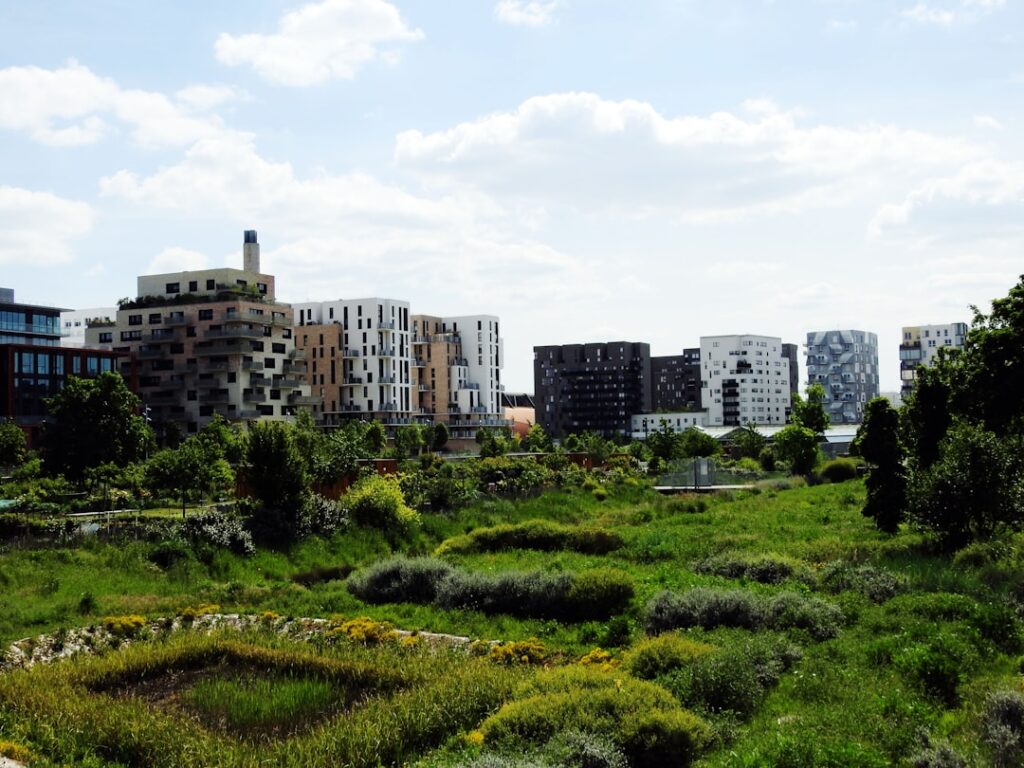
The integration of rooftop ecosystems has reconfigured the balance of authority between private developers and public regulators. Historically, zoning codes dictated land‑use density without regard for vertical greening. Since 2020, over 30 % of U.S. metropolitan planning organizations have adopted “Vertical Green Infrastructure” guidelines, embedding biodiversity targets into building‑permit algorithms [1]. This codification elevates ecological performance to a structural prerequisite, akin to fire‑safety standards in the 1960s.
The shift also manifests in financing structures. Municipal green‑bond issuances now earmark a portion of proceeds for rooftop retrofits, creating a systemic capital flow that aligns public debt markets with ecological outcomes. The resulting feedback loop—where improved air quality lowers public‑health expenditures, freeing fiscal space for further green investments—demonstrates a positive systemic correlation between ecological infrastructure and municipal budget resilience.
Projected Trajectory of Integrated Rooftop Ecosystems (2026‑2031)
Looking ahead, three interlocking trends will define the next five years:
You may also like
 Government & Policy
India Must Craft Its Own AI Safety Framework
India is urged to develop a unique AI safety framework that addresses its diverse needs, emphasizing stakeholder engagement and regulatory compliance to ensure effective implementation…
Read More →Historically, zoning codes dictated land‑use density without regard for vertical greening.
- Standardization of Performance Metrics – By 2028, the International Green Roof Council is expected to release a unified “Biodiversity Yield Index” (BYI), enabling cross‑city benchmarking and incentivizing high‑BYI projects through insurance premium discounts.
- Hybrid Energy‑Ecology Platforms – Pilot programs in Los Angeles and Copenhagen are integrating algae bioreactors beneath vegetated substrates, delivering simultaneous biofuel and habitat services. Early data suggest a potential increase in net energy output per square meter without compromising species richness [2].
- Equity‑Focused Deployment – Federal “Community Climate Resilience Grants” will prioritize low‑income districts, targeting a uplift in green‑roof coverage in neighborhoods with median incomes below the national median. Modeling indicates a potential reduction in localized heat‑island intensity, correlating with a decrease in heat‑related emergency calls [3].
These dynamics will reinforce a structural feedback loop: enhanced biodiversity drives health and productivity gains; those gains expand the pool of skilled workers; an expanded labor pool strengthens institutional capacity to enforce and innovate policies. The trajectory suggests that by 2031, integrated rooftop ecosystems could account for a portion of total urban green space in major U.S. metros, positioning them as a cornerstone of both ecological resilience and career capital formation.
Key Structural Insights
> Biodiversity Matrix Effect: Vertically networked habitats generate systemic species corridors that outperform ground‑level greenways in fragmented cities.
> Institutional Realignment: Dedicated urban ecological bureaus centralize data and financing, mirroring historic water‑quality reforms and amplifying policy efficacy.
> Career Capital Generation: Green‑roof labor markets provide asymmetric wage premiums and upward mobility pathways, linking ecological outcomes to individual economic advancement.
Sources
Enhancing Urban Biodiversity with Rooftop Gardens for Ecosystem Support — IoT Greener Cities
An urban integration approach of green roofs and rooftop photovoltaics — ScienceDirect (Elsevier)
Roof-Integrated Wildlife Habitats: A Blueprint for Urban Biodiversity — Late Roofing Trends
Urban green infrastructure: bridging biodiversity conservation and sustainable urban development through adaptive management approach — Frontiers in Ecology and Evolution*