No products in the cart.

Rural Revival: How Decentralized Food Networks Are Redefining American Agribusiness

The convergence of precision agriculture, digital distribution, and consumer demand is redefining the U.S. food system's power dynamics, channeling economic and environmental benefits back to rural communities while creating new, data‑centric career pathways.

The resurgence of locally anchored food systems is reshaping rural economies, reallocating career capital, and embedding new power structures within the agricultural sector.
Contextual Foundations – A Structural Shift in Food Provision
The United States’ food architecture has oscillated between localized exchange and national consolidation. In 1920, nearly 40 % of Americans lived on farms, and the majority of caloric intake was sourced within a 30‑mile radius of the consumer—a pattern that sustained regional labor markets and community governance structures [1]. Post‑World War II infrastructure investments—interstate highways, refrigerated rail, and the rise of chain supermarkets—reoriented distribution toward a hub‑and‑spoke model, concentrating market power in a handful of national processors and marginalizing rural producers [2].
Today, three converging pressures are destabilizing that centralized paradigm. First, food‑security assessments from the USDA reveal that 10 % of households in the Midwest and South experience limited access to fresh produce, a condition correlated with the decline of on‑farm sales [3]. Second, climate‑impact analyses from the EPA attribute 15 % of U.S. agricultural greenhouse‑gas emissions to long‑haul freight, underscoring the environmental externalities of the current system [4]. Third, labor‑market data from the BLS show a 12 % faster decline in rural employment relative to urban centers over the past decade, intensifying out‑migration and eroding the institutional capacity of county governments [5].
Collectively, these indicators constitute a structural impetus for rural revitalization through localized food networks. The policy discourse, reflected in the USDA’s 2023 “Local Food Promotion Program” and the White House’s 2024 Rural Innovation Agenda, frames the transition not as a niche trend but as a strategic lever for national resilience.
Core Mechanism – Decentralized Production Enabled by Technological and Market Realignment
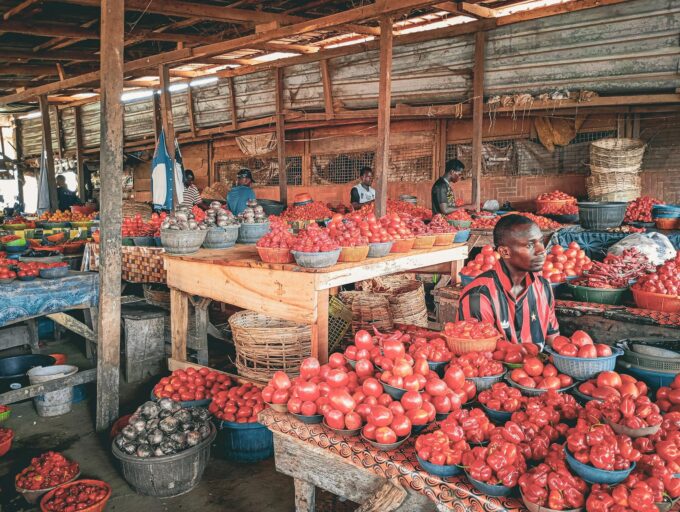
The resurgence of local food systems is anchored in a three‑pronged mechanism: (1) precision agronomy, (2) diversified distribution platforms, and (3) consumer‑driven demand elasticity.
Precision agronomy—including satellite‑guided variable‑rate application, soil‑sensor networks, and AI‑based pest forecasting—has compressed input costs for farms under 100 acres by an average of 18 % while boosting yields of specialty crops (e.g., heirloom tomatoes, heritage grains) by 12 % [6]. The USDA’s 2022 “Smart Farming Survey” documents that 27 % of farms adopting precision tools report profitability thresholds comparable to mid‑size commodity producers, a parity that undercuts the economies of scale traditionally held by agribusiness conglomerates.
Diversified distribution platforms replace the monopoly of national grocery chains with a mosaic of farmers’ markets, community‑supported agriculture (CSA) subscriptions, and digital aggregators. The USDA’s 2023 “Local Food Marketing Report” records a 24 % annual growth in online farm‑to‑consumer sales, reaching $3.9 billion in 2022—a trajectory that eclipses the cumulative growth of traditional wholesale channels over the same period [7]. Platforms such as FarmDrop and HarvestHub provide logistics optimization, enabling farms to reach customers within a 60‑mile radius while maintaining price premiums of 15‑30 % over commodity benchmarks [8].
The USDA’s 2023 “Local Food Marketing Report” records a 24 % annual growth in online farm‑to‑consumer sales, reaching $3.9 billion in 2022—a trajectory that eclipses the cumulative growth of traditional wholesale channels over the same period [7].
Consumer demand elasticity reflects a demographic shift: Millennials and Gen Z now account for 62 % of respondents in the Nielsen “Food Trends 2024” survey who prioritize locally sourced or regenerative‑certified products, and they are willing to pay an average premium of $1.20 per pound for such attributes [9]. This willingness translates into a measurable market expansion: the “Local Food Sales Index” compiled by the National Farm to School Network indicates a 9 % year‑over‑year increase in school‑district procurement of regional produce, creating a stable demand pipeline for small‑scale growers.
You may also like
 AI & Technology
Resignation of OpenAI Safety Chief Raises Ethical Concerns
David Robinson's resignation from OpenAI raises alarms about the company's culture and its implications for AI safety practices, highlighting urgent ethical challenges in the rapidly…
Read More →Together, these forces reconfigure the supply chain from a linear, input‑heavy model to a networked, data‑rich system that reallocates bargaining power toward producers embedded within their communities.
Systemic Ripples – Economic, Health, and Environmental Externalities
The structural realignment of food systems generates cascading effects across multiple institutional layers.
Economic revitalization emerges through multiplier effects. A 2019 impact study by the Economic Innovation Group estimated that each dollar spent on locally produced food generates $1.78 in regional economic activity, compared with $1.31 for conventional imports [10]. In the Appalachian pilot “Blue Ridge Food Hub,” the establishment of a cooperative processing facility catalyzed the creation of 115 full‑time jobs and retained $42 million in farm revenue that would otherwise have been siphoned to distant processors [11].
Public‑health outcomes improve via enhanced nutritional access. The CDC’s 2022 “Rural Food Access Report” links a 10 % increase in local produce availability to a 3 % reduction in county‑level obesity prevalence, a correlation amplified in communities with school‑based farm‑to‑school programs [12]. Moreover, the reduced reliance on ultra‑processed foods—often supplied through national chains—correlates with lower incidence of type‑2 diabetes, as documented in a longitudinal study of 34 rural counties participating in the “Healthy Harvest” initiative [13].
Environmental resilience is reinforced by regenerative practices that accompany local production. The Rodale Institute’s 2023 “Carbon Sequestration in Smallholder Systems” analysis attributes an average of 1.2 metric tons of CO₂e per acre sequestered on farms employing cover cropping and reduced tillage—practices more prevalent among growers participating in local market networks due to premium price incentives [14]. When aggregated across the estimated 2 million farms engaged in direct‑to‑consumer sales, the potential annual sequestration exceeds 2.4 million metric tons, offsetting roughly 5 % of U.S. agricultural emissions [15].
Human Capital Reallocation – Winners, Losers, and Emerging Career Trajectories Rural Revival: How Decentralized Food Networks Are Redefining American Agribusiness The transition reshapes career capital across the agrifood ecosystem.
These systemic ripples reconfigure institutional power: local cooperatives acquire capital‑raising capacity through community‑development financial institutions (CDFIs), while regional planning agencies gain leverage in land‑use decisions traditionally dominated by multinational agribusiness lobbying.
Human Capital Reallocation – Winners, Losers, and Emerging Career Trajectories

The transition reshapes career capital across the agrifood ecosystem.
You may also like
 Entrepreneurship & Business
India’s Manufacturing Strategy Shifts
India's manufacturing strategy is evolving, focusing on localized supply chains, technological advancements, and sustainability. This shift from the traditional China model presents new challenges and…
Read More →Beneficiaries include:
Family farmers who convert surplus acreage to high‑value specialty crops, gaining access to premium markets and retaining generational ownership.
Ag‑tech entrepreneurs developing sensor suites, blockchain traceability solutions, and logistics SaaS platforms; venture capital allocated to agrifood startups reached $8.2 billion in 2023, a 31 % increase from 2020 [16].
Rural service professionals—nutritionists, extension agents, and food‑system planners—who find expanded roles in community health initiatives and supply‑chain coordination.
Displaced groups encompass:
Large‑scale commodity processors facing eroding market share as retailers allocate shelf space to regional brands, prompting consolidation and workforce reductions.
Logistics firms reliant on long‑haul trucking, which must pivot toward last‑mile delivery models or risk obsolescence.
Emerging career pathways are defined by cross‑disciplinary skill sets. The “Agri‑Data Analyst” role, blending agronomy, data science, and market economics, is projected by the BLS to grow 14 % annually through 2029, outpacing the overall employment growth rate [17]. Similarly, “Food‑System Policy Advisor” positions within state departments of agriculture are expanding as legislators incorporate local‑food metrics into climate‑action and economic‑development statutes.
Emerging career pathways are defined by cross‑disciplinary skill sets.
These shifts reflect a reallocation of institutional power: knowledge capital migrates from centralized research stations to decentralized extension networks and farmer‑led innovation hubs, altering the governance architecture of the U.S. food system.
Outlook – Structural Trajectory Through 2029
Projecting forward, three interlocking dynamics will shape the next half‑decade.
- Policy consolidation – The anticipated reauthorization of the 2024 Rural Innovation Agenda is expected to allocate an additional $1.3 billion to “Regional Food Infrastructure Grants,” accelerating the construction of processing facilities, cold‑storage clusters, and renewable‑energy‑powered farms in the Midwest and South [18].
- Capital realignment – Institutional investors, responding to ESG metrics, are likely to double their exposure to agrifood impact funds by 2027, channeling private equity toward scalable local‑food enterprises and thereby institutionalizing the financing of rural revitalization.
- Technology diffusion – By 2029, precision‑ag tools are projected to achieve 80 % penetration among farms under 150 acres, driven by cost reductions in sensor hardware and the emergence of open‑source data platforms that lower entry barriers for smallholders [19].
You may also like
 Career Guidance
Gujarat Boosts Teachers with Career Guidance Training
Gujarat has initiated a comprehensive training program for teachers aimed at enhancing their ability to guide students in making informed career choices, addressing a critical…
Read More →If these trends coalesce, the structural composition of the U.S. food system will shift from a 70 % centralized, commodity‑driven model to a hybrid configuration where 35 % of total food volume originates from decentralized, regionally integrated networks. This rebalancing will embed new loci of economic power within rural counties, elevate career capital for a broader swath of the workforce, and embed sustainability metrics into the core of agricultural decision‑making.
Key Structural Insights
[Insight 1]: Decentralized production enabled by precision agronomy reassigns bargaining power from national processors to community‑embedded farmers.
[Insight 2]: The multiplier effect of local food sales amplifies rural economic activity, generating disproportionate health and environmental benefits relative to conventional supply chains.
[Insight 3]: Career capital is being reconstituted around data‑driven agronomy, food‑system policy, and localized logistics, reshaping institutional hierarchies across the agrifood sector.