No products in the cart.

South African Anti‑Immigrant Demonstrations Turn Door‑to‑Door, Displacing Immigrant Families
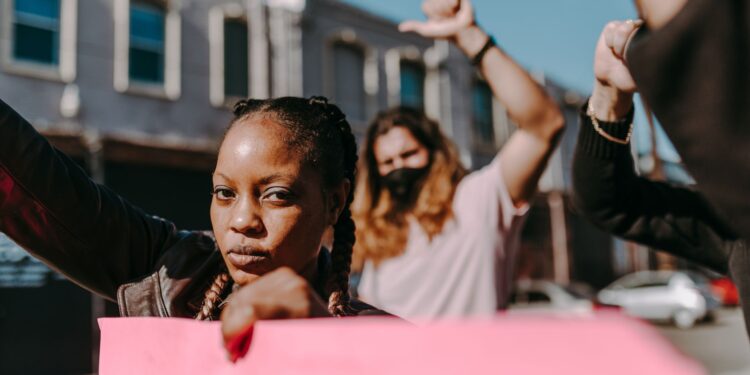
Anti‑immigrant protesters in South Africa moved from street rallies to door‑to‑door searches, displacing immigrant families and raising concerns for education access.

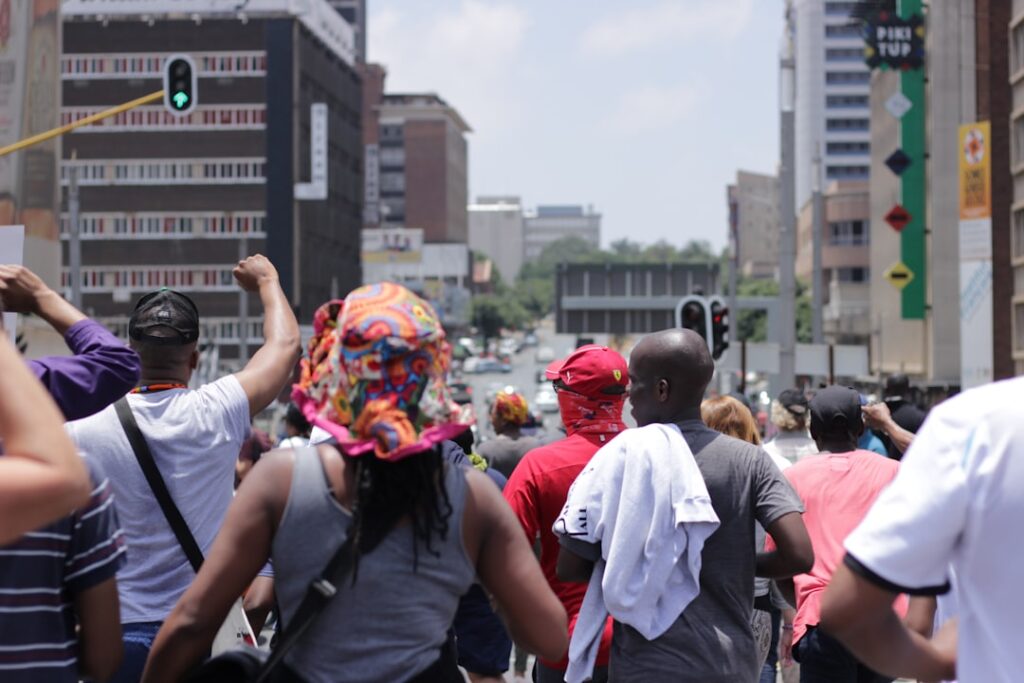
Protesters in multiple South African cities conducted door‑to‑door searches for undocumented foreigners after an unofficial June 30 deadline. Police maintained a heavy presence while thousands of residents participated in the coordinated actions.
On June 30 2026, anti‑immigrant demonstrations erupted in several South African cities, most prominently Durban, where participants moved from street marches to door‑to‑door searches aimed at identifying undocumented foreign nationals and forcing them to leave their homes [3][4]. The actions continued into early July, with Reuters reporting further incidents on July 9 2026, when protesters again canvassed neighborhoods and escorted suspected immigrants to police stations [1][2].
The protests involved thousands of South African citizens organized through local anti‑foreigner groups, undocumented immigrants targeted by the searches, and a substantial police and security deployment intended to manage public order [4][1]. Coordinated efforts were announced by community leaders who set an informal deadline of June 30 2026 for foreigners to vacate premises, prompting the door‑to‑door tactics that followed [3][2].
Timeline of Demonstrations
The initial mass march on June 30 2026 saw more than 2,000 participants converge on Durban’s central business district, chanting slogans against illegal immigration and demanding the removal of foreign nationals [3][4]. Within hours, organizers announced a shift from public rallies to neighborhood sweeps, instructing participants to knock on doors, verify residency status, and report undocumented occupants to authorities [3].
A second wave of activity was documented on July 9 2026, when Reuters reported that anti‑immigrant protesters resumed door‑to‑door searches in additional cities, including Johannesburg and Cape Town, extending the campaign beyond the original Durban focus [1][2]. Police statements released after the July incidents confirmed that law‑enforcement officers were stationed at key intersections and community centers to oversee the process and to intervene when confrontations escalated [2].
Both dates are linked by the same unofficial deadline, which was communicated through social media and local radio broadcasts, emphasizing that foreigners who remained after June 30 would be subject to forced removal [3][4]. The timeline reflects a rapid escalation from public protest to direct intervention in private residences within a ten‑day span.
Police statements released after the July incidents confirmed that law‑enforcement officers were stationed at key intersections and community centers to oversee the process and to intervene when confrontations escalated [2].
Geographic Scope and Security Response
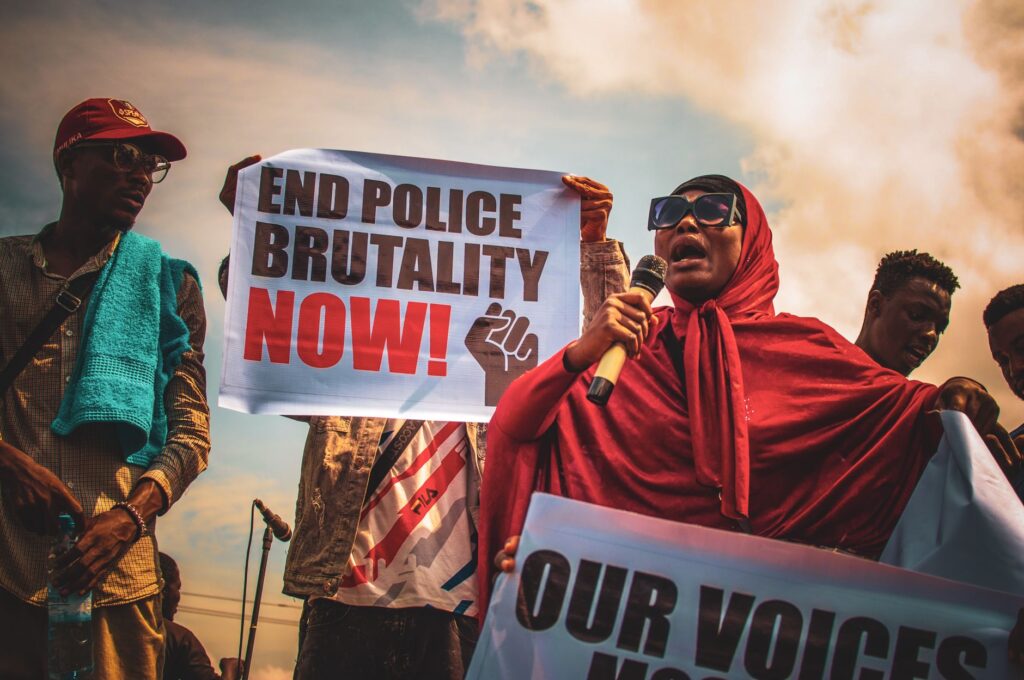
The protests were not confined to a single municipality. In Durban, the initial door‑to‑door sweeps covered residential blocks adjacent to the main protest route, while in Johannesburg, demonstrators gathered in the suburb of Soweto before dispersing into surrounding neighborhoods for similar searches [1][4]. Cape Town’s coastal districts also reported organized groups conducting door‑to‑door inquiries, with local police confirming heightened patrols in the areas most affected [2].
You may also like
 News
NewsEngland Flat Sales Hit Standstill
Flats in England are facing major challenges in the current market, with a significant number remaining unsold. Economic factors, shifting buyer preferences, and tightening mortgage…
Read More →Police deployment varied by city but remained consistent in its intensity. In Durban, the South African Police Service (SAPS) stationed riot units and mounted officers at the protest’s perimeter, later assigning patrols to monitor the door‑to‑door activities and to prevent violent clashes [4]. Johannesburg’s SAPS released a statement indicating that traffic police and community policing forums were mobilized to assist with crowd control and to process any individuals taken to police stations [1]. In Cape Town, the Western Cape Provincial Police reported the use of mobile command centers to coordinate responses across multiple precincts [2].
Despite the heavy security presence, reports from local media noted several instances where protesters forced entry into homes without warrants, leading to confrontations that required police mediation [3][4]. No official arrests were reported in the immediate aftermath of the July 9 incidents, but police indicated that investigations into unlawful entry and intimidation were ongoing [2].
Impact on Education and Safety for Immigrant Communities
The forced removals have immediate implications for immigrant children enrolled in South African schools. Families displaced from their homes face uncertainty regarding school enrollment, transportation, and access to basic services, potentially disrupting academic continuity for an estimated 5,000 immigrant students in the affected districts [3][4]. School administrators in Durban confirmed that several learners were absent from class following the June 30 sweeps, citing safety concerns and lack of stable housing [4].
Community organizations that provide language support and after‑school programs reported a surge in demand for emergency assistance, as displaced families sought temporary shelter and educational resources [1]. The Department of Basic Education has not issued a formal response as of July 9 2026, but officials indicated that they are monitoring the situation to ensure that all children retain the right to education regardless of immigration status [2].
Impact on Education and Safety for Immigrant Communities The forced removals have immediate implications for immigrant children enrolled in South African schools.
Beyond schooling, the broader safety of immigrant residents is at risk. The door‑to‑door tactics have generated fear among foreign nationals, prompting some to seek refuge in embassies or to relocate to informal settlements where they lack access to formal education and health services [3]. Human‑rights groups have warned that the climate of intimidation could exacerbate social tensions and hinder integration efforts, potentially leading to longer‑term socioeconomic instability [1].
Response from Government and Civil Society
National and provincial authorities have called for calm while emphasizing the rule of law. President Cyril Ramaphosa, in a televised address on July 1 2026, urged citizens to respect the rights of all residents and to allow law‑enforcement agencies to handle immigration matters [4]. The Minister of Home Affairs reiterated that any removal of individuals must follow legal procedures, and that the government does not endorse vigilantism [2].
You may also like
 News
NewsIndia’s Prime Minister adopts Instagram to Reach Young Voters after Education Minister’s Resignation
Prime Minister Narendra Modi launched Instagram videos to address Gen Z concerns after the Education Minister resigned following nationwide student protests.
Read More →Civil‑society groups, including the South African Human Rights Commission, have lodged formal complaints regarding alleged violations of constitutional protections, citing the door‑to‑door searches as unlawful and discriminatory [1]. Legal aid clinics have reported an increase in inquiries from immigrants seeking counsel on their rights and on how to navigate potential police detention [3].
These statements and actions underscore a tension between public sentiment on immigration and the legal frameworks governing residency and education, a dynamic that will shape policy discussions in the coming weeks.
Key Facts
What: Anti‑immigrant protesters conducted door‑to‑door searches to force undocumented foreigners out of homes in multiple South African cities.
These statements and actions underscore a tension between public sentiment on immigration and the legal frameworks governing residency and education, a dynamic that will shape policy discussions in the coming weeks.
When: Unofficial deadline of June 30 2026; major incidents reported on June 30 and July 9 2026.
Impact: Immigrant families face displacement, disrupting school attendance for thousands of children and raising safety concerns.
You may also like
 News
NewsKarnataka Announces India’s First Government-Run AI University in Bengaluru
Karnataka's AI university plan, announced at a Google event, includes a 100-acre AI Hub and aims to issue 200,000 AI certifications.
Read More →Sources
- South African Protesters Go Door‑To‑Door Forcing Immigrants From Their Homes – Reuters
- South African Protesters Go Door‑To‑Door Forcing Immigrants From Their Homes – US News
- ‘They will attack me if I stay’: Immigrants in South Africa flee for safety amid violence and anti‑foreigner protests – The Guardian
- South African anti‑migrant protests: Thousands march amid heavy police presence – BBC