Blue-footed boobies and other South American seabirds have been documented in Panama Bay as the 2025-2026 El Niño warms the eastern Pacific, prompting a northward shift in their foraging range.
Flocks of blue-footed boobies and other seabirds native to Peru and Chile have been recorded in Panama Bay as the 2025-2026 El Niño event warms the eastern Pacific, prompting a northward shift in their foraging range.Scientists attribute the northward movement to altered food availability caused by the warming anomaly.
Flocks of seabirds normally confined to the cold, nutrient-rich waters off Peru and Chile were observed in Panama Bay on August 14, 2026, according to field reports from local observers and regional wildlife agencies [1].
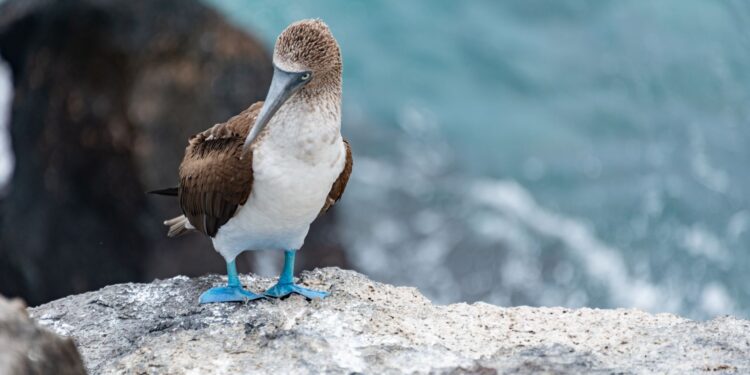
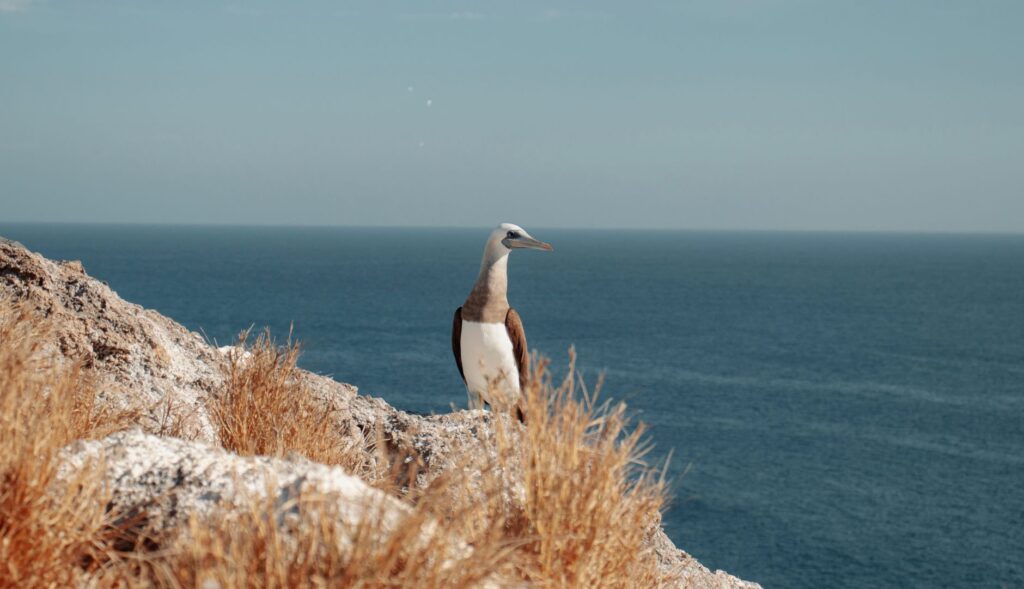
The birds involved include adult and immature blue-footed boobies (Sula nebouxii), as well as other pelagic species such as Peruvian pelicans and guanay cormorants [3].
No single organization coordinated the observations; instead, ornithologists from the Smithsonian Tropical Research Institute, Panamanian environmental NGOs, and citizen-science participants documented the events through visual counts and photographic records [1].
Researchers linked the displacement to the El Niño-driven reduction in upwelling along the South American coast, which diminishes the availability of small fish and squid that seabirds rely on for sustenance [1].
Habitat Shifts Triggered by El Niño
The 2025-2026 El Niño represents one of the strongest warming events recorded in the Pacific since systematic monitoring began in 1950 [1].
Warmer surface waters suppress the upwelling of cold, nutrient-rich currents that support the prolific plankton blooms off the coasts of Peru and Chile [4].
Habitat Shifts Triggered by El Niño The 2025-2026 El Niño represents one of the strongest warming events recorded in the Pacific since systematic monitoring began in 1950 [1].
The resulting decline in prey density forces seabird colonies to seek alternative foraging grounds, often at greater distances from their breeding sites [2].
Historical data indicate that similar, though less extensive, northward movements occurred during the 1997-1998 El Niño, but the current displacement reaches farther into the Caribbean basin than previously documented [1].
On August 13-14, 2026, researchers stationed at the Panama Canal Authority’s wildlife monitoring stations recorded groups of up to 150 blue-footed boobies perched on rocks near the canal’s Pacific entrance [3].
The launch comes at a time when media consumption patterns are rapidly changing. Viewers increasingly prefer on-demand content and real-time updates, prompting networks like Bloomberg…
Additional sightings of Peruvian pelicans and guanay cormorants were reported along the shoreline of Panama Bay, with some individuals observed feeding on small fish near the surface [2].
Photographic evidence captured by local birdwatchers shows the distinctive bright blue feet of the boobies, confirming species identification without the need for capture or tagging [3].
Scientific Monitoring and Response
The Smithsonian Tropical Research Institute deployed a temporary acoustic monitoring array in Panama Bay to record seabird vocalizations and estimate population density in real time [1].
Photographic evidence captured by local birdwatchers shows the distinctive bright blue feet of the boobies, confirming species identification without the need for capture or tagging [3].
Data collected during the first 48 hours indicated a daily presence of approximately 120 individuals, with peak activity during early morning foraging periods [2].
Researchers are coordinating with the Pacific Seabird Conservation Network to compare the Panama observations with concurrent surveys in Ecuador and Colombia, aiming to map the full extent of the displacement [4].
No immediate mortality events have been reported, and preliminary health assessments of captured individuals suggest normal body condition, indicating that the birds have successfully located sufficient food resources in the new area [3].
Impact on Readers
The displacement provides a concrete example of how large-scale climate anomalies can alter wildlife distribution patterns, offering a real-time case study for students of ecology, environmental science, and climate studies [1].
Educators can incorporate the Panama sightings into curricula on marine ecosystems, species adaptation, and the effects of El Niño on biodiversity [2].
Conservation practitioners may use the data to refine predictive models of seabird movements under future warming scenarios, informing management strategies for protected marine areas [4].
Key Facts
Conservation practitioners may use the data to refine predictive models of seabird movements under future warming scenarios, informing management strategies for protected marine areas [4].
In September, the economy added just 150,000 jobs, a stark contrast to the 200,000 jobs analysts had predicted. This slowdown comes amid ongoing inflationary pressures,…



 News
NewsNews