No products in the cart.

Starship’s 1,800 Launches Needed for Space Data Centers
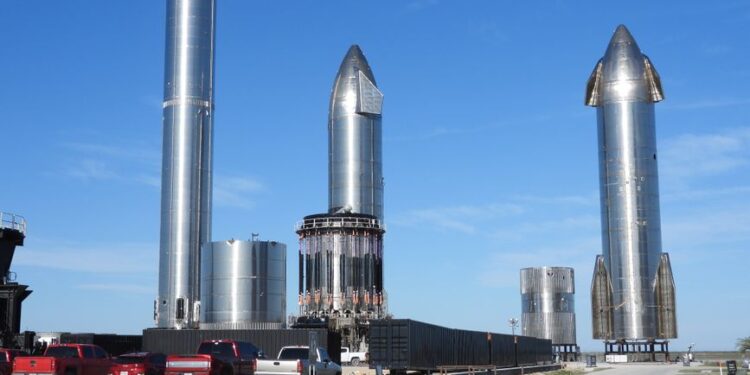
Google's recent announcement emphasizes that SpaceX's Starship must complete 1,800 launches to enable the deployment of orbital data centers, a target that presents significant challenges and opportunities for the aerospace industry.

Google’s recent announcement emphasizes that SpaceX’s Starship must complete 1,800 launches to enable the deployment of orbital data centers. This ambitious target will require a significant ramp-up in launch frequency, which currently stands at a mere five flights per year. This requirement presents a complex challenge for aerospace project managers and space data engineers, who will need to align their strategies with these evolving goals.
The implications of this target are profound. As companies like Google invest in space infrastructure, they are looking to utilize the capabilities of Starship to facilitate the creation of advanced data centers in orbit. These data centers are expected to process vast amounts of data and run complex AI algorithms, which are increasingly critical for various industries. The push for 1,800 launches underscores the urgency and scale of investment needed in aerospace technology. According to a report by TechCrunch, this initiative is not merely about achieving a number; it represents a significant leap towards establishing a sustainable space economy, where data centers in orbit could revolutionize how data is processed and stored.
Impact on Project Timelines for Space Data Engineers
Space data engineers will face new challenges as they adapt to the projected timelines associated with the 1,800 launches. The requirement for such a high frequency of launches means that engineers must develop systems and software that can handle the rapid deployment of satellites. Career Ahead’s analysis shows that engineers will need to enhance their skills in satellite technology and orbital mechanics to meet these demands effectively.
Furthermore, the timeline for launching these data centers is not just about frequency; it is also about coordination. Engineers must work closely with project managers to ensure that each launch aligns with the overall project goals. This could mean adjusting their workflows and timelines to accommodate potential delays or issues that arise during the launch process. As highlighted in a recent article from CNN, the successful deployment of these satellites will require meticulous planning and execution, especially as Google aims to test its AI capabilities in space, which could set a precedent for future technological advancements.
As the industry shifts towards more frequent launches, data engineers may also need to integrate advanced technologies that can optimize data processing in space. This may involve learning new programming languages or frameworks that are specifically designed for space applications. The demand for engineers who can innovate in this area is likely to grow, making it essential for professionals to stay ahead of technological trends. The successful integration of AI in space operations, as envisioned by Google, could lead to unprecedented efficiencies in data handling and processing, further emphasizing the need for skilled engineers in this evolving landscape.
Ultimately, the need for 1,800 launches will necessitate a reevaluation of project timelines and expectations. Space data engineers should prepare for a landscape that demands agility and responsiveness as they work to develop the next generation of space-based data centers.
The successful integration of AI in space operations, as envisioned by Google, could lead to unprecedented efficiencies in data handling and processing, further emphasizing the need for skilled engineers in this evolving landscape.
Resource Allocation Challenges for Aerospace Project Managers
You may also like
 Industry & Global Trends
Hormuz Crude Oil Exports Near Pre-War Levels
The return to pre-war export levels is crucial as it indicates a stabilization in the oil market. Producers and shipping industries have adapted by employing…
Read More →Aerospace project managers are at the forefront of navigating the complexities introduced by the requirement for 1,800 Starship launches. Effective resource allocation will be critical as they strive to manage budgets, timelines, and personnel. With the expectation of increased launch frequency, project managers must develop robust strategies to ensure that resources are available when needed. This includes not only financial resources but also human capital, as the demand for skilled professionals in the aerospace sector is set to rise significantly.
Career Ahead research identifies that project managers will need to focus on building partnerships with suppliers and contractors who can support the increased demand for launch services. This may involve negotiating contracts that allow for flexibility in scaling up operations as needed. The ability to secure reliable partners will be essential for meeting the ambitious launch targets set by SpaceX and its clients. As noted in TechJournal’s coverage of the situation, the collaboration between Google and SpaceX is a prime example of how partnerships can drive innovation and efficiency in the aerospace sector.
Moreover, project managers will need to enhance their risk management strategies. The high stakes associated with frequent launches mean that any delays or issues could have cascading effects on project timelines. By implementing more rigorous risk assessment protocols, managers can better prepare for potential challenges and mitigate their impact on overall project success. This proactive approach is crucial as the aerospace industry moves towards a model that demands rapid adaptation to changing circumstances.

In light of these challenges, the aerospace industry may see an increase in job opportunities for project managers who specialize in launch operations and logistics. As companies invest in their space initiatives, those with the right expertise will be in high demand, driving a competitive job market. As the frequency of launches increases, project managers will also need to stay informed about technological advancements that can streamline operations, which could include adopting new project management software or tools that enhance communication and collaboration among team members.
The implications for job growth and the evolution of project management practices in the aerospace sector will be significant, making this an exciting time for professionals in the field.
The successful realization of the 1,800 launch goal will not only reshape the operational landscape for SpaceX and its partners but will also set a benchmark for future aerospace projects. The implications for job growth and the evolution of project management practices in the aerospace sector will be significant, making this an exciting time for professionals in the field.
The quest for 1,800 Starship launches is not just about meeting immediate needs; it also sets the stage for future advancements in space data infrastructure. Google envisions a network of satellites working in concert to provide powerful computational capabilities in orbit. This vision aligns with the broader trend of increasing reliance on space-based data processing and storage solutions.
As this infrastructure develops, it will likely create new roles and opportunities within the aerospace sector. Space data engineers and project managers will find themselves at the center of a rapidly evolving industry, where the demand for innovative solutions will drive job growth. Career Ahead’s analysis finds that professionals with expertise in AI, machine learning, and data analytics will be particularly well-positioned to capitalize on these changes.
You may also like
 Industry & Global Trends
Man Charged
A US national has been charged with illegally exporting Nvidia chips to China, raising significant compliance and legal concerns in the semiconductor industry.
Read More →Additionally, the successful deployment of space data centers could revolutionize industries beyond aerospace. From climate monitoring to global communications, the applications of this technology are vast. As such, the implications for job growth and skill development in related fields could be significant.
Looking ahead, the success of this initiative will depend on the ability of SpaceX and its partners to achieve the necessary launch frequency. The aerospace community will be watching closely as these developments unfold, as they could redefine the landscape of space technology and data management.
As the countdown to the first of these 1,800 launches begins, one must wonder: will SpaceX be able to meet these ambitious targets, and what will that mean for the future of aerospace engineering and data processing?
Career Ahead’s analysis shows that space data engineers will need to adapt their skills to manage the rapid deployment of satellites and optimize data processing in orbit.
Frequently Asked Questions
What are the implications of 1,800 Starship launches for space data engineers?
Career Ahead’s analysis shows that space data engineers will need to adapt their skills to manage the rapid deployment of satellites and optimize data processing in orbit. This may involve learning new technologies and programming languages specific to space applications.
How can aerospace project managers plan for extended timelines in space data center projects?
Aerospace project managers must focus on building reliable partnerships and enhancing risk management strategies to navigate the complexities introduced by increased launch frequencies. This includes securing flexible contracts with suppliers and implementing rigorous risk assessment protocols.
What skills should space data engineers develop to adapt to changing project requirements?
Space data engineers should enhance their knowledge in satellite technology, orbital mechanics, and advanced data processing techniques. Staying updated on technological trends will be crucial for success in this rapidly evolving field.
You may also like
 Industry & Global Trends
$600 Billion Food Market Expands, Processing Gains Focus
India’s food market, now estimated to be worth $600 billion, is experiencing a robust growth rate of 7% compounded annually, driven by economic expansion and…
Read More →