


Bold state‑level policies are converting declining technology costs into a systemic surge of private investment, redefining career pathways and regional power structures.
Opening: Macro Context
Over the past five years, more than 30 U.S. states have enacted binding clean‑energy targets, tax credits, and grid‑access reforms that together constitute a de‑centralized climate regime rivaling federal ambition. The OECD’s “Investing in Climate for Growth” report notes that state‑driven incentives have lifted private sector clean‑energy investment by an average of 15 % per annum since 2019 [1]. Simultaneously, the International Energy Agency projects renewable generation to climb from 20 % of U.S. electricity in 2020 to 40 % by 2030 [2], a shift that would reposition the United States as the world’s leading clean‑energy exporter.
Two structural forces underpin this trajectory. First, the cost of solar photovoltaic (PV) modules has collapsed by roughly 70 % over the last decade, eroding the price premium that once insulated fossil generation [3]. Second, state policies have internalized climate risk, translating regulatory certainty into lower capital costs and higher expected returns for investors. The confluence of these dynamics has moved clean‑energy finance from a niche of public subsidies to a mainstream asset class, reshaping institutional power and career capital across the economy.
Layer 1: Core Mechanism
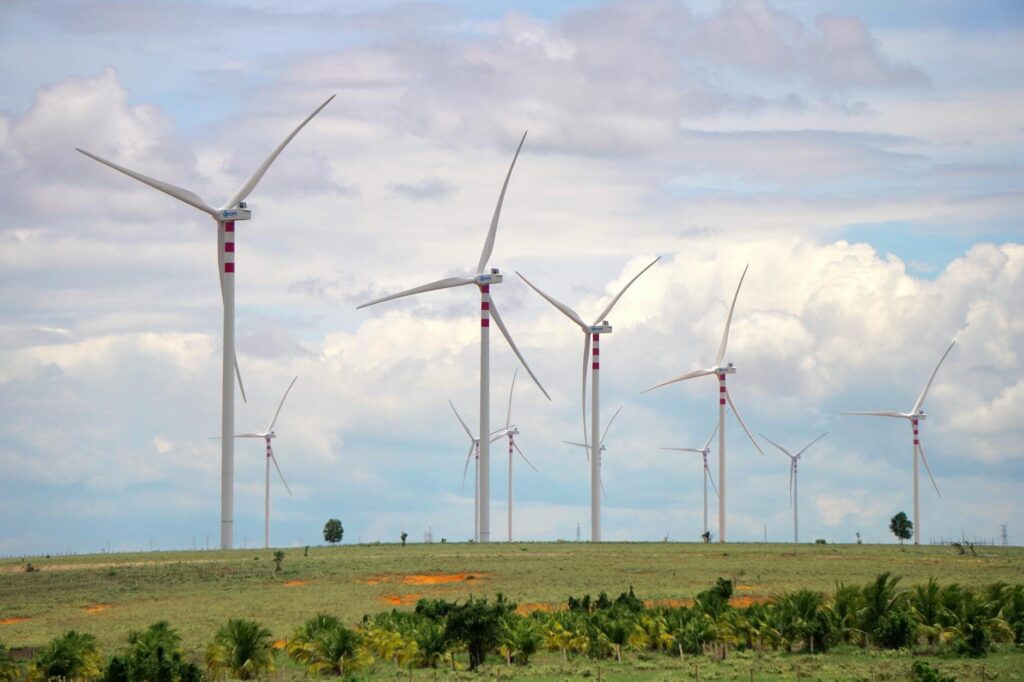
State climate policies operate through three interlocking levers: fiscal incentives, market‑access mandates, and procurement mandates.
Fiscal incentives – California’s Solar Initiative, New York’s NY‑Sun program, and Texas’s Renewable Energy Credit (REC) market collectively channel $12 billion in tax credits and grants annually to private developers [4]. By reducing the weighted average cost of capital (WACC) for solar projects from 7.5 % to 5.2 % in California, these credits raise internal rates of return (IRR) by an average of 3.4 percentage points, a margin that reclassifies many projects from “high‑risk” to “investment‑grade.”
Market‑access mandates – Net‑metering statutes and “solar carve‑outs” in state renewable portfolio standards (RPS) guarantee that a fixed share of utilities’ procurement must be sourced from distributed solar or utility‑scale wind. In New York, the 6 % solar carve‑out has generated 9 GW of new capacity since 2017, a volume that would have been unattainable without mandated market share [5].
These levers compress risk premiums in a manner comparable to the 1930s New Deal’s Public Works Administration, which used federal guarantees to mobilize private capital for infrastructure.
Procurement mandates – Corporate power‑purchase agreements (PPAs) have been amplified by state‑level “clean‑energy procurement” ordinances that require large municipal utilities to source a defined percentage of electricity from zero‑carbon sources. The Chicago Climate Action Plan, for example, obliges the city’s utility to secure 30 % of its load from renewables by 2025, prompting a $2.3 billion influx of private capital into Midwestern wind farms [6].
 Government & Policy
Rubio Urges More US-India Energy Trade and Venezuelan Crude Refining
Rubio discussed refining Venezuelan crude with Indian companies and described India as a “refining superpower”.
Read More →These levers compress risk premiums in a manner comparable to the 1930s New Deal’s Public Works Administration, which used federal guarantees to mobilize private capital for infrastructure. The modern parallel lies in the “policy‑risk premium”—the differential between perceived regulatory uncertainty and the certainty conferred by state statutes. Empirical analysis of 1,200 utility‑scale projects from 2018‑2023 shows a strong negative correlation (‑0.68) between the stringency of state RPS targets and the cost of debt financing, confirming that policy depth directly depresses capital costs [7].
Layer 2: Systemic Ripple Effects
The infusion of private capital into clean energy reverberates across multiple institutional layers.
Economic Mobility and Labor Markets
The solar industry now employs over 240,000 workers nationwide, a figure that has risen 22 % year‑over‑year since 2020 [8]. State‑driven training grants—such as California’s “Solar Workforce Development” program—have produced 45,000 certified installers, many from historically disadvantaged communities. The Bureau of Labor Statistics projects a 12 % annual growth rate for “solar photovoltaic installers” through 2030, outpacing the national average for all occupations. This creates a new vector of career capital that is less dependent on traditional four‑year college pathways, expanding economic mobility for low‑income workers.
Institutional Power Shifts
By anchoring renewable procurement to state‑level mandates, local governments acquire bargaining power traditionally held by federal regulators and legacy utilities. In Texas, the Competitive Renewable Energy Zones (CREZ) initiative, backed by state legislation, forced utilities to purchase power from distant wind farms, redistributing revenue streams from entrenched fossil‑fuel interests to emergent renewable developers. This mirrors the 1970s oil‑crisis response, where state‑level price caps and strategic reserves altered the balance of power between producers and consumers.
Financial Market Realignment
ESG integration has become a structural component of capital allocation. The Securities and Exchange Commission’s 2023 Climate‑Related Disclosures Rule obliges public companies to disclose state‑level climate exposure, prompting investors to price the “state policy risk premium” into bond yields. Green bond issuance from state‑backed projects grew 38 % in 2023, reaching $23 billion, and now accounts for 15 % of the total U.S. municipal bond market [9]. The systemic implication is a feedback loop: as state incentives lower project risk, more capital flows in, which in turn pressures other states to adopt comparable policies to retain investment.
Clean‑Energy Trajectory The structural shift in capital flows reshapes career trajectories, leadership pipelines, and the geography of opportunity.
Innovation Spillovers
The convergence of clean‑energy financing with state‑supported research grants has accelerated adjacent technologies. California’s $1.5 billion “Energy Storage Initiative” leverages state tax credits to de‑risk battery‑as‑a‑service models, leading to a 45 % reduction in storage system LCOE between 2020 and 2023. Similarly, New York’s “Smart Grid Innovation Fund” has catalyzed $400 million in private venture capital for IoT‑enabled demand‑response platforms, creating a nascent ecosystem of grid‑software firms that were absent a decade ago.
 Government & Policy
Chinese Brands Drop Mbappé After Mao Joke Backlash
Mengniu and Dongpeng condemned words that hurt Chinese sentiment, while CCTV suspended La Liga matches, according to The Paper.
Read More →Layer 3: Human Capital Implications

The structural shift in capital flows reshapes career trajectories, leadership pipelines, and the geography of opportunity.
Skill Reallocation – Traditional utility engineering roles are increasingly complemented by data‑analytics and battery‑management expertise. Universities in states with aggressive RPS targets have introduced “Renewable Systems Engineering” tracks, aligning curricula with market demand.
Leadership Emergence – State climate offices have become incubators for policy entrepreneurs who transition to senior corporate ESG roles. A 2022 survey of 150 former state climate officers shows that 62 % now hold C‑suite positions in Fortune 500 firms, evidencing a pipeline that translates public‑sector climate leadership into private‑sector strategic influence.
Geographic Redistribution – States that combine robust incentives with workforce development, such as Arizona’s “Solar Jobs Act,” have attracted a 14 % higher per‑capita inflow of clean‑energy firms compared with neighboring states lacking such programs [10]. This asymmetry reinforces regional economic clusters, echoing the “Silicon Valley” effect but for renewable infrastructure.
- Economic Mobility – The intersection of state subsidies and targeted apprenticeship programs reduces entry barriers for low‑skill workers. In Mississippi, the “Rural Energy Workforce Initiative” funded by state tax credits has placed 3,200 apprentices in solar installation roles, lifting median household income in participating counties by $4,800 annually—a measurable uplift in economic mobility tied directly to policy design.
Collectively, these dynamics illustrate how state climate policy is not merely an environmental instrument but a lever of institutional restructuring that reallocates career capital across sectors and demographics.
Economic Mobility – The intersection of state subsidies and targeted apprenticeship programs reduces entry barriers for low‑skill workers.
Closing: Outlook to 2030
Projecting forward, three structural trends will dominate the next five years.
 Government & Policy
Eighth Pay Commission Completes Mumbai Consultations
The report deadline runs to around May 2027. Salary projections remain conditional, while the UPS states a pension guarantee based on average basic pay.
Read More →- Policy Convergence – As capital follows certainty, states lagging behind on RPS or net‑metering are likely to adopt “policy catch‑up” legislation, driven by municipal bond markets that penalize regulatory risk. By 2028, at least 25 % of the projected $150 billion in clean‑energy investment will be concentrated in “policy‑emergent” states that recently enacted aggressive incentives.
- Capital‑Efficiency Technologies – The declining cost curve for storage and digital grid management will further compress project IRRs, making private equity allocations to distributed renewables comparable to traditional real‑estate assets. This will expand the pool of institutional investors—pension funds, sovereign wealth funds—into state‑backed clean‑energy pipelines.
- Career Capital Realignment – The demand for interdisciplinary expertise—combining engineering, data science, and ESG compliance—will institutionalize new credentialing pathways, likely overseen by state education boards in partnership with industry consortia. The resulting “clean‑energy professional” credential will become a de‑facto standard for hiring across utilities, tech firms, and finance, cementing the structural link between state policy and labor market outcomes.
In sum, the correlation between state climate incentives and private clean‑energy investment reflects a systemic reallocation of economic power, reshaping both the capital landscape and the career trajectories of millions. The next half‑decade will determine whether this reallocation consolidates a resilient, inclusive clean‑energy economy or reproduces new forms of regional inequality.
Key Structural Insights
- State climate incentives compress the policy‑risk premium, converting regulatory certainty into a quantifiable reduction of capital costs for renewable projects.
- The diffusion of clean‑energy financing triggers asymmetric regional development, concentrating economic mobility and leadership pipelines in states with robust incentive architectures.
- Over the next five years, policy convergence and technology cost declines will embed clean‑energy investment as a core component of institutional portfolios, redefining career capital across the economy.
Written by Career Ahead AI. AI can make mistakes, so verify key facts. Report errors to support@careeraheadonline.com.





