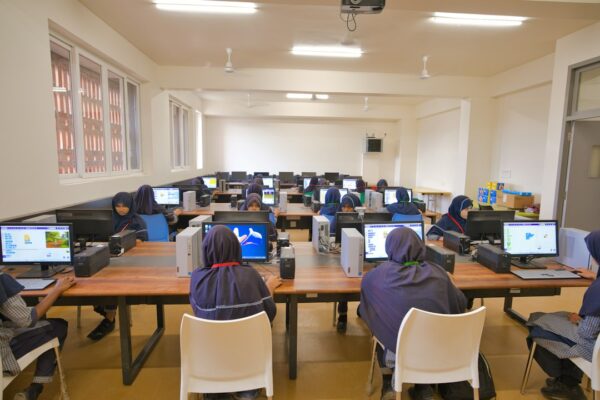
Students who use AI generally score worse at school
A recent OECD report reveals that students who use AI tools for studying tend to perform worse academically than their peers who do not. This study highlights the complex relationship between AI usage and educational outcomes, emphasizing the need for balanced and critical engagement with technology.
Students who use AI to help them study generally perform worse at school than those who do not, according to a recent OECD report. This study, which surveyed over 760,000 students across 91 countries, highlights the complex relationship between AI tool usage and academic performance. The findings suggest that while some AI applications can be beneficial, excessive reliance on these tools may hinder students’ learning outcomes.
The OECD’s Programme for International Student Assessment (PISA) collected data in 2025, marking the first comprehensive analysis of AI’s impact on education since its mainstream adoption. The results reveal a significant trend: students who never use AI typically outperformed their peers who do in subjects like science. This raises critical questions about how AI tools are integrated into learning environments and their effect on students’ cognitive skills. The report indicates that students who rely on AI for basic tasks may not develop the necessary skills to tackle more complex problems, suggesting a potential long-term detriment to their educational journey.
Understanding the Performance Metrics
Analysis of the PISA data indicates that students who use AI for specific tasks, such as summarizing texts or drafting assignments, tend to score lower. Conversely, those who utilize AI for broader learning assistance, like preliminary research, show less of a performance drop. This suggests that the context in which AI is used plays a crucial role in determining its effectiveness. For instance, students who employ AI to enhance their understanding of a subject through interactive learning may experience different outcomes compared to those who use it merely as a shortcut for completing assignments.
Interestingly, the frequency of AI usage also impacts performance metrics. Students who engage with AI tools infrequently—once or twice a year—tend to fare better than those who rely on them daily. This implies that a balanced approach to AI usage may be key, with moderate use potentially fostering better academic outcomes. The OECD report emphasizes that students who are trained to critically assess the quality of AI-generated information appear to benefit more from these tools. Those who reported using AI weekly for general learning purposes outperformed non-users, which suggests that teaching students how to interact with AI can enhance their learning experience. Furthermore, a study by Brainly highlights that students who actively engage with AI tools in a reflective manner, rather than passively accepting the information provided, tend to develop better analytical skills, which are essential in academic settings.
In addition, the report highlights disparities in AI usage across different socioeconomic backgrounds. Students from more affluent families are more likely to use AI tools, reflecting better access to technology and resources. This raises concerns about equity in education, as students from disadvantaged backgrounds may miss out on potential learning benefits. The implications of this divide are significant; as technology becomes increasingly integrated into educational practices, those without access may find themselves at a disadvantage, further widening the achievement gap. The OECD’s findings underscore the need for educational institutions to address these disparities to ensure that all students can benefit from technological advancements.
As these students prepare for careers that increasingly rely on cognitive skills, their reliance on AI tools may undermine their ability to think critically and solve complex problems.
Career Ahead analysis finds that the negative impact of AI on academic performance is particularly concerning for students in technology fields. As these students prepare for careers that increasingly rely on cognitive skills, their reliance on AI tools may undermine their ability to think critically and solve complex problems. This trend could have long-term implications for their future career prospects. The report warns that if students do not develop a strong foundation in critical thinking and problem-solving, they may struggle to adapt to the evolving demands of the workforce, where independent thought and innovation are highly valued.
The Broader Implications for Education and Employment
The findings from the OECD report resonate beyond individual academic performance. They highlight a growing concern among educators and policymakers about the role of technology in learning. As AI becomes more integrated into educational systems, there is a pressing need to understand its effects on student development. The report suggests that while AI can serve as a valuable educational tool, it should not replace traditional learning methods that promote critical thinking and creativity.
For high school and college students, especially those pursuing technology-related fields, the challenge lies in balancing the use of AI tools with the development of essential skills. The ability to analyze, synthesize, and critically evaluate information is paramount in today’s job market. Students who rely too heavily on AI may find themselves lacking the foundational skills necessary for success in their careers. This concern is echoed in a recent article by Capenetwork, which emphasizes the importance of fostering an educational environment that encourages independent thought alongside technological proficiency.
Moreover, the OECD report’s findings may prompt educational institutions to rethink their approach to technology in the classroom. There is potential for curricula to evolve, incorporating training on how to use AI effectively while also emphasizing the importance of independent thinking and problem-solving abilities. This could help students navigate the complexities of modern learning environments. As the education sector grapples with these challenges, it is essential for students to remain aware of their learning habits. The trend of lower scores among AI users serves as a reminder that technology should augment, not replace, traditional learning methods. Developing a strong foundation in critical thinking and problem-solving will be vital for students’ success in both academic and professional settings.
Looking ahead, the ongoing evolution of AI in education will likely continue to spark debate among educators, students, and policymakers. As technology advances, the dialogue surrounding its role in learning will be crucial in shaping future educational practices. Students and educators alike will need to adapt to these changes while ensuring that the core principles of effective learning remain intact. The OECD report serves as a call to action for all stakeholders in education to prioritize skill development alongside technological integration, ensuring that students are well-prepared for the challenges of the future.
Kumar linked policy success to institutional capacity, while industry examples show curricula and hiring tests shifting towards applied problem-solving.
The OECD report serves as a call to action for all stakeholders in education to prioritize skill development alongside technological integration, ensuring that students are well-prepared for the challenges of the future.
Frequently Asked Questions
How can high school students improve their grades without using AI?
Career Ahead research finds that high school students can enhance their academic performance by focusing on active learning strategies, such as engaging in group discussions, practicing problem-solving exercises, and seeking feedback from teachers. These methods encourage deeper understanding and retention of material.
What are the risks of using AI tools for college students in tech?
Career Ahead analysis shows that college students in technology fields may risk developing a reliance on AI tools, which can hinder their critical thinking and problem-solving skills. This reliance may lead to difficulties in real-world applications where independent analysis is required.
What should high school students do about their academic performance if they use AI tools?
Students who use AI tools should reflect on their study habits and consider reducing their reliance on technology for learning. Engaging in traditional study methods, such as note-taking and collaborative learning, can help reinforce their understanding of the material.
Written by Career Ahead AI. AI can make mistakes, so verify key facts. Report errors to support@careeraheadonline.com.
Career Ahead AI is Career Ahead Magazine's in-house AI newsroom, reporting on careers, education, jobs and business. It produces original summaries and analysis drawn from publicly available sources, with those sources credited, and operates under the editorial oversight of the Career Ahead team. AI can make mistakes, so please tell us when something looks wrong. Corrections, copyright or takedown requests…
India’s teenagers are beginning UPSC prep years before they’re eligible. Experts and toppers say the trick is balance—board grades, degree depth, answer-writing…


Education & University Insights

 Education & University Insights