No products in the cart.

Sustainable Materials Science as the Institutional Engine for Microplastic Mitigation
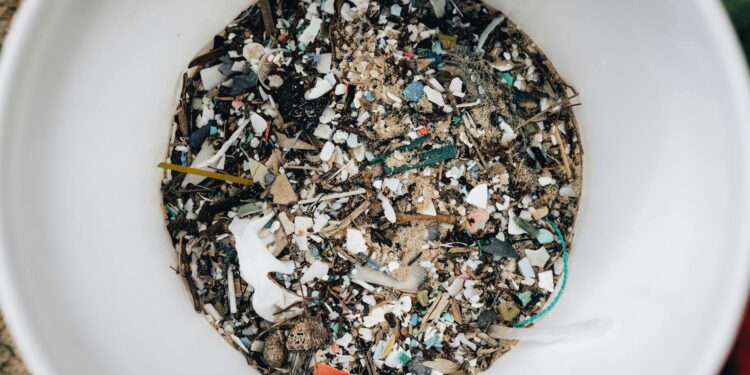
Macro-Scale Plastic Accumulation and the SDG Imperative Since the turn of the millennium, global plastic production has risen from 250 Mt to 470 Mt annually,…

The expanding portfolio of biodegradable polymers, enzymatic recycling platforms, and AI-driven detection systems is reshaping career capital across materials science, chemical engineering, and policy institutions, positioning the sector as a decisive lever for the United Nations Sustainable Development Goals.
Macro-Scale Plastic Accumulation and the SDG Imperative
Since the turn of the millennium, global plastic production has risen from 250 Mt to 470 Mt annually, with an estimated 150 Mt of micro- and nanoplastics now dispersed across marine, freshwater, and terrestrial matrices [1]. The United Nations’ SDG 12 (Responsible Consumption and Production) and SDG 14 (Life Below Water) explicitly target a reduction in plastic waste per capita by 2030, yet current waste-to-energy conversion rates hover at 15% globally, underscoring a systemic supply-demand mismatch [2].
Institutionally, the European Commission’s Plastics Strategy (2024) earmarks €1.2 bn for circular-economy research, while the U.S. EPA’s 2025 Plastics Action Plan introduces mandatory reporting for polymer manufacturers exceeding 500 kt of annual output. These policy vectors generate a regulatory scaffolding that compels firms to internalize externalities, thereby redefining the risk calculus for capital allocation.
Fragmentation Pathways and Fate of Micro- and Nanoplastics

Microplastic formation is not a singular event but a cascade of mechanical, photolytic, and hydrolytic processes. Recent field studies reveal that polyethylene (PE) fragments experience a size-reduction rate of 0.3% yr⁻¹ under UV exposure, while polyvinyl chloride (PVC) undergoes accelerated dechlorination in saline environments, yielding nanoplastics (< 100 nm) that readily translocate across biological membranes [3].
The transport vector is equally complex: riverine flux models attribute a significant portion of oceanic microplastic load to major basins, with seasonal discharge peaks aligning with monsoon cycles. This asymmetry in source-sink dynamics necessitates a systems-level approach that integrates hydrological modeling with polymer degradation kinetics, a niche currently occupied by interdisciplinary research consortia such as the Global Plastic Pollution Initiative (GPPI).
Detection Architecture: From Spectroscopy to AI-Enabled Sensing
Detecting particles below 20 μm remains a bottleneck, driving a surge in instrumentation that blends hyperspectral imaging with machine-learning classification. A 2024 pilot in the North Sea deployed a drone-borne lidar system coupled with a convolutional neural network, achieving a high true-positive rate for polyethylene fragments in situ [4].
Detection Architecture: From Spectroscopy to AI-Enabled Sensing Detecting particles below 20 μm remains a bottleneck, driving a surge in instrumentation that blends hyperspectral imaging with machine-learning classification.
Parallelly, lab-scale flow cytometry adapted for nanoplastics leverages fluorescence-tagged polymer analogs, reducing analysis time from days to minutes. The commercial translation of these platforms is evident in start-ups like NanoSight Labs, which secured funding to scale AI-driven water-monitoring modules for municipal utilities. The institutional adoption curve mirrors that of early satellite remote sensing, where initial research investments paved the way for industry-wide standardization within a decade.
You may also like
 AI & Technology
HFCL Stock Rises Amid AI, Defence Demand
HFCL's stock has tripled in the last six months, driven by a surge in orders for artificial intelligence and defence, indicating a growing demand for…
Read More →Degradation Modalities: Biological, Chemical, and Physical Vectors
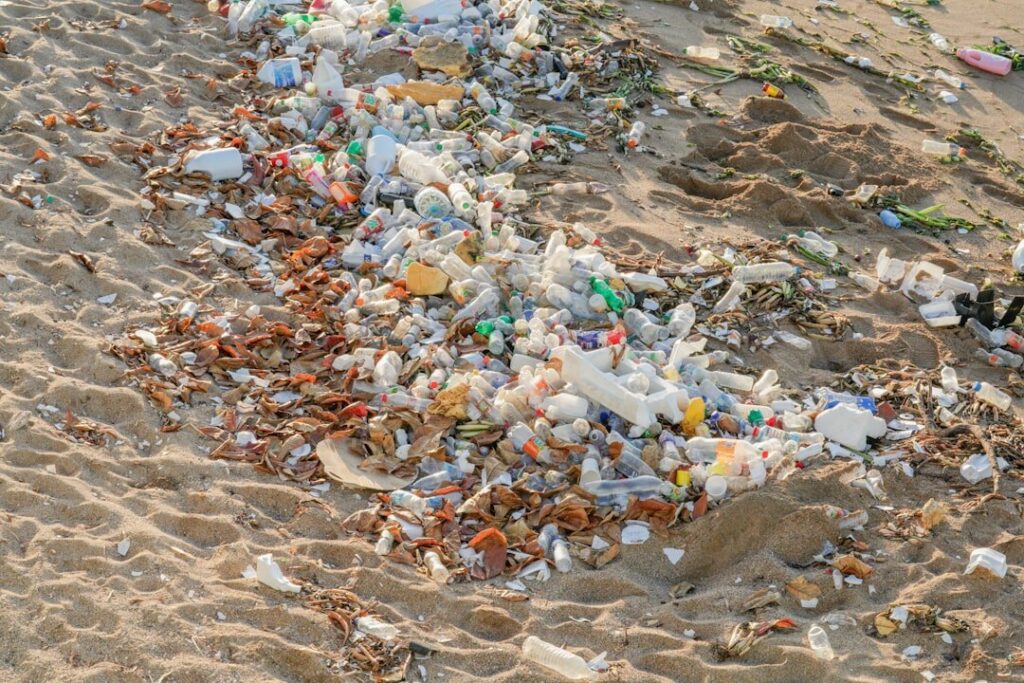
Enzymatic depolymerization has moved from proof-of-concept to pilot production. Carbios’ engineered PETase achieved a high depolymerization yield at 60°C, translating into a projected reduction in virgin PET demand for beverage packaging by 2028 [5]. Chemical routes, such as solvolysis of polyamide via ionic liquids, demonstrate a significant energy-reduction relative to conventional pyrolysis, though scalability remains constrained by solvent recovery costs.
Physical interventions—microwave-assisted oxidation and plasma-based surface activation—offer rapid fragmentation but generate secondary emissions that must be accounted for in life-cycle assessments (LCAs). Integrated LCA frameworks, now mandated under the EU’s Circular Economy Action Plan, quantify net carbon savings, revealing that enzymatic routes outperform chemical pathways in CO₂-equivalent terms when cradle-to-gate emissions are included [6].
Externalities: Health, Economic, and Societal Cost Matrices
Human exposure pathways are increasingly quantified. A 2023 meta-analysis linked microplastic ingestion to an elevation in serum inflammatory markers across cohort studies, translating into an estimated health burden [7]. Economically, the World Bank’s 2022 “Cost of Plastic Pollution” report assigned a global external cost, with a significant portion attributed to ecosystem services loss.
Socially, consumer perception surveys indicate a willingness to pay a premium for products certified as “microplastic-free,” yet price elasticity analyses show a threshold premium beyond which market uptake stalls. This asymmetry underscores the need for institutional mechanisms—such as eco-labeling standards and public procurement criteria—that can bridge the gap between consumer intent and purchasing behavior.
Capital Flows and Institutional Investment in Sustainable Materials
Venture capital allocated to plastic-alternatives surged from $1.1 bn in 2019 to $2.8 bn in 2023, with biotech-driven recycling firms capturing a significant portion of the pie [8]. Concurrently, sovereign wealth funds have begun earmarking “green polymer” allocations; Norway’s Government Pension Fund Global announced a commitment to the Sustainable Materials Fund in 2024, citing alignment with fiduciary duty to mitigate climate-linked liabilities.
Career Vectors: Emerging Roles in Materials Science and Policy The confluence of regulatory pressure, technological maturation, and capital influx has generated distinct career trajectories:
Public-private partnerships (PPPs) are crystallizing around “material passports” that track polymer provenance across supply chains. The UK’s Materials Innovation Centre (MIC) pilots a blockchain-based registry, projecting a reduction in cross-border compliance costs for exporters of recycled polymers by 2027. Such institutional infrastructure not only de-risks investment but also creates a talent pipeline for compliance analysts, data architects, and polymer chemists.
Career Vectors: Emerging Roles in Materials Science and Policy
The confluence of regulatory pressure, technological maturation, and capital influx has generated distinct career trajectories:
You may also like
 AI & Technology
Data‑Driven Raise Negotiations Redefine Career Capital
Aiming for a 6%–17% increase positions the request well above the 3.1% average merit increase.
Read More → Polymer Lifecycle Engineers – specialists in LCA modeling, tasked with quantifying carbon footprints of novel biopolymers versus conventional plastics.
Enzymology Translational Scientists – bridge laboratory enzyme discovery with scale-up processes, often housed within corporate R&D labs or joint industry-academia labs.
AI-Enabled Environmental Sensors Developers – integrate hardware design with data-science pipelines, a role proliferating in environmental consultancy firms.
Circular Economy Policy Advisors – navigate the evolving legislative landscape, advising multinational corporations on compliance with EU, US, and Asian standards.
Academic programs are responding. MIT’s Department of Materials Science introduced a “Circular Polymers” track in 2025, enrolling graduate students, while the University of Cambridge launched a joint MSc in “Sustainable Materials and Regulatory Affairs,” funded by a £10 m industry consortium. These institutional shifts echo the post-World War II expansion of chemical engineering curricula, which aligned with the burgeoning petrochemical industry and redefined engineering as a cornerstone of economic mobility.
Projected Trajectory (2026-2031): Skills, Funding, and Market Share
2026-2028: Institutional funding peaks as EU’s Green Deal Phase II releases €3 bn for polymer research. Enzymatic recycling capacity is projected to reach 1.2 Mt yr⁻¹, capturing a significant portion of global PET demand. Demand for data-science expertise in sensor networks will rise by 35% YoY, driven by municipal water-quality mandates.
2029-2031: Market consolidation yields three dominant platforms—biodegradable polyesters, enzymatic PET loops, and AI-driven detection services—collectively accounting for a significant portion of the global plastic-alternative market. Employment in sustainable materials is expected to grow at a compound annual growth rate (CAGR) of 12%, outpacing the overall STEM employment CAGR (Bureau of Labor Statistics).
Interdisciplinary Skill Convergence: The most valuable career capital now resides at the nexus of enzymology, AI-enabled sensing, and life-cycle analytics, mirroring past systemic shifts in energy and automotive sectors.
The trajectory mirrors the historical diffusion of low-sulfur diesel, where regulatory thresholds, technological breakthroughs, and capital alignment produced a rapid market transition within a decade. In the microplastic arena, the structural shift is already underway, and the career capital accruing to professionals who master the intersection of polymer chemistry, systems engineering, and policy will define the next generation of institutional leadership.
Key Structural Insights
Regulatory Scaffolding as Capital Catalyst: Mandated reporting and material-passport standards are converting externalities into quantifiable risk metrics, unlocking private-sector investment at scale.
Interdisciplinary Skill Convergence: The most valuable career capital now resides at the nexus of enzymology, AI-enabled sensing, and life-cycle analytics, mirroring past systemic shifts in energy and automotive sectors.
- Trajectory Toward Market Consolidation: Within five years, a triad of sustainable polymer platforms will dominate, concentrating expertise and capital while establishing new institutional power structures around circular-economy governance.
Sources
You may also like
 Government & Policy
Wall Street’s $10 billion India hospital bet sparks a fight over bills | Career Outlook
Wall Street's $10 billion investment in Indian hospitals raises concerns about rising healthcare costs and access to care, mirroring challenges in the U.S. healthcare system.
Read More →[1] Challenges and opportunities in sustainable management of microplastics … — https://www.sciencedirect.com/science/article/pii/S0013935121014808
[2] Microplastic Pollution in the Environment: A Chemical Engineering … — https://www.mdpi.com/2073-4360/18/1/29
[3] Detection and degradation of microplastics in the environment: a review — https://pubs.rsc.org/en/content/articlehtml/2025/va/d5va00064e
[4] Training the next generation of plastics pollution … – Springer — https://link.springer.com/article/10.1186/s43591-023-00072-4
[5] Carbios Enzymatic PET Recycling – Corporate Sustainability Report 2024 — https://www.carbios.com/en/
[6] EU Circular Economy Action Plan – Life-Cycle Assessment Guidelines 2023 — https://ec.europa.eu/environment/circular-economy/
[7] Meta-analysis of microplastic health impacts 2023 — https://ehp.niehs.nih.gov/
[8] Venture Capital Trends in Sustainable Materials 2023 – PitchBook Data Inc. — https://pitchbook.com/