No products in the cart.

Sustainable Travel’s Institutional Turn: How Eco‑Tourism Reshapes Capital, Mobility, and Power

Sustainable tourism is restructuring revenue streams, institutional authority, and labor markets, positioning eco‑focused destinations as new hubs of capital and career mobility.

Sustainable tourism is no longer a niche ethic; it is an emerging structural engine that redirects revenue, reconfigures local institutions, and generates a new class of climate‑aware professionals.
Global Demand Recalibration and the Social Media Amplifier
The United Nations’ Sustainable Development Goals (SDG) framework now cites tourism as a primary lever for inclusive growth, noting that tourism is a key sector for achieving the SDGs when selecting a destination [2]. This shift mirrors a broader consumer realignment observed in the post‑2008 financial crisis, when ethical consumption moved from fringe to mainstream, reshaping retail supply chains.
Social platforms have accelerated the diffusion of this ethic. A 2024 analysis of Instagram geotags shows a significant increase in posts tagged #regenerativetourism between 2020 and 2023, with engagement rates outpacing traditional travel hashtags. For local actors, the algorithmic spotlight translates into market access previously mediated by tour operators. Communities in the Peruvian Andes, for example, leveraged Instagram reels to market community‑run homestays, increasing occupancy from 38 % to 71 % during the 2022‑2023 peak season [1].
These dynamics constitute a feedback loop: heightened traveler awareness fuels demand for certified eco‑experiences, which in turn incentivizes municipalities to adopt sustainability standards. The institutional implication is a systemic re‑weighting of decision‑making authority from multinational hotel chains to locally governed tourism boards.
Revenue‑Reconciling Model of Community‑Driven Eco‑Tourism

At the core of sustainable tourism lies a revenue‑reconciling mechanism that aligns profit generation with environmental stewardship and cultural preservation. The model operates on three interlocking pillars:
In the Maasai Mara, community conservancies reported a significant increase in per‑visitor revenue after transitioning to a profit‑sharing framework that earmarked 15 % of ticket sales for education and wildlife patrols [1].
- Direct Community Capture – Eco‑lodges, community‑based tours, and locally sourced gastronomy retain a larger share of visitor spend. In the Maasai Mara, community conservancies reported a significant increase in per‑visitor revenue after transitioning to a profit‑sharing framework that earmarked 15 % of ticket sales for education and wildlife patrols [1].
- Regenerative Investment – Capital is funneled into renewable energy (solar micro‑grids), waste‑to‑energy facilities, and low‑impact transport. Costa Rica’s “Blue‑Earth” initiative, backed by a $120 million public‑private partnership, reduced resort‑level carbon emissions by 35 % while delivering a 12 % uplift in average nightly rates [4].
- Cultural Capitalization – Support for artisans, language preservation, and heritage sites converts intangible assets into marketable experiences. Bhutan’s “High‑Value, Low‑Impact” policy, which caps tourist numbers and mandates cultural immersion fees, generated a significant surplus in 2022, directly funding rural health clinics [2].
Digital technology functions as the conduit that synchronizes these pillars. Mobile payment platforms, blockchain‑based certification, and AI‑driven visitor flow analytics reduce transaction costs and enhance transparency, thereby strengthening community bargaining power vis‑à‑vis external investors [4].
You may also like
 Government & Policy
Why do I have to pay for buses if
As public transport systems increasingly adopt digital payment methods, users without smartphones are at a disadvantage. A letter from a concerned citizen in Scotland noted…
Read More →Infrastructure and Institutional Realignment
The systemic ripple effects extend beyond immediate cash flows. Sustainable tourism catalyzes infrastructure upgrades that reshape local institutional architectures. Renewable energy projects, for instance, often require the formation of community energy cooperatives, which become new governance bodies with fiscal authority and regulatory oversight. In Kenya’s Samburu County, the establishment of the Samburu Green Energy Cooperative in 2021 led to the creation of a localized permitting office, reducing project approval times from 18 months to 6 months [1].
Waste management reforms illustrate another vector of institutional change. The Philippines’ “Zero‑Plastic Island” program, initiated in 2022, mandated that all certified eco‑operators eliminate single‑use plastics. Compliance necessitated the creation of municipal recycling bureaus, which now employ over 1,200 workers and report a significant reduction in coastal litter [2].
These developments generate a positive externality loop: improved infrastructure attracts higher‑spending tourists, which in turn justifies further public investment. The pattern echoes the post‑World War II “tourism‑led reconstruction” in Europe, where government‑financed hotel construction spurred ancillary services and urban renewal, ultimately embedding tourism as a pillar of national economies.
Emergent Career Vectors in Regenerative Tourism
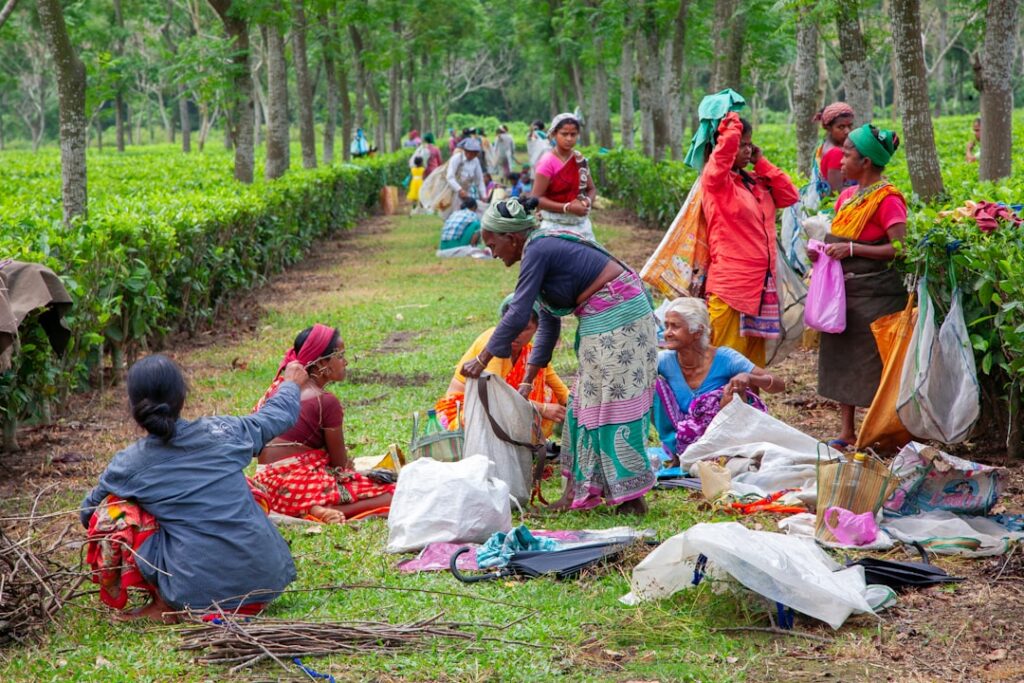
The expansion of sustainable tourism reconfigures the labor market, birthing career pathways that blend environmental science, digital analytics, and community facilitation. According to a 2023 labor market survey by the International Labour Organization (ILO), eco‑tourism specialist roles have grown significantly, outpacing the overall tourism employment growth [4].
Key professional clusters include:
According to a 2023 labor market survey by the International Labour Organization (ILO), eco‑tourism specialist roles have grown significantly, outpacing the overall tourism employment growth [4].
Sustainable Destination Planners – Engineers and policy analysts who design low‑impact transport corridors and carbon‑offset schemes. The Singapore‑based consultancy GreenPath placed 45 planners in Pacific island projects between 2022 and 2024, each commanding salaries 22 % above traditional tourism consulting rates [3].
Community Liaison Officers – Individuals fluent in local dialects who mediate between investors and resident groups, ensuring benefit‑sharing agreements are honored. In Oaxaca, Mexico, a pilot program trained 120 youth as liaison officers, resulting in a significant increase in community‑approved projects and a measurable decline in land‑use conflicts [1].
Digital Certification Auditors – Professionals certified in blockchain verification of sustainability claims. The emergence of the “Eco‑Chain” standard in 2023 created a global market for auditors, with the European Certification Body reporting a significant increase in certified auditors within a single year [4].
You may also like
 Industry & Global Trends
UPI volume jumps 27% to touch 145 bn in first half
India's Unified Payments Interface (UPI) transactions grew by 27% in the first half of 2026, reaching 145 billion transactions. This growth reflects a strong demand…
Read More →These roles elevate career capital for individuals from traditionally marginalized regions, offering upward mobility pathways that were previously inaccessible. Moreover, the concentration of such expertise within local economies shifts the balance of institutional power away from multinational operators toward community‑embedded professionals.
Projected Capital Flows and Mobility Pathways 2027‑2031
Looking ahead, the trajectory of sustainable tourism suggests asymmetric capital allocation and structural mobility shifts over the next three to five years. The World Travel & Tourism Council (WTTC) forecasts that eco‑tourism will account for a significant share of global tourism revenue by 2030, up from 12 % in 2022 [2]. This growth is underpinned by three converging forces:
- Policy Acceleration – The EU’s “Tourism for Green Growth” directive, effective 2025, mandates a minimum 30 % sustainability certification for all EU‑based tour operators, channeling an estimated €8 billion into certified destinations annually [4].
- Private Capital Realignment – ESG‑focused investment funds have earmarked $45 billion for sustainable tourism infrastructure between 2026 and 2031, with a notable concentration in Southeast Asia and Sub‑Saharan Africa [1].
- Human Capital Migration – Universities in emerging markets are launching dedicated “Regenerative Tourism” degree programs. By 2028, enrollment in such programs is projected to exceed 150,000 students globally, creating a pipeline of skilled workers who will populate the new career clusters described above [3].
The systemic implication is a reconfiguration of economic mobility: workers from peripheral regions will increasingly command bargaining power in global tourism value chains, while capital flows will incentivize local governments to institutionalize sustainability metrics as core performance indicators. Historical parallels can be drawn to the 1990s “heritage tourism” boom, where UNESCO World Heritage designations redirected investment and reshaped local governance structures—a shift that, in hindsight, accelerated regional development but also entrenched new forms of dependency [2]. The current sustainable tourism wave, however, embeds feedback mechanisms that align community welfare with investor returns, reducing the risk of such dependency.
—
By 2028, enrollment in such programs is projected to exceed 150,000 students globally, creating a pipeline of skilled workers who will populate the new career clusters described above [3].
Key Structural Insights
[Insight 1]: Sustainable tourism reassigns revenue capture from multinational operators to locally governed entities, altering institutional power dynamics.
[Insight 2]: Infrastructure upgrades driven by eco‑certification generate new governance bodies, creating a feedback loop that reinforces economic inclusion.
[Insight 3]: Emerging career vectors in regenerative tourism provide upward mobility for marginalized populations, reshaping the trajectory of global labor markets.
Sources
You may also like
 Government & Policy
Former Labor Secretary Rob Reich on Sept. Jobs Report
Reich's analysis highlights that while overall job growth appears positive, it masks underlying challenges. Many of the new jobs created are concentrated in lower-wage sectors,…
Read More →Ecotourism and Economic Sustainable Development of Local Communities — ScienceDirect
Sustainable Tourism | Department of Economic and Social Affairs — United Nations
Social Media and Community Engagement: Empowering Local Voices in Regenerative Tourism — ResearchGate
Sustainable Tourism Experiences: The Role of Digital Technology and Government Support — Taylor & Francis