No products in the cart.

Why are humans surrendering hated tasks to AI?

Humans are choosing to hand over their most hated chores to AI, not out of fear but to reclaim creative and empathic capacity, reshaping the future of work.

Even when a task feels personally intolerable, people often keep doing it themselves rather than delegating to a machine.
The Psychology of Voluntary Automation
The willingness to hand over work to an algorithm does not arise from a cold calculation of efficiency alone. Studies show that workers draw a line between duties they view as merely tedious and those they consider core to their identity. When a task is repetitive, mundane, or demands a high degree of precision, the perceived cost of human error outweighs the discomfort of relinquishing control. In contrast, activities that involve judgment, storytelling, or direct customer contact retain a “human touch” premium, even if they are equally boring.
This split reflects a deeper cognitive bias: people overvalue the symbolic meaning of personal effort. The act of completing a chore, however trivial, reinforces a sense of agency. When a machine offers to take that chore, the brain registers a subtle loss of ownership, prompting resistance that can persist until the task’s pain points become undeniable.
Productivity Pressures and the AI Adoption Curve
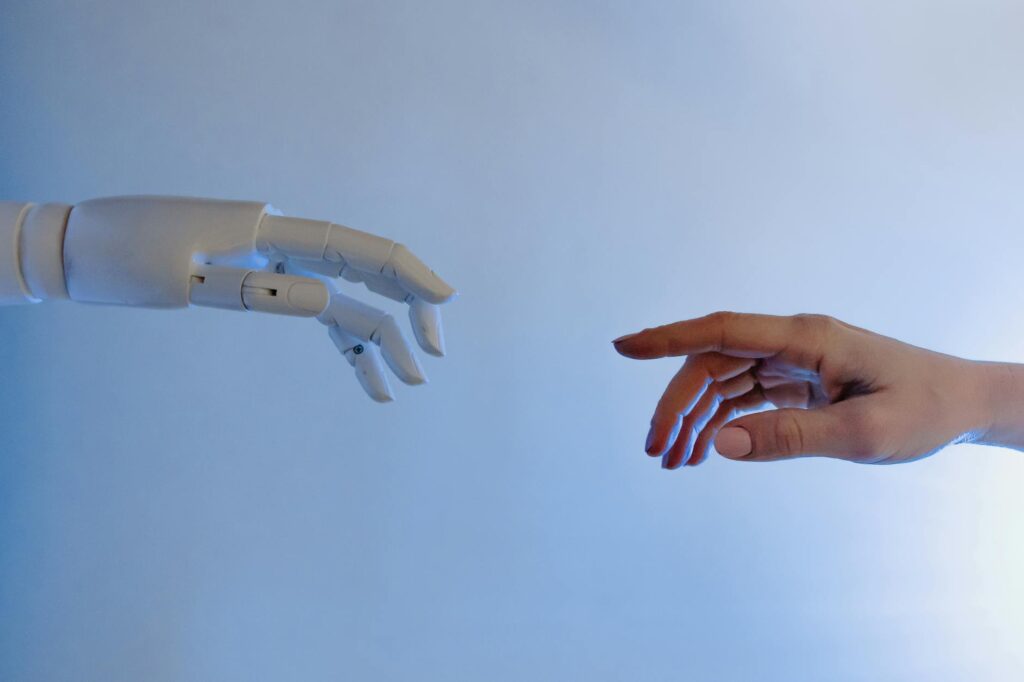
Large U.S. firms are moving quickly to embed AI into their workflows. A recent survey indicates that a significant majority of these companies plan to use AI within the next year to automate tasks once handled by humans. The driver is not a desire to replace staff but a relentless push for higher output at lower marginal cost.
First, AI excels at scaling repetitive processes. In finance, algorithmic reconciliation can process thousands of entries in seconds, freeing analysts to focus on interpretation. In marketing, copy-generation tools draft baseline content, allowing creatives to refine tone and narrative. The result is a measurable lift in throughput that corporate boards can quantify in quarterly reports.
By shifting the low-skill, high-volume layer to a machine, firms claim a tighter error margin and a more predictable output.
Second, the competitive pressure to adopt AI creates a bandwagon effect. Companies that lag risk being outpaced on both price and speed. When peers announce AI-driven efficiencies, internal stakeholders feel compelled to follow suit, even if the immediate benefit to their own unit appears modest.
Third, the promise of AI reduces the perceived risk of human error. Human operators are vulnerable to fatigue, bias, and simple slip-ups, especially in data-heavy environments. By shifting the low-skill, high-volume layer to a machine, firms claim a tighter error margin and a more predictable output.
Yet the adoption curve is uneven. Industries that hinge on nuanced judgment—legal counsel, strategic consulting, high-touch healthcare—show slower AI uptake. The reason is not technological limitation but the belief that a human’s contextual awareness adds irreplaceable value. This belief sustains a market for hybrid roles where humans supervise, interpret, and intervene when AI outputs deviate from expectations.
Skill Gaps That Emerge When Routine Fades
When machines absorb the routine, the remaining human work pivots toward creativity, empathy, and complex problem-solving. The labor market is already reflecting this shift: hiring patterns reveal a contraction in employment, with a significant decrease in the number of people being hired.
Our view is that this contraction will not translate into a net loss of employment but rather a reshuffling of career capital. Workers who once built résumés on volume—processing invoices, logging calls, or formatting reports—must now demonstrate capabilities that machines cannot replicate. Narrative construction, strategic framing, and relationship management become the new currencies of employability.
Traditional classroom training is insufficient; experiential learning, cross-functional projects, and mentorship loops provide the context where human-centric skills are honed.
To bridge the emerging gap, organizations need to invest in upskilling programs that emphasize divergent thinking and emotional intelligence. Traditional classroom training is insufficient; experiential learning, cross-functional projects, and mentorship loops provide the context where human-centric skills are honed. Moreover, performance metrics must evolve to reward outcomes that stem from these higher-order abilities rather than sheer output counts.
The Hybrid Future: From Surrender to Symbiosis

The ultimate workplace will be a hybrid ecosystem where humans and AI co-create value. In this model, surrendering hated tasks is not an act of defeat but a strategic reallocation of cognitive resources.
Our view is that as we enter a new stage in the development of AI, it’s essential to recognize the importance of maintaining human cognitive agency. By offloading routine tasks to machines, employees can focus on higher-value work that requires creativity, empathy, and complex problem-solving. This partnership between humans and AI can lead to increased productivity and innovation, but it requires a practiced commitment to keeping human strengths intact.
A practical illustration emerges in product development teams that use AI to generate design prototypes. Engineers review the suggestions, inject user empathy, and iterate on concepts that blend computational speed with human nuance. The result is faster time-to-market without sacrificing the brand’s emotional resonance.
However, the symbiosis is fragile. If organizations treat AI as a mere cost-cutting tool rather than a collaborative partner, they risk eroding trust and stifling the very creativity they hope to unleash. Leadership must therefore cultivate a culture where AI is framed as an augmenting colleague, not a replacement.
The future of work will be defined not by how many jobs AI can replace, but by how effectively humans can integrate machine assistance into the fabric of their professional identities.
In sum, the voluntary surrender of disliked tasks reveals a deeper reconfiguration of work: the elimination of low-value labor, the elevation of uniquely human strengths, and the emergence of a collaborative human-AI frontier. The future of work will be defined not by how many jobs AI can replace, but by how effectively humans can integrate machine assistance into the fabric of their professional identities.
The path forward demands that individuals and firms alike recognize the paradox of surrender: by letting go of the tasks we despise, we reclaim the capacity to shape work that matters.
Written by Career Ahead AI. AI can make mistakes, so verify key facts. Report errors to support@careeraheadonline.com.