No products in the cart.

Tariff Shockwaves Reshape Supply‑Chain Architecture Across the Global South

duties force firms to rewire production, accelerating a regionalization pivot that redefines career capital, institutional leverage,…

Rising U.S. duties force firms to rewire production, accelerating a regionalization pivot that redefines career capital, institutional leverage, and economic mobility in Southeast Asia and Latin America.
Tariff‑Induced Reconfiguration of Global Trade Flows
Since the 2022 escalation of U.S.–China tariffs, the average ad‑valorem duty on high‑tech components has risen from 7 % to 14 % across the United States’ “Phase II” schedule, adding an estimated $120 billion in annual import costs for U.S. manufacturers [1]. The 2025 “Strategic Trade Resilience Act” introduced a supplemental 10 % surcharge on all non‑U.S.‑origin semiconductor assemblies, inflating the cost of a typical smartphone bill of materials by $30 per unit [2].
These fiscal pressures intersected with pandemic‑induced logistics bottlenecks and the 2024 European Green Deal’s carbon‑border adjustment, creating a confluence of “trade cost inflation” that erodes the comparative advantage of long‑haul, low‑cost offshore production. The macro‑environment therefore compels firms to treat tariff exposure as a systemic risk variable, comparable to currency volatility or geopolitical instability.
Regionalization Matrix: Southeast Asia vs. Latin America
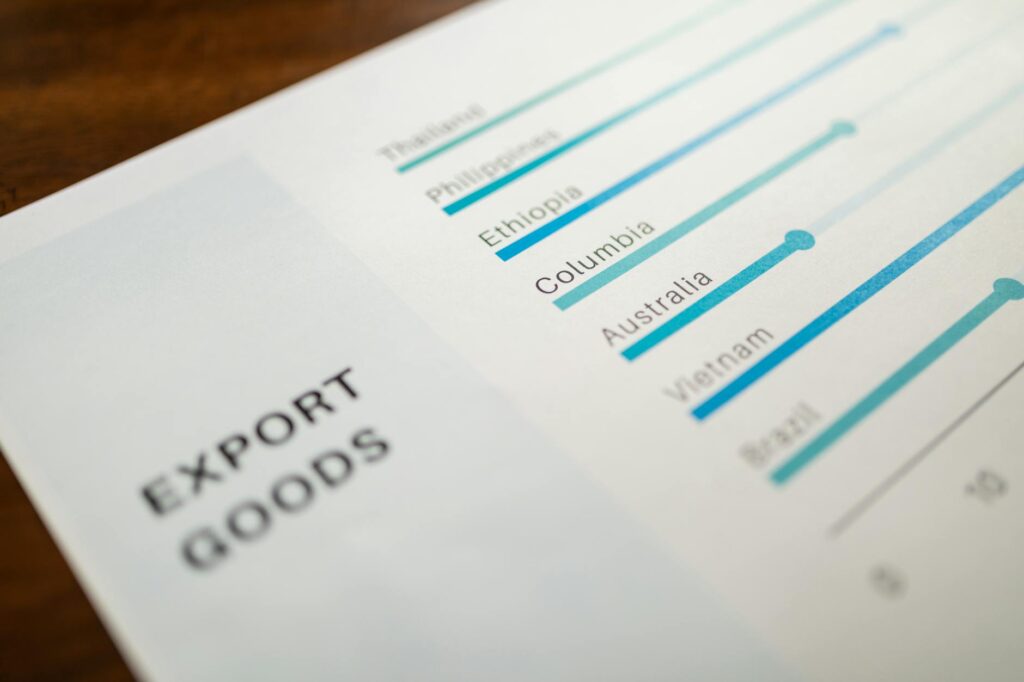
The response bifurcates along two distinct regional corridors, each leveraging institutional assets and geographic proximity to the United States.
| Dimension | Southeast Asia (SEA) | Latin America (LA) |
|---|---|---|
| Nearshoring Share (2024) | 22 % of U.S. imports from SEA (up 6 pp YoY) [3] | 18 % of U.S. imports from LA (up 5 pp YoY) [3] |
| Average Tariff Reduction (2025‑2029) | 4 % via ASEAN‑U.S. Trade and Investment Framework (TTIF) agreements [4] | 3 % via US‑Mexico‑Canada Agreement (USMCA) extensions and MERCOSUR‑U.S. dialogue [4] |
| Logistics Cost Index (2024) | 1.12 (benchmark = 1.0 for U.S. domestic) [5] | 1.27 (higher due to inland transport constraints) [5] |
| Digital Trade Infrastructure | 78 % of firms report end‑to‑end ERP integration across borders [6] | 61 % of firms report comparable integration [6] |
Southeast Asia’s advantage derives from the ASEAN “single market” legal framework, which reduces customs processing time by an average of 2 days per shipment [4]. Conversely, Latin America benefits from the proximity of major ports (e.g., Veracruz, Santos) to U.S. Gulf and Atlantic corridors, shortening ocean transit by 1‑2 weeks relative to East‑Asian routes.
Trade and Investment Framework (TTIF) agreements [4] 3 % via US‑Mexico‑Canada Agreement (USMCA) extensions and MERCOSUR‑U.S.
Both regions have witnessed a surge in “dual‑sourcing” contracts: 41 % of multinational electronics firms now split production between Vietnam and Mexico, compared with 27 % in 2022 [6]. This pattern signals a structural shift from single‑source offshore dependency to a multi‑regional resilience architecture.
You may also like
 Government & Policy
Global South Climate Payments Tied to Carbon Pricing
Economist Michael Greenstone argues that developing nations should receive compensation for climate damage, but only if they adopt carbon pricing. This approach aims to link…
Read More →Institutional Catalysts and Financial Realignment
Tariff volatility has reprogrammed capital allocation at the institutional level. Sovereign wealth funds in Singapore and Chile have increased exposure to “resilience‑linked” private equity funds by 18 % and 22 % respectively between 2023 and 2025, citing risk‑adjusted return models that weight tariff exposure as a downside factor [7].
Banks in the United States have revised loan‑to‑value (LTV) ratios for firms with >30 % of bill of materials sourced from high‑tariff jurisdictions, lowering LTV from 70 % to 55 % in the 2025 credit cycle [8]. This credit tightening accelerates the migration toward “regional capital hubs,” where financing is sourced locally to avoid cross‑border risk premiums.
Regulatory bodies are also adapting. The U.S. International Trade Commission’s 2025 “Supply‑Chain Resilience Review” introduced a mandatory disclosure of tariff‑risk exposure for firms exceeding $500 million in annual revenue, creating a new compliance layer that drives transparency and informs investor decisions [9].
Human Capital Reallocation in Resilient Supply Chains
The reconfiguration of production networks reshapes career capital in two interrelated dimensions: skill set relevance and institutional mobility.
Human Capital Reallocation in Resilient Supply Chains The reconfiguration of production networks reshapes career capital in two interrelated dimensions: skill set relevance and institutional mobility.
Skill Set Realignment – Demand for “regional supply‑chain architects” has risen 38 % YoY in SEA and 31 % YoY in LA, according to the 2025 Deloitte Global Talent Survey [10]. These roles combine expertise in customs law, digital trade platforms, and agile manufacturing. Traditional “global logistics manager” positions have contracted by 12 % globally, reflecting the reduced emphasis on long‑haul coordination.
You may also like
 Government & Policy
FEMA Rules Change for Dollar Earnings by Freelancers, YouTubers
Freelancers, content creators, and service exporters must now declare the full value of services exported to overseas clients under new FEMA regulations.
Read More →Institutional Mobility – Professionals with bilingual proficiency (English‑Mandarin, English‑Spanish/Portuguese) and certifications in Incoterms 2020 have seen a 2.4‑fold increase in cross‑border placement rates within multinational firms [11]. Moreover, university programs in “Supply‑Chain Resilience Engineering” have proliferated, with 14 new graduate tracks launched across ASEAN and Latin American institutions between 2023 and 2025, collectively graduating 3,200 specialists annually [12].
These trends indicate that career trajectories now hinge on the ability to navigate institutional interfaces—customs agencies, trade ministries, and regional trade blocs—rather than solely on operational logistics expertise.
Projected Trajectory to 2030: Structural Shifts and Mobility
Looking ahead, three converging forces will define the next 3‑5 years of supply‑chain architecture in the Global South:
- Policy Consolidation – ASEAN’s 2026 “Tariff Harmonization Initiative” aims to cap intra‑regional duties at 2 % for electronics, while MERCOSUR’s 2027 “Integrated Customs Digitization” project targets a 30 % reduction in clearance time. Successful implementation will embed lower‑cost, high‑certainty buffers into the regional supply‑chain calculus [13].
- Technology Diffusion – Adoption of blockchain‑based provenance tracking is projected to reach 62 % of high‑value shipments in SEA and 48 % in LA by 2029, providing real‑time tariff‑risk visibility that underpins dynamic sourcing decisions [14].
- Labor Market Realignment – The International Labour Organization estimates that 1.1 million new “regional supply‑chain analyst” positions will be created across both regions by 2028, outpacing the 750 k net loss in traditional offshore logistics roles. This net gain translates into upward economic mobility for workers transitioning from low‑skill manufacturing to knowledge‑intensive coordination functions [15].
Collectively, these dynamics suggest a durable pivot toward “regionalized resilience” as the dominant paradigm. Companies that embed tariff‑risk analytics into their core strategic planning will capture asymmetric gains in cost efficiency and market responsiveness, while workers who acquire cross‑border regulatory fluency will command premium career capital within the emerging institutional architecture.
This net gain translates into upward economic mobility for workers transitioning from low‑skill manufacturing to knowledge‑intensive coordination functions [15].
Key Structural Insights
> Tariff Exposure as Systemic Risk: The escalation of U.S. duties has transformed tariff costs from a marginal expense into a core variable that reshapes global production topology.
> Dual‑Regional Sourcing as Institutional Lever: Southeast Asia and Latin America are converging as complementary nodes, each exploiting distinct legal and logistical assets to mitigate tariff shocks.
> * Career Capital Realignment: The rise of regional supply‑chain architect roles redefines professional mobility, privileging regulatory fluency and digital trade expertise over traditional logistics execution.
Sources
You may also like
 Government & Policy
Goyal Engages US Trade Representative on Proposed Pact
India's Commerce Minister Piyush Goyal and US Trade Representative Jamieson Greer engaged in significant discussions on October 2, 2026, during the G20 trade ministers' meeting…
Read More →[1] How US-China Tariffs Are Reshaping Global Supply Chains: 2026 — GrowthHQ
[2] Resilient Global Supply Chains in Times of Escalating Trade Costs — UNIDO Policy Brief
[3] Navigating Trade and Tariff Impacts — Deloitte US
[4] Special Issue: Global Supply Chain Reconfiguration Under Tariff — Annals of Operations Research
[5] Logistics Cost Index 2024 — World Bank
[6] Dual‑Sourcing Trends Report 2025 — McKinsey & Company
[7] Sovereign Wealth Fund Allocation Review 2025 — IMF Working Paper
[8] U.S. Bank Credit Policy Update 2025 — Federal Reserve Board
[9] Supply‑Chain Resilience Review 2025 — U.S. International Trade Commission
[10] Deloitte Global Talent Survey 2025 — Deloitte
[11] Cross‑Border Placement Rates Study 2025 — Bloomberg Career Analytics
[12] Graduate Program Expansion Data 2023‑2025 — ASEAN University Network & LA Education Council
[13] ASEAN Tariff Harmonization Initiative 2026 — ASEAN Secretariat; MERCOSUR Integrated Customs Digitization 2027 — MERCOSUR Council
[14] Blockchain Provenance Adoption Forecast 2029 — Gartner
[15] ILO Labor Market Projections 2028 — International Labour Organization