No products in the cart.

Technicians Master AI-Powered Robot Collaboration

We map the rise of AI‑driven cobots, show how skill sets are reshaping, and explain why trust will decide who thrives in the emerging Symbiotic Shift.

We have been watching the rollout of AI‑augmented cobots across factory lines and hospital wards since the pilot wave. The pattern that emerges is not a gradual upgrade but a rapid re‑writing of daily work scripts. Our read on this shift is that the next career move for many technicians hinges on mastering the partnership, not the machine.
Real‑time AI adaptation reshapes floor dynamics
AI now feeds cobots with streaming sensor data, letting them adjust grip force or path in milliseconds. Workers watch robots correct a misaligned part before a defect ever reaches quality control. The speed of this feedback loop forces operators to become on‑the‑spot data interpreters rather than manual specialists.
“The convergence of AI and robotics is creating unprecedented opportunities for human‑machine collaboration.” — Dr. Jennifer Liu
The year 2026 marks the year when human‑robot collaboration became mainstream on automotive assembly lines. In that same year, hospitals reported a reduction in instrument‑hand‑off errors after introducing AI‑guided surgical assistants. The implication is clear: real‑time AI eliminates the latency that once protected human workers from robot mistakes, but it also eliminates the safety net of human‑only checks.
Skill portfolios pivot toward robot training and oversight Technicians Master AI-Powered Robot Collaboration Photo: pexels Mid‑career technicians now list “cobot trainer” and “AI feedback analyst” alongside welding and HVAC repair.
Skill portfolios pivot toward robot training and oversight
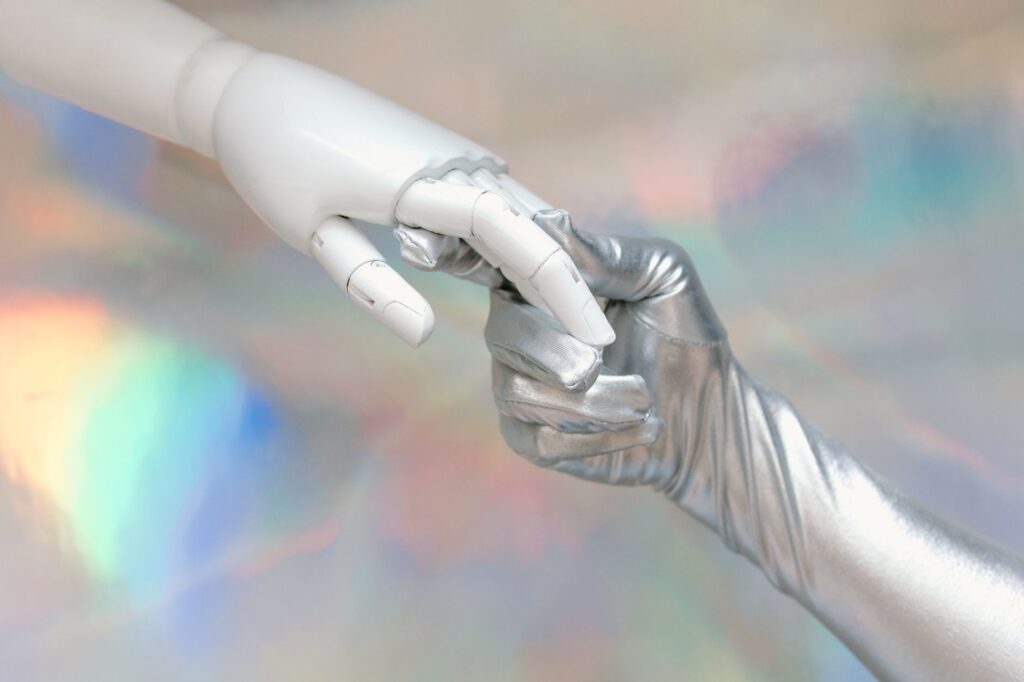
Mid‑career technicians now list “cobot trainer” and “AI feedback analyst” alongside welding and HVAC repair. The shift reflects a demand for people who can program learning loops, calibrate vision systems, and translate operator intuition into algorithmic rules. Employers reward certifications that prove a worker can teach a robot a new task in under an hour.
Our view is that the traditional apprenticeship model must expand to include a digital apprenticeship layer. We see training programs that pair a veteran mechanic with a data scientist for a semester‑long “symbiosis sprint.” The result: a hybrid credential that bridges hands‑on craft and machine‑learning fluency.
You may also like
 AI & Technology
Founders Face Open vs Closed AI Dilemma
Founders now see that selecting an AI model is more than just a technical choice. It is a core part of their business strategy. The…
Read More →Trust and ethics become the bottleneck for scaling
As AI‑driven cobots take on higher‑stakes roles, workers question whether the machines will honor safety protocols when data streams glitch. Trust hinges on transparent error‑reporting dashboards that surface a robot’s confidence score in real time. Without that visibility, operators default to disengaging, eroding the productivity gains that AI promised.
Ethical guidelines now appear on shop‑floor bulletin boards, outlining responsibilities for data privacy and decision accountability. Companies that embed these standards early see smoother adoption curves; those that wait face labor disputes and regulatory scrutiny. The pattern suggests that the next competitive edge will be a firm’s ability to institutionalize trust, not just deploy smarter hardware.
We have been watching the same trend repeat in healthcare, where AI‑enabled exoskeletons assist nurses in patient transfers. The same skill pivot—learning to calibrate force feedback—applies across sectors. Our analysis concludes that the emerging “Symbiotic Shift” will dictate which mid‑career professionals stay relevant.
The pattern we see—a rapid convergence of AI learning loops, skill redefinition, and trust infrastructure—signals a new era we call the Symbiotic Shift. If organizations embed transparent feedback, invest in hybrid training, and treat trust as a core metric, they will lock in a workforce that amplifies robot potential instead of fearing it.
The same skill pivot—learning to calibrate force feedback—applies across sectors.
“From manufacturing floors to household environments, intelligent robots are becoming essential partners in various tasks, augmenting human capabilities rather than simply replacing them.” — Dr. Jennifer Liu
You may also like
 AI & Technology
Why are data centres such a big deal in Scotland?
Scotland's data centre expansion is creating thousands of jobs and raising environmental concerns. The demand for skilled professionals in engineering, cloud architecture, and AI research…
Read More →The Symbiotic Shift predicts that a significant share of technical roles will require AI‑collaboration credentials. Workers who ignore this pivot risk obsolescence, while those who embrace robot partnership will find new ladders of responsibility and pay.