


Human expertise is no longer anchored in static credentials but in the capacity to co‑create with algorithmic systems. This structural shift compels firms to redesign talent architectures, governance, and employee value propositions.
The AI‑Accelerated Recalibration of Expertise Metrics
The diffusion of generative AI tools across white‑collar functions has accelerated a redefinition of what constitutes professional authority. OECD projections indicate that by 2030, approximately 40% of workers in advanced economies will require substantial upskilling to remain productive in AI‑augmented roles [1]. Simultaneously, a McKinsey survey finds that a significant percentage of executives view AI proficiency as a top hiring priority, eclipsing traditional degree‑based criteria [2].
These data points reveal a systemic transition from credential‑centric human capital to capability‑centric capital, where the measurable output of human‑AI collaboration becomes the primary signal of expertise. The metric shift mirrors the 1990s transition from mainframe to client‑server computing, when “systems knowledge” supplanted “programming language fluency” as the valued skill set. In the AI era, the “new currency” is data‑backed proof of problem‑framing, prompt engineering, and ethical judgment—abilities that machines cannot replicate without human guidance [3].
Institutional Reorientation of Talent Pipelines

The core mechanism driving this transition is the dynamic skill loop: continuous acquisition, rapid deployment, and iterative refinement of AI‑enhanced competencies. Unlike the static skill accumulation model of the post‑industrial period—where a single certification could sustain a career for a decade—the AI loop demands quarterly learning cycles.
Harvard Business Review documents five emergent reskilling paradigms that illustrate this loop: (1) micro‑credential ecosystems, (2) AI‑driven competency dashboards, (3) cross‑functional project labs, (4) internal talent marketplaces, and (5) data‑centric performance contracts [4]. Firms that embed these paradigms into their talent pipelines report a significant lift in employee engagement scores and a reduction in turnover, suggesting an asymmetric advantage for organizations that institutionalize continuous learning infrastructures.
Unlike the static skill accumulation model of the post‑industrial period—where a single certification could sustain a career for a decade—the AI loop demands quarterly learning cycles.
Case in point: A global financial services firm piloted an internal “AI‑Co‑Creator” program, pairing senior analysts with generative‑AI assistants for real‑time scenario modeling. Within six months, the analysts’ output quality rose by 23% while their reported sense of purpose increased, underscoring how AI augmentation can convert routine expertise into strategic insight [5].
 Career Guidance
How to Switch Industries Mid-Career Without Starting Over
Bridge roles can reduce risk, while targeted skills and industry-specific applications help you make the case for a new field.
Read More →Governance Frameworks for Human‑AI Collaboration
Embedding AI into the fabric of work raises structural governance challenges. Ethical considerations—bias propagation, data privacy, and decision‑making opacity—necessitate a dual‑layer oversight architecture: (a) a technical ethics board overseeing model provenance and (b) a human‑impact council evaluating workforce implications.
MIT Sloan Review argues that the most valuable experts in an AI‑rich environment are those who can ask “better questions” and navigate “gray areas” where algorithmic confidence wanes [6]. Institutionalizing this expertise requires formalizing “question‑craft” as a competency, complete with assessment rubrics and career ladders.
Historical parallels emerge from the introduction of computer‑assisted design (CAD) in engineering during the 1980s. Firms that created dedicated “design ethics” committees avoided costly rework and liability, while those that neglected governance faced regulatory sanctions. The AI era replicates this pattern: firms that pre‑emptively embed ethical oversight into talent development secure both regulatory compliance and reputational capital.
Capitalization of Adaptive Human Skills
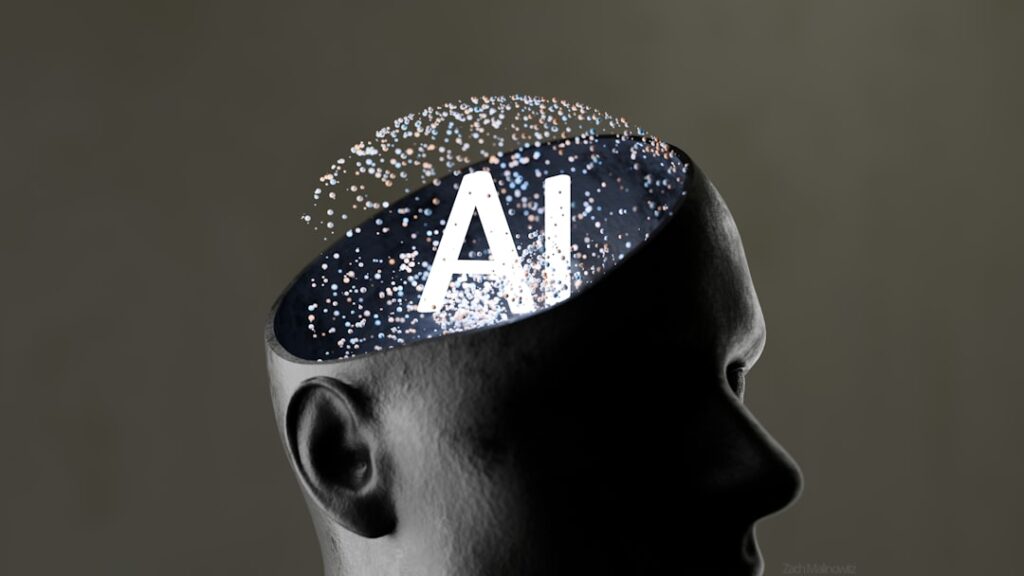
From an employee perspective, the AI‑redefined expertise model translates into career capital that is both portable and data‑rich. Professionals must now curate a personal brand that showcases AI‑augmented outcomes, measurable through dashboards that log prompt efficiency, model refinement contributions, and cross‑domain problem‑solving metrics.
Resumly’s “expertise audit” framework illustrates this practice: individuals conduct quarterly audits of AI‑enhanced deliverables, align them with organizational KPIs, and surface gaps for targeted learning [7].
Resumly’s “expertise audit” framework illustrates this practice: individuals conduct quarterly audits of AI‑enhanced deliverables, align them with organizational KPIs, and surface gaps for targeted learning [7]. The audit process generates a living portfolio that can be leveraged in internal mobility programs or external labor markets, effectively turning AI fluency into a tradable asset.
 Career Guidance
Gujarat Boosts Teachers with Career Guidance Training
Gujarat has initiated a comprehensive training program for teachers aimed at enhancing their ability to guide students in making informed career choices, addressing a critical…
Read More →Moreover, the shift reconfigures the power dynamics between employees and institutions. When expertise is demonstrable through data, asymmetries in information access diminish, granting high‑performing workers greater bargaining power. Conversely, organizations that centralize AI tool ownership without transparent skill‑validation mechanisms risk entrenching new forms of hierarchical opacity.
Projected Skill Landscape 2027‑2032
Looking ahead, three systemic trajectories will dominate the next 3‑5 years:
- Standardization of AI‑Capability Taxonomies – International bodies (e.g., OECD, World Economic Forum) are drafting cross‑industry taxonomies that codify AI‑augmented skill levels. Adoption will enable interoperable credentialing and reduce friction in cross‑border talent mobility.
- Institutionalization of AI‑Centric Learning Contracts – Companies will embed AI proficiency targets into employment contracts, linking bonus structures to measurable AI‑enhanced outcomes. Early adopters, such as the aforementioned financial services firm, already report a productivity premium per AI‑century employee.
- Emergence of Hybrid Governance Nodes – By 2030, we anticipate the proliferation of “Human‑AI Ethics Pods” embedded within business units, tasked with continuous monitoring of algorithmic impact on work design. These pods will function as both compliance auditors and talent development advisors, aligning ethical safeguards with career progression pathways.
Collectively, these trajectories suggest a structural rebalancing where career capital is increasingly quantified, fluid, and contingent on algorithmic collaboration. Institutions that embed these mechanisms into their talent ecosystems will capture asymmetric returns in innovation velocity, employee retention, and market reputation.
Emergence of Hybrid Governance Nodes – By 2030, we anticipate the proliferation of “Human‑AI Ethics Pods” embedded within business units, tasked with continuous monitoring of algorithmic impact on work design.
Key Structural Insights
> [Insight 1]: The valuation of expertise is shifting from static credentials to demonstrable AI‑augmented outcomes, creating a data‑driven capital market for human talent.
> [Insight 2]: Institutional power is reconstituted through dual‑layer governance that couples technical ethics with human‑impact oversight, mirroring historic CAD governance models.
> * [Insight 3]: The next 3‑5 years will witness standardized AI‑capability taxonomies and contract‑linked proficiency targets, institutionalizing the AI‑human skill loop as a core organizational asset.
Sources
The AI Talent Myth: Why Your Organisation’s Approach to AI Expertise is … — LinkedIn Pulse
What’s Your Edge? Rethinking Expertise in the Age of AI — MIT Sloan Review
Reskilling in the Age of AI — Harvard Business Review
Building generative AI employee talent | McKinsey — McKinsey & Company
How AI Changes the Meaning of Expertise – A Deep Dive — Resumly
 Career Guidance
Gujarat Empowers Teachers with Career Guidance Training
Gujarat's education department has launched a training program to equip teachers with skills for providing informed career guidance to students, covering various educational and vocational…
Read More →Written by Career Ahead AI. AI can make mistakes, so verify key facts. Report errors to support@careeraheadonline.com.





