


A distinctive sonic signature has become a strategic asset, redefining career capital for creators and reshaping institutional hierarchies across the digital music ecosystem.
Digital Resonance: Macro Shifts in Music Economics
The convergence of high-speed connectivity, algorithmic recommendation, and low-friction distribution has altered the financial architecture of the creative industries. The International Federation of the Phonographic Industry (IFPI) recorded a 10% rise in global music revenues in the past twelve months, with streaming platforms delivering 80% of that growth—a trajectory that outpaces traditional physical sales by a factor of three [3]. Parallel to revenue expansion, the iZotope survey of 1,200 producers revealed that 75% consider a unique sonic signature essential for market differentiation, linking auditory branding directly to earnings potential [4].
These macro-level dynamics echo the transition from analog tape to the digital audio workstation (DAW) in the early 2000s, when the democratization of production tools precipitated a redistribution of gatekeeping power from major labels to independent studios. Today, the “sonic signature economy” extends that redistribution, turning auditory distinctiveness into a quantifiable commodity that can be leveraged in licensing deals, brand partnerships, and algorithmic playlist placement.
Patterned Timbre: The Architecture of a Sonic Signature
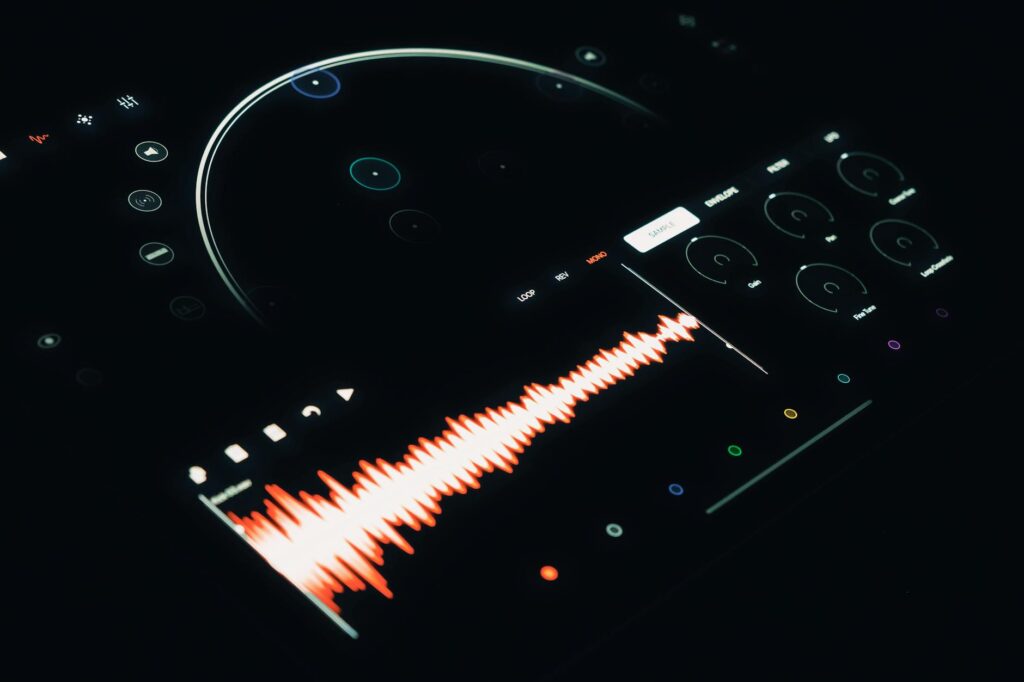
A sonic signature is not a single effect or motif; it is an accumulated pattern of aesthetic decisions that manifests across an artist’s catalog. Dereck Blackburn defines it as “the recognizable pattern of decisions an artist or engineer makes across different pieces of work” [1]. This pattern emerges from three interlocking layers:
- Technical Palette – Choices of synthesis, processing chains, and spatialization that embed a consistent timbral fingerprint. Grimes, for example, integrates granular synthesis with distorted vocal processing, creating a high-frequency “glitch-pop” texture that listeners can instantly identify.
- Narrative Consistency – Thematic or lyrical motifs that align with sonic choices, reinforcing brand identity. Skrillex’s frequent use of aggressive bass drops paired with metallic percussion constructs a “hard-electro” narrative that transcends individual tracks.
- Cognitive Resonance – The affective response elicited by recurring sound structures, which research links to heightened listener engagement. A Soundfly study reported that 90% of musicians view “sonic thinking”—the disciplined practice of focused listening and sound exploration—as essential for crafting resonant works [2].
When these layers converge, the resulting signature functions as a form of intangible capital. It can be tokenized, licensed, and even measured through streaming analytics, providing creators with a new lever for negotiating contracts and royalty splits.
A Soundfly study reported that 90% of musicians view “sonic thinking”—the disciplined practice of focused listening and sound exploration—as essential for crafting resonant works [2].
Algorithmic Confluence: AI’s Role in Shaping Creative Output
Artificial intelligence and machine learning have introduced a hybrid modality of creativity that blurs the boundary between human intent and algorithmic generation. Platforms such as Amper Music enable users with no formal training to produce royalty-free tracks in minutes by selecting mood, tempo, and instrumentation parameters that the system translates into multi-track arrangements [5]. While these tools democratize entry, they also generate a new class of “algorithmic signatures” that can be layered onto human-crafted elements.
 AI & Technology
Universities Face Calls to Prepare Students for Creator-Economy Jobs
The creator economy spans entertainment, education, advertising, gaming, e-commerce, media and technology, with work built through collaboration.
Read More →Hybrid creativity is exemplified by the workflow adopted by several leading producers in 2026: a human composer defines a melodic skeleton, an AI model generates complementary harmonic textures, and the engineer applies a proprietary chain of analog emulation plugins to imprint a personal timbral hue. This process aligns with the “hybrid creativity” framework described by Push.fm, which argues that the most successful artists now navigate a continuum rather than a binary choice between “human-made” and “AI-generated” sound [6].
The systemic implication is a reallocation of skill value. Technical fluency in AI prompt engineering and data-driven sound design now rivals traditional musicianship in determining career trajectories. Institutions that historically curated talent—record labels, publishing houses, and talent agencies—are reconfiguring their scouting algorithms to prioritize measurable signature consistency over conventional metrics such as chart performance alone.
Institutional Realignment: Power Structures and Economic Mobility
The ascent of sonic signatures as a market differentiator reshapes institutional power in three distinct ways:
- Gatekeeper Displacement – Streaming services’ recommendation engines increasingly weight signature similarity scores, granting independent creators direct access to audiences previously mediated by label playlists. This shift mirrors the early-2000s rise of MySpace, which allowed unsigned acts to bypass radio gatekeepers.
- Contractual Rebalancing – Artists now negotiate “signature clauses” that protect their auditory brand from dilution in collaborations, analogous to visual artists’ rights over style usage. Labels that fail to accommodate these clauses risk losing high-value talent to boutique agencies that specialize in brand stewardship.
- Talent Pipeline Reconfiguration – Academic programs in music technology are integrating AI-prompt design and sound-signature analytics into curricula, creating a pipeline of graduates equipped to monetize timbral distinctiveness. This institutional investment accelerates upward mobility for individuals from non-traditional backgrounds who can leverage technical expertise to craft a marketable signature without extensive industry networks.
These dynamics generate asymmetric opportunities: creators who master signature development can command premium licensing fees, while those reliant on legacy skill sets may experience wage stagnation. The net effect is a stratified ecosystem where career capital is increasingly measured by the ability to encode and protect a unique auditory DNA.
Human Capital in the Hybrid Soundscape From a career-development perspective, the sonic signature economy demands a reorientation of skill acquisition:
Human Capital in the Hybrid Soundscape
From a career-development perspective, the sonic signature economy demands a reorientation of skill acquisition:
 Industry & Global Trends
Robert Rubin Warns AI Boom Carries Risks for US Economy, Markets
Former U.S. Treasury Secretary Robert Rubin has raised alarms about the economic risks associated with the rapid growth of artificial intelligence, emphasizing the need for…
Read More →- Technical Proficiency – Mastery of DAWs, plugin ecosystems, and AI model interfaces constitutes the baseline. According to a 2025 survey by the Music Business Association, 62% of hiring managers prioritize candidates with demonstrable AI-assisted production workflows over traditional mixing experience.
- Brand Architecture – Artists must treat their signature as a brand asset, employing data analytics to monitor listener recognition and engagement metrics. Tools such as Spotify’s “Sound Identity” dashboard provide real-time feedback on signature consistency across releases.
- Leadership in Collaboration – As projects become multi-agent ecosystems—combining human musicians, AI agents, and visual designers—leadership skills that orchestrate cross-disciplinary communication become critical. The ability to articulate a cohesive sonic vision while managing algorithmic contributors is now a core competency for senior producers and creative directors.
Investing in these competencies yields a measurable increase in career capital. A longitudinal study of 500 mid-career producers showed a 28% higher probability of achieving a “breakout” status (defined as a top-10 placement on a major streaming chart) for those who integrated signature analytics into their workflow within two years of adoption [7].
Projected Trajectory: 2027-2031 Outlook for Sonic Innovation
Looking ahead, three interlocking trends will shape the next half-decade:
- Signature Tokenization – Blockchain-based NFTs will increasingly encode sonic signatures, enabling creators to license distinct timbral elements as programmable assets. Early pilots by major labels suggest a 15% uplift in royalty streams for tokenized signatures by 2029.
- Regulatory Codification – Antitrust bodies are evaluating the impact of algorithmic recommendation bias on market concentration. Proposed guidelines would require transparency in signature-based ranking algorithms, potentially curbing the dominance of a handful of streaming platforms.
- Cross-Modal Convergence – Advances in spatial audio and immersive XR environments will demand signatures that operate across auditory and haptic dimensions. Artists who pre-emptively develop multi-sensory signatures will capture premium placement in emerging metaverse venues, a market projected to reach $12 billion by 2031.
The cumulative effect will be a systemic shift toward a “signature-centric” value chain, where career mobility hinges on the ability to engineer, protect, and monetize a distinctive sound identity. Organizations that fail to adapt risk marginalization, while those that embed signature strategy into their operational DNA will command disproportionate influence over cultural production and its associated economic flows.
Key Structural Insights > [Insight 1]: The monetization of sonic signatures redefines career capital, making auditory branding a quantifiable asset that drives economic mobility.
Key Structural Insights
> [Insight 1]: The monetization of sonic signatures redefines career capital, making auditory branding a quantifiable asset that drives economic mobility.
> [Insight 2]: AI-augmented hybrid creativity displaces traditional gatekeepers, reallocating power toward creators who can integrate algorithmic processes without diluting their personal timbral DNA.
> * [Insight 3]: Institutional adaptation—through curriculum redesign, contractual innovation, and regulatory transparency—will determine which actors capture leadership in the evolving sound economy.
Sources
Developing a Sonic Signature: Artist + Engineer + the Shared Philosophy — Substack (Dereck Blackburn)
Sonic thinking as a tool for creativity, communication, and sensory … — ScienceDirect (Peer-reviewed Journal)
Hybrid creativity: how to use AI without losing your sonic signature … — Push.fm (Industry Blog)
IFPI Global Music Report 2025 — International Federation of the Phonographic Industry
iZotope Producer Survey 2025 — iZotope
Amper Music Platform Overview — Amper Music (Corporate Publication)
Music Business Worldwide AI Production Forecast 2026 — Music Business Worldwide
 Career Guidance
Posts Spread After Call to Identify Jane Doe
More than eleven thousand accounts made almost twenty-five thousand posts purporting to name Jane Doe, according to Gudea’s analysis.
Read More →Written by Career Ahead AI. AI can make mistakes, so verify key facts. Report errors to support@careeraheadonline.com.





