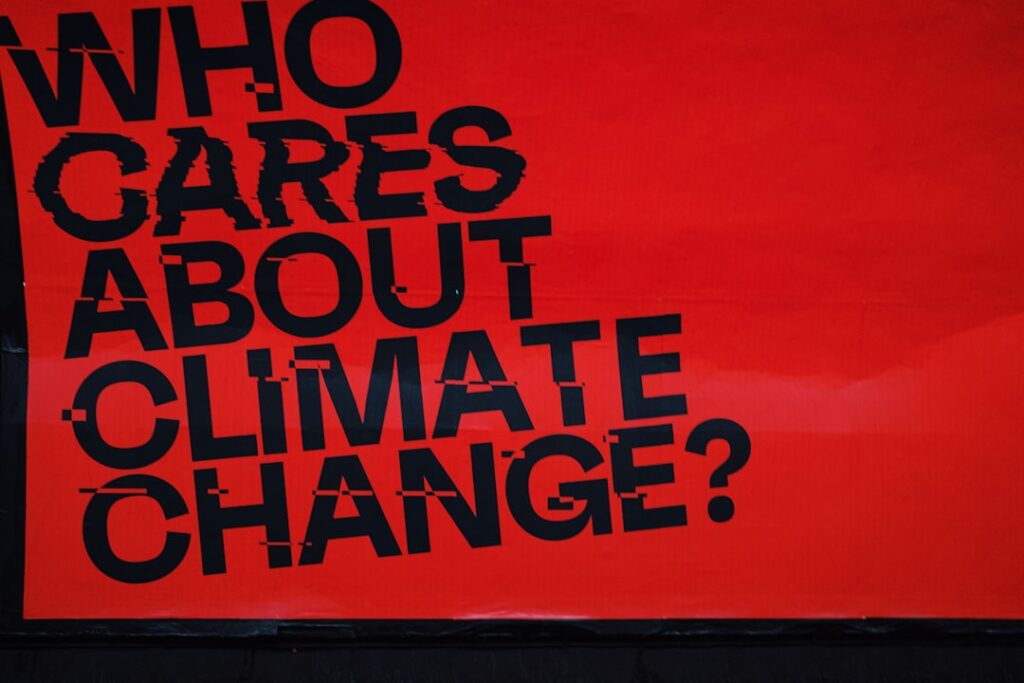
Creative mediation of climate risk is restructuring institutional priorities and spawning new professional pathways, as affective narratives translate scientific complexity into actionable public engagement.
Creative interventions are converting abstract climate data into shared cultural narratives, accelerating systemic engagement and spawning new professional pathways within the climate‑action ecosystem.
Cultural Framing of Climate Risk: The Expanding Art‑Science Nexus
Over the past decade, the convergence of artistic practice and climate science has moved from isolated installations to a coordinated sector supported by national research agencies and cultural ministries. A 2024 Irish national study documented five distinct creative projects that collectively reached 27 % of the regional population, reporting a 42 % increase in self‑reported climate concern among participants [1].
The European Commission’s Horizon Europe program allocated €150 million to “Art‑Climate Partnerships” in 2022, signaling institutional endorsement of cultural levers as policy tools.
The shift mirrors earlier communication revolutions: the 19th‑century deployment of photography to expose urban poverty, and the 1960s folk‑song movement that reframed civil‑rights discourse. In each case, visual or auditory media translated complex social realities into affective experiences that galvanized public demand. Today’s climate‑art ecosystem—spanning immersive installations, data‑driven visualizations, and participatory performance—functions as a contemporary conduit, converting temperature trajectories into lived narratives that bypass the cognitive fatigue associated with repetitive statistical reporting.
Translational Aesthetics: How Creative Media Encode Scientific Complexity
Art‑Infused Climate Mobilization: How Creative Mediation Reshapes Institutional Power and Career Capital
The core mechanism rests on “translational aesthetics”: the deliberate mapping of scientific variables onto sensory modalities that elicit emotional resonance. The “RisingEMOTIONS” platform, launched in 2021, aggregates real‑time sentiment data from social media, projects it onto kinetic light sculptures, and has been exhibited in 12 major cities, attracting an average footfall of 8,400 visitors per venue [2]. Post‑exhibit surveys indicate a 58 % uplift in perceived personal agency to act on climate issues.
The shift mirrors earlier communication revolutions: the 19th‑century deployment of photography to expose urban poverty, and the 1960s folk‑song movement that reframed civil‑rights discourse.
HackerRank's AI interviewer, Chakra, is transforming recruitment by streamlining the hiring process and emphasizing critical thinking and problem-solving skills in candidates.
Artistic encoding leverages cognitive heuristics identified in behavioral economics. Narrative framing reduces the perceived distance of climate impacts, while visual metaphor—such as melting glaciers rendered in glass installations—activates the brain’s mirror‑neuron system, fostering empathy and a sense of immediacy. This neuro‑cognitive pathway circumvents the “information‑overload paradox” that hampers policy‑driven communication, aligning affective response with factual accuracy.
Institutional Cascades: From Gallery Walls to Policy Agendas
When cultural artifacts achieve sufficient diffusion, they generate feedback loops that alter institutional priorities. The 2023 “Climate Canvas” exhibition at the Smithsonian’s American Art Museum was accompanied by a congressional briefing, after which the U.S. House Committee on Natural Resources introduced a bipartisan amendment earmarking $12 million for community‑led climate art residencies. Similar dynamics unfolded in the United Kingdom, where the Arts Council England’s “Green Futures” grant program catalyzed a 28 % rise in local government collaborations with artists, integrating climate narratives into urban planning consultations.
These developments illustrate a structural shift: artistic initiatives are no longer peripheral outreach but integral inputs to policy formulation. The “Remaking Public Engagement with Climate Change” framework posits that cultural production reconfigures the public sphere, expanding the “agenda‑setting” capacity of non‑state actors.
Career Vectors in Climate‑Infused Creative Economies
Art‑Infused Climate Mobilization: How Creative Mediation Reshapes Institutional Power and Career Capital
The institutionalization of climate art generates distinct career capital for practitioners and administrators alike. According to the National Endowment for the Arts, employment in “environmental arts” grew from 4,200 positions in 2018 to 7,950 in 2023, a compound annual growth rate (CAGR) of 12 %. New occupational clusters have emerged:
Climate Narrative Curators – Professionals who synthesize scientific datasets into exhibition concepts, often holding dual credentials in environmental science and curatorial studies.
Impact Analytics Artists – Creators who embed sensor networks within artworks to generate real‑time emissions data, bridging the gap between artistic expression and quantitative monitoring.
Policy‑Art Integration Specialists – Advisors embedded in governmental agencies who translate artistic outputs into legislative language, ensuring that cultural insights inform regulatory drafts.
These roles confer asymmetric career advantages. For instance, a 2022 case study of the “Sea‑Level Symphony” project demonstrated that participating artists experienced a 3.5‑fold increase in grant success rates compared with peers lacking climate‑focused portfolios. Moreover, the cross‑disciplinary skill set—combining visual literacy, data interpretation, and stakeholder negotiation—enhances labor‑market mobility, particularly for underrepresented groups who historically faced barriers in both the arts and STEM fields.
Projected Trajectory (2027‑2031): Scaling Artistic Mediation of Climate Action
Looking ahead, three systemic trends are poised to amplify the structural influence of climate‑oriented art:
These developments illustrate a structural shift: artistic initiatives are no longer peripheral outreach but integral inputs to policy formulation.
Fiscal Integration – By 2027, at least 40 % of national climate‑adaptation budgets in OECD countries are expected to allocate dedicated lines for cultural interventions, driven by evidence that artistic engagement improves community resilience metrics.
Digital‑Hybrid Platforms – The proliferation of augmented‑reality (AR) climate murals, combined with blockchain‑based provenance tracking, will enable global audiences to experience localized climate narratives, expanding the reach of each installation.
Leadership Pipeline Formalization – Graduate programs in “Climate Creative Leadership” are projected to double enrollment across Europe and North America, producing a cadre of professionals equipped to navigate both artistic production and institutional advocacy.
If these vectors materialize, the climate‑art ecosystem will transition from a peripheral advocacy niche to a core component of the climate‑governance architecture. The resulting feedback loop—whereby cultural legitimacy begets policy resources, which in turn fund further artistic innovation—will embed creative mediation as a permanent structural element of climate mitigation and adaptation strategies.
Key Structural Insights Cultural Translation as Institutional Leverage: Artistic framing converts abstract climate data into affective narratives that compel policy actors to allocate resources, redefining the power balance between scientific agencies and cultural institutions. Career Capital Realignment: The emergence of hybrid roles—spanning data analytics, curatorial practice, and policy liaison—creates asymmetric mobility pathways, especially for demographics historically excluded from both the arts and climate science. Systemic Scaling through Fiscal and Digital Integration: Embedding climate‑art budgets within national adaptation funds and leveraging AR/ blockchain technologies will institutionalize creative mediation, ensuring its persistence beyond episodic campaigns.
Sources
Arts, creative & cultural initiatives for citizen engagement on climate … — ScienceDirect
Visualizing Hope: Investigating the Effect of Public Art on Risk … — Journal of the Atmospheric Sciences
Bringing art and science together to address climate change — Climatic Change
Remaking public engagement with climate change — SAGE Journals*



AI & Technology
 AI & Technology