Wafr Technologies announced a $100 million financing round to bring its AI cooling system to market, promising a 95 percent cut in water usage for data centres.
Wafr Technologies announced a $100 million private-investor financing round to commercialize an AI-driven cooling system that claims to cut water use in data centres by up to 95 percent. The funding will fund a new data-centre facility, an AI research lab, and a hiring program in Vancouver, Canada.
The announcement was made on 3 July 2026 by Wafr Technologies, a startup founded in 2025 and headquartered in Vancouver, British Columbia [1][2]. The $100 million financing was provided by a consortium of private investors, with no disclosed government participation [1][2].
Wafr Technologies is the primary organization involved; its leadership includes CEO and co-founder Alex Chen, who has spoken publicly about the capital deployment plan [1]. The company will allocate the funds to construct a purpose-built data-centre that incorporates its proprietary AI cooling technology, launch an AI research laboratory focused on sustainable computing, and recruit dozens of engineers, data scientists, and support staff [1][2].
Funding Details and Deployment Plan
The $100 million round was closed in early July 2026 after a series of private-placement agreements that were finalized in the week of 1 July 2026 [1][2]. Investors cited the startup’s patented cooling architecture and the projected reduction in operational expenditures for AI workloads as primary motivations [2].
Wafr plans to use the capital to secure a 150,000-square-foot site in the Greater Vancouver area for a new data-centre that will house the cooling system at scale [1]. The facility is slated to become operational by Q4 2027, with phased rollout of the cooling modules beginning in Q2 2027 [1].
Investors cited the startup’s patented cooling architecture and the projected reduction in operational expenditures for AI workloads as primary motivations [2].
In parallel, the company will establish an AI research lab on the same campus, intended to explore further efficiency improvements in high-performance computing and to collaborate with academic partners [1]. The hiring program aims to add approximately 50 new positions across engineering, research, and operations by the end of 2027 [2].
Technology Overview and Expected Efficiency Gains
Vancouver Startup Wafr Technologies Secures $100 Million to Deploy AI Cooling Technology
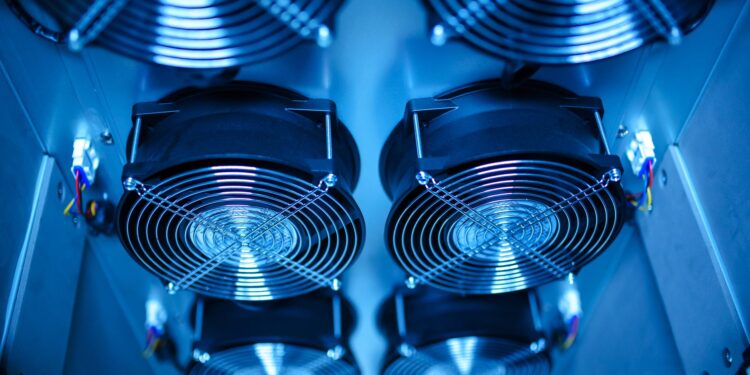
Wafr’s cooling solution integrates AI-driven airflow management with a closed-loop liquid cooling circuit that recirculates water without external draw [1]. The system monitors temperature, humidity, and workload intensity in real time, adjusting vent configurations to maintain optimal server temperatures while minimizing evaporative loss [1].
According to the company’s technical brief, the technology can reduce water consumption for cooling by up to 95 percent compared with conventional evaporative-cooling towers used in many AI data centres [1][2]. Energy usage is also projected to decline by 30 percent, owing to reduced pump loads and lower heat-exchange requirements [2].
The recent Bloomberg report on unusual network activity alerts underscores a critical issue for digital marketing professionals. With increasing cybersecurity threats, teams must enhance their…
The company’s internal testing on a pilot rig demonstrated a 92 percent reduction in water flow while maintaining server performance within industry-standard thermal thresholds [1]. Independent verification by a third-party engineering firm is scheduled for Q1 2027, pending the full-scale deployment [2].
Implications for Educational Institutions
Higher-education campuses and research institutes that operate on-premise AI clusters or lease dedicated AI compute resources are directly affected by data-centre cooling costs. Water-intensive cooling accounts for a measurable share of campus utility bills, especially in regions with limited freshwater supplies [2].
Implications for Educational Institutions Higher-education campuses and research institutes that operate on-premise AI clusters or lease dedicated AI compute resources are directly affected by data-centre cooling costs.
By adopting Wafr’s technology, institutions could lower water procurement and treatment expenses, aligning with sustainability targets set by many universities under national carbon-reduction frameworks [2]. The projected 30 percent energy savings also translate into reduced electricity expenditures and lower greenhouse-gas emissions, supporting campus climate-action plans [2].
The startup’s plan to open an AI research lab includes a partnership model that invites collaboration with university computer-science departments, offering access to the cooling platform for joint research projects [1]. Such collaborations could accelerate the development of energy-efficient AI algorithms while providing students with hands-on experience in sustainable computing infrastructure [1].
Key Facts
What: Wafr Technologies secured $100 million to commercialize AI-driven cooling technology that reduces data-centre water use by up to 95 percent.
When: Funding announced 3 July 2026; deployment slated for 2027.
Remote workers are increasingly targeted by sophisticated scams involving fake job offers and OTP requests. Understanding these tactics is crucial for freelancers and digital marketers…




 News
NewsNews