No products in the cart.

Vertical Farms Reshape the Agrifood System: From Closed‑Loop Tech to New Institutional Power
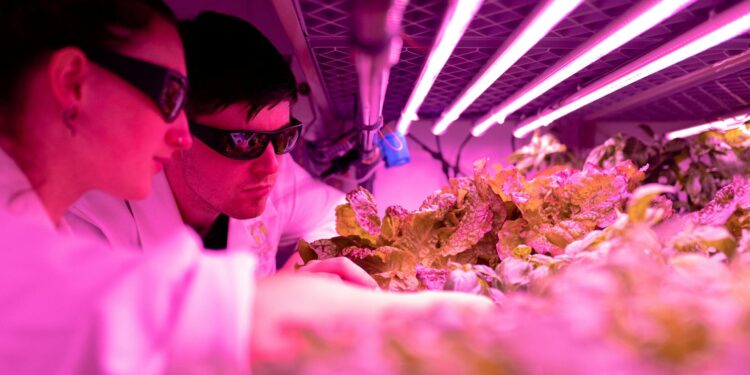
Vertical farming’s closed‑loop, data‑driven model is redirecting capital, labor, and regulatory authority from traditional land‑based agriculture to urban technology platforms, reshaping career pathways and regional economic dynamics.

Dek: Vertical farming is moving from niche pilot projects to a $13.6 billion industry poised to meet a 70 % surge in global food demand. Its closed‑loop architecture reconfigures capital flows, labor markets, and urban governance, creating a systemic pivot in how societies produce and distribute food.
Opening: Macro Context and Structural Stakes
The world’s agricultural output is confronting a convergence of stressors that exceed the adaptive capacity of conventional field production. The United Nations projects a 70 % rise in food consumption by 2050, driven by a projected 2.2 billion increase in global population and accelerating urbanization that will place 68 % of humanity in cities by 2050 [1]. Simultaneously, the FAO reports that 33 % of cultivated land is already degraded, while freshwater withdrawals for irrigation consume 70 % of global freshwater supplies, a figure rising sharply in arid regions [2].
These macro‑level dynamics have catalyzed a shift in the agrifood system’s structural foundations. Traditional, land‑intensive agriculture is increasingly constrained by climate volatility, soil erosion, and the geopolitical volatility of commodity markets. In response, vertical farming—an indoor, stacked‑layer production model that leverages hydroponic, aeroponic, or aquaponic techniques—has emerged as a systemic alternative. The sector attracted $13.6 billion in venture capital and corporate investment by the end of 2026, and market forecasts anticipate a compound annual growth rate (CAGR) of 25.2 % between 2023 and 2028 [3].
The magnitude of these capital flows signals more than a technological fad; it reflects a structural reallocation of economic power from rural land‑owners to urban‑based technology firms, municipalities, and new classes of agritech talent. Understanding this reallocation requires a dissection of the core mechanisms that drive vertical farms, the ripple effects across institutional systems, and the resulting impact on career capital and economic mobility.
Core Mechanism: Closed‑Loop Production and Quantifiable Gains

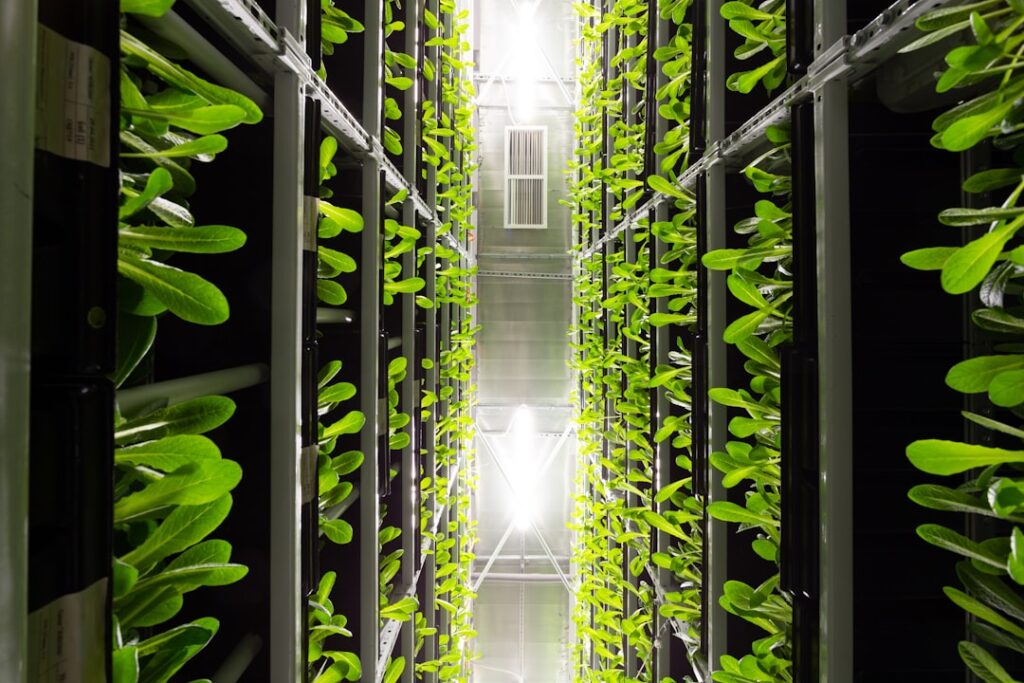
Vertical farms operate on a closed‑loop resource architecture that decouples crop growth from external climate, soil, and water variability. The primary production cycles employ soilless media—hydroponic nutrient films, mist‑based aeroponics, or bio‑substrates—delivered through precisely calibrated irrigation loops. Sensors embedded in the growing environment feed real‑time data to AI‑driven control systems that modulate temperature, humidity, CO₂ concentration, and spectrally tuned LED lighting.
Quantitative studies demonstrate that these controls translate into measurable productivity gains. Yield per square foot can be 10‑30 times higher than field equivalents, depending on crop type and lighting efficiency [4]. For leafy greens, the most mature vertical farm segment, the yield multiplier averages 12×, while strawberries and micro‑greens can achieve 30× under optimized photoperiods [5]. Water consumption falls dramatically: recirculating hydroponic loops reuse up to 90 % of applied water, reducing total water use to 5‑10 % of conventional irrigation rates [2]. Pesticide and synthetic fertilizer inputs decline by up to 90 % because the sealed environment eliminates most pest pressures and enables precise nutrient dosing [2].
Quantitative studies demonstrate that these controls translate into measurable productivity gains.
Energy intensity remains the sector’s principal cost driver. However, integration of high‑efficiency LED arrays (PPE < 2 µmol/J) and renewable on‑site generation (solar, wind, or biogas) can cut net electricity consumption by 40‑50 % relative to early‑generation farms [6]. The most advanced facilities, such as Singapore’s Sky Greens and the U.S. firm AeroFarms, report total lifecycle carbon footprints 70‑80 % lower than field‑grown lettuce when accounting for renewable energy offsets [1][6].
You may also like
 AI & Technology
Schneider Expands in AI With $23 Billion Acquisition
Schneider Electric's $23 billion acquisition of PTC marks a pivotal moment in the AI landscape, creating new job opportunities and driving innovation across various sectors.
Read More →These hard data points illustrate that vertical farming’s core mechanism is not merely an incremental improvement but a systemic redesign of input‑output ratios, shifting the agrifood value chain from an open, weather‑dependent system to a controllable, data‑centric platform.
Systemic Implications: Supply Chains, Urban Planning, and Institutional Realignment
Reconfiguring the Agrifood Supply Chain
Vertical farms compress the traditional farm‑to‑fork timeline from months to weeks, eliminating long‑haul transport and cold‑chain logistics for many perishable items. A 2025 case study of a 10,000 m² indoor lettuce facility in Detroit showed a 65 % reduction in total logistics cost per kilogram compared with a Midwest field operation supplying the same market [7]. This compression reshapes the role of intermediaries: wholesale distributors face declining volumes, while last‑mile delivery firms—often tech‑enabled “dark stores”—see demand surge.
The shift also reorients capital risk. Land‑based agribusinesses historically leveraged collateralized land assets to secure financing. Vertical farms, by contrast, rely on intellectual property (IP) in lighting algorithms, sensor integration, and data analytics, moving risk assessment to venture capital models that prioritize scalability and software patents. Institutional investors such as SoftBank’s Vision Fund have explicitly cited “software‑defined agriculture” as a strategic focus, reallocating billions from traditional commodity futures to agritech equity [3].
Urban Planning and Governance
Municipalities are embedding vertical farms into zoning codes and development incentives. The 2024 New York City “Urban Agriculture Initiative” offers tax abatements and expedited permits for projects that meet a minimum 30 % renewable energy threshold and provide at least 10 % of the local food budget [8]. In Singapore, the “30 by 30” food security plan mandates that 30 % of vegetable consumption be locally produced by 2030, with vertical farms accounting for 70 % of that target [9].
These policies generate new institutional power dynamics. City planning departments, traditionally focused on housing and transportation, now oversee agrifood licensing, water rights, and energy grid integration for vertical farms. This expands the jurisdictional reach of urban governments into domains historically managed by national agricultural ministries, creating a hybrid governance model that blends municipal zoning with national food security mandates.
The lesson from the earlier shift—rapid adoption without robust regulatory frameworks can entrench new inequities—underscores the need for anticipatory governance in the vertical farming era.
Historical Parallel: The Green Revolution
The systemic transition mirrors the Green Revolution of the 1960s‑70s, when high‑yielding varieties, synthetic fertilizers, and irrigation transformed global cereal production. Both periods feature a technology‑driven productivity surge, massive capital inflows, and a reshaping of agrarian power structures. However, vertical farming diverges by decoupling production from natural ecosystems, thereby internalizing many externalities that the Green Revolution externalized (e.g., soil degradation, water depletion). The lesson from the earlier shift—rapid adoption without robust regulatory frameworks can entrench new inequities—underscores the need for anticipatory governance in the vertical farming era.
Human Capital Impact: Winners, Losers, and Emerging Career Pathways
Skill Premiums and Career Capital
Vertical farms demand a hybrid skill set: agronomy knowledge fused with data science, electrical engineering, and supply‑chain analytics. Labor market data from the U.S. Bureau of Labor Statistics indicate that “Agricultural Technologists” with AI or IoT certifications command median salaries $15,000–$25,000 above traditional farm managers, reflecting a premium on digital fluency [10].
You may also like
 Government & Policy
Next-Gen GST and India’s next phase of growth
The introduction of Next-Gen GST marks a significant shift in India's tax landscape, aiming to streamline compliance and enhance operational efficiency for businesses. Under Finance…
Read More →Education institutions are responding. The University of Arizona’s “Controlled Environment Agriculture” program, launched in 2022, now graduates 200 students annually, many of whom secure positions in startup accelerators or corporate R&D labs. This pipeline creates a new form of career capital—technical expertise that is portable across sectors such as biotech, renewable energy, and smart‑city infrastructure.
Economic Mobility and Regional Disparities
The relocation of high‑value agrifood jobs to urban cores offers pathways for upward mobility among city dwellers, particularly in post‑industrial regions with declining manufacturing employment. Detroit’s 2025 partnership with a vertical farm consortium created 350 skilled jobs, reducing local unemployment from 9.2 % to 7.4 % within two years [7].
Conversely, rural communities risk marginalization if traditional farms cannot compete with indoor yields. In the Midwest, smallholder adoption of vertical farming remains limited due to capital intensity and lack of broadband infrastructure. The USDA’s Rural Development program has allocated $500 million for “Digital Agrifood Hubs” to bridge this gap, but early uptake suggests a lag that could exacerbate regional income gaps.
Leadership and Institutional Power
Vertical farming firms are consolidating leadership through vertical integration—controlling seed development, sensor manufacturing, and distribution. AeroFarms’ 2024 acquisition of a proprietary LED design firm illustrates this trend, granting the company IP control over light spectra that optimize phytochemical content. Such integration concentrates decision‑making authority within a narrow cadre of tech‑oriented executives, shifting agrifood governance from farmer cooperatives and commodity boards toward corporate boards and venture capital syndicates.
Leadership and Institutional Power Vertical farming firms are consolidating leadership through vertical integration—controlling seed development, sensor manufacturing, and distribution.
The emergent power structure creates a new class of “agrifood technocrats” who influence policy through lobbying, research sponsorship, and standard‑setting bodies such as the International Society for Horticultural Science (ISHS). Their agenda prioritizes data transparency, digital traceability, and standards for energy‑based carbon accounting, reshaping regulatory priorities away from land‑based metrics toward technology‑centric benchmarks.
Outlook: Structural Trajectory Over the Next 3‑5 Years
By 2030, vertical farms are projected to supply 12 % of global leafy‑green consumption and 5 % of fruit and vegetable calories, according to a joint FAO‑World Bank modeling effort [11]. The trajectory hinges on three interlocking developments:
- Energy Decarbonization: As renewable generation costs fall below $0.02 /kWh, the energy penalty of indoor lighting diminishes, making vertical farms cost‑competitive with field production in temperate regions. Policy mechanisms such as carbon‑credit trading for “negative‑emission” farms could accelerate adoption.
- Data Ecosystem Standardization: Industry consortia are drafting interoperable data schemas for sensor feeds, enabling cross‑farm analytics and AI model sharing. This will lower entry barriers for mid‑size operators and democratize access to high‑precision agronomy.
- Institutional Integration: Municipal food‑security plans will increasingly embed vertical farms as critical infrastructure, granting them access to public financing, land‑use concessions, and utility subsidies. The resulting public‑private partnership model will embed vertical farming within the fabric of urban resilience strategies.
You may also like
 Entrepreneurship & Business
Startups Captivating VCs at PearX Demo Day
The PearX program is renowned for its selective nature, capping its cohorts at just 20 startups. This approach facilitates focused mentorship and investment opportunities from…
Read More →If these conditions materialize, the agrifood system will experience a sustained reallocation of capital from land‑intensive assets to technology‑intensive platforms, reshaping labor markets, regional economies, and governance structures. The pace of change will be uneven, with early adopters capturing disproportionate market share and influencing standards, while laggards risk structural exclusion.
Key Structural Insights
[Insight 1]: The closed‑loop architecture of vertical farms translates into 10‑30× yield per square foot and up to 90 % reductions in water and pesticide inputs, redefining agrifood productivity metrics.
[Insight 2]: Capital and decision‑making power are shifting from land‑based agribusinesses to urban‑centered technology firms, creating a new class of agrifood technocrats who dominate standards and policy influence.
- [Insight 3]: Career capital is reconfigured toward hybrid agronomy‑tech expertise, offering upward mobility in urban regions while threatening economic inclusion for rural communities lacking digital infrastructure.