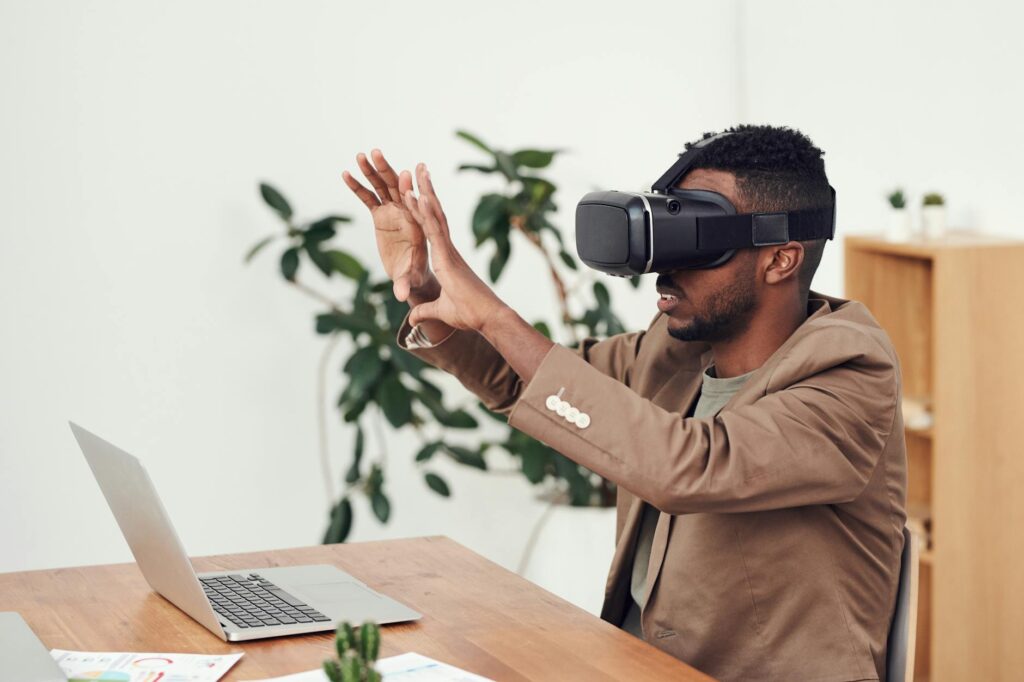
VR is reshaping the economics of employee well‑being, turning immersive therapy from a niche clinical tool into a systemic component of corporate talent strategy.
The Macro‑Workplace Mental‑Health Landscape
The modern labor market confronts a persistent asymmetry between productivity demands and employee well‑being. Recent surveys indicate that a significant proportion of U.S. workers reported a mental‑health episode in the past twelve months, while 45 % of senior HR leaders rank mental health as a top‑tier risk to organizational performance [1]. Historically, the rise of Employee Assistance Programs (EAPs) in the 1990s provided a modest, cost‑controlled response to absenteeism and substance‑abuse concerns, yet utilization remained below 10 % due to stigma and limited accessibility [2].
The COVID‑19 pandemic accelerated the adoption of tele‑mental‑health platforms, expanding reach by a significant percentage in 2020 [3]. However, virtual consultations still lack the embodied engagement that many therapeutic modalities require. Simultaneously, the commercial VR market surpassed $25 billion in 2025, propelled by enterprise hardware roll‑outs and a declining cost curve for head‑mounted displays [4]. The convergence of these trends creates a structural opening for immersive technologies to address the “mental‑health gap” that has long constrained labor productivity and economic mobility.
Immersive Therapeutics: The VR Core Mechanism

VR’s therapeutic potency derives from its capacity to generate controlled, high‑fidelity simulations that replicate anxiety‑provoking or socially demanding scenarios. In exposure therapy for phobias, for example, patients navigate a virtual elevator while physiological markers (heart rate, galvanic skin response) are monitored in real time, enabling clinicians to titrate stimulus intensity with millisecond precision [2].
Evidence‑based protocols such as Cognitive‑Behavioral Therapy (CBT) have been digitized into interactive modules where users practice reframing techniques within a virtual office setting, receiving algorithmic feedback on speech patterns and body language [5]. Meta‑analyses confirm that VR‑augmented CBT achieves comparable effect sizes (Cohen’s d) to in‑person delivery for generalized anxiety and mild depression [5][6].
Meta‑analyses confirm that VR‑augmented CBT achieves comparable effect sizes (Cohen’s d) to in‑person delivery for generalized anxiety and mild depression [5][6].
A salient systemic feature is anonymity. By decoupling therapist and patient avatars, VR reduces perceived judgment, a factor that historically limited EAP uptake. Moreover, the data infrastructure embedded in VR platforms creates longitudinal, multimodal health records (behavioral, biometric, usage patterns) that can be anonymized and aggregated for organizational analytics, a capability absent from traditional counseling services.
Institutional Ripple Effects of VR Wellness Integration
 Future Skills & Work
How Unions Are Confronting A.I. Threats in the Workplace | Career Outlook
The growing concern over AI's potential to displace jobs has led to a surge in union negotiations. For instance, labor leaders are pushing for new…
Read More →Corporate benefit design is undergoing a structural shift as HR leaders reallocate wellness dollars toward immersive solutions. A 2024 Deloitte survey found that a significant proportion of Fortune 500 firms plan to embed VR‑based mental‑health modules in their employee assistance suites within two years [1]. Early adopters illustrate divergent implementation pathways:
JPMorgan Chase launched a pilot “MindSpace” program in 2022, providing VR headsets to a portion of its global workforce for guided mindfulness and exposure exercises. Preliminary internal metrics reported a reduction in self‑reported stress scores and a decline in short‑term disability claims over 12 months [7].
Accenture integrated VR CBT into its “Future Skills” learning platform, linking therapeutic progress to professional development badges. Employees who completed the VR module demonstrated a higher promotion rate within 18 months, suggesting a correlation between mental‑health resilience and career acceleration [8].
These cases reflect an emerging institutional architecture where mental‑health outcomes feed directly into performance management systems. The systemic implication is a redefinition of “human capital” from a static skill inventory to a dynamic, health‑adjusted productivity vector.
From a macroeconomic perspective, VR interventions can compress health‑care expenditures. A 2023 health‑economics model estimated that scaling VR‑based anxiety treatment to a significant portion of the U.S. workforce could slash employer‑borne mental‑health costs by up to 30 %, primarily through reduced inpatient utilization and lower presenteeism rates [4].
Human Capital Recalibration through VR Mental Health

The integration of immersive therapy reshapes the talent pipeline in three interlocking dimensions:
Skill Retention and Up‑skilling – Employees with stabilized mental health exhibit higher learning velocity.
- Skill Retention and Up‑skilling – Employees with stabilized mental health exhibit higher learning velocity. VR’s gamified CBT modules dovetail with corporate up‑skilling initiatives, creating a feedback loop where psychological resilience amplifies technical competence.
- Equity of Access – Traditional therapy access is uneven across geography and income. By subsidizing VR hardware, firms can democratize high‑quality mental‑health care for remote or under‑served staff, mitigating structural barriers to upward mobility.
- Leadership Pipeline Diversification – Executive coaching now incorporates VR scenarios that simulate crisis management and ethical decision‑making under stress. Early evidence suggests participants who engage in VR stress inoculation are more likely to be identified for senior‑leadership tracks, indicating an asymmetric advantage for those who adopt the technology early [9].
These dynamics echo the historical diffusion of corporate wellness gyms in the early 2000s, which initially served high‑performing cohorts before becoming a universal benefit. VR’s scalability and data richness accelerate that diffusion curve, embedding mental‑health capital directly into the firm’s talent calculus.
 Future Skills & Work
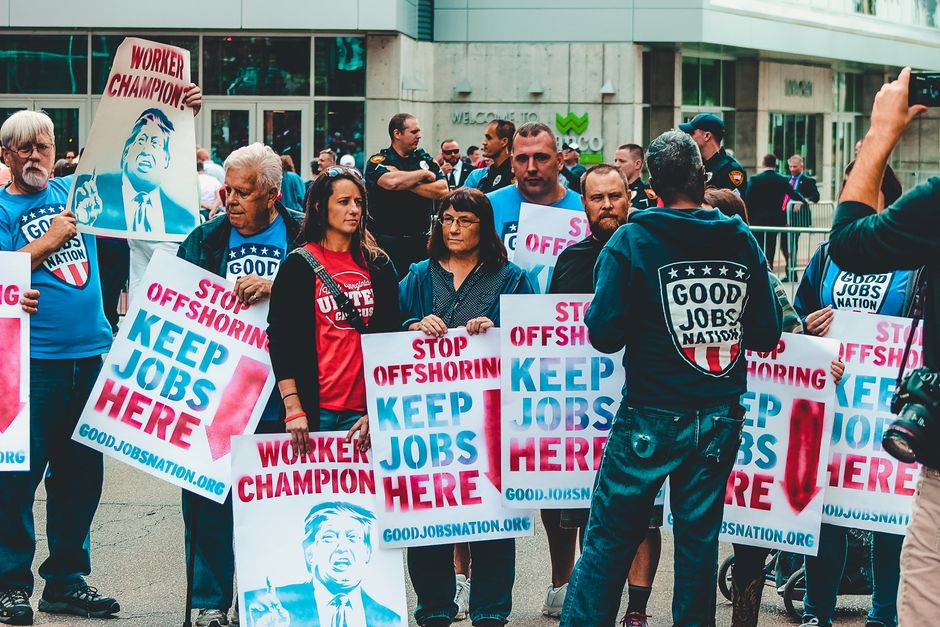
How Unions Are Confronting A.I. Threats in the Workplace
Unions in the manufacturing sector are actively negotiating safeguards against job losses due to AI, focusing on job security and retraining programs for workers.
Read More →Projected 2027‑2031 Trajectory of VR‑Enabled Workforce Resilience
Looking ahead, three structural forces will shape the trajectory of VR‑mediated mental health in the workplace:
Regulatory Standardization – The U.S. Department of Labor is drafting guidelines for “Digital Therapeutic Equity,” mandating that employers disclose data‑privacy safeguards for VR health tools by 2028. Compliance will drive uniform adoption across industries, reducing the current “early‑adopter premium.”
Hardware Democratization – By 2029, consumer‑grade VR headsets are projected to cost under $150, a price point comparable to a standard laptop peripheral. This price compression will lower capital barriers for mid‑market firms, expanding the addressable market from the current 12 % of large enterprises to an estimated 48 % of all employers.
AI‑Enhanced Therapeutic Personalization – Generative AI will refine scenario generation in real time, aligning exposure intensity with biometric feedback loops. Early pilots at Siemens report an increase in therapy adherence when AI‑curated content replaces static modules [10].
Cumulatively, these trends suggest that by 2031, a significant proportion of U.S. employees will have accessed VR‑based mental‑health interventions as part of their standard benefits package. The systemic impact will manifest as a measurable uplift in aggregate labor productivity (estimated +0.4 % GDP contribution) and a narrowing of the economic mobility gap for workers in high‑stress occupations such as healthcare, finance, and logistics.
—
[Insight 2]: Institutional adoption creates a feedback loop where health data informs performance management, accelerating promotion pathways for resilient employees and reshaping leadership pipelines.
Key Structural Insights
[Insight 1]: VR embeds mental‑health capital into the corporate talent calculus, converting well‑being from a peripheral benefit into a measurable productivity lever.
[Insight 2]: Institutional adoption creates a feedback loop where health data informs performance management, accelerating promotion pathways for resilient employees and reshaping leadership pipelines.
[Insight 3]: The convergence of regulatory mandates, hardware cost declines, and AI‑driven personalization will drive mass‑scale diffusion, yielding macroeconomic gains and narrowing mobility disparities.
Sources
 Career Guidance
Posts Spread After Call to Identify Jane Doe
More than eleven thousand accounts made almost twenty-five thousand posts purporting to name Jane Doe, according to Gudea’s analysis.
Read More →Mental Health Virtual Reality | Wiley Online Books — Wiley
Virtual Reality and Mental Health — Psychiatric Clinics
Mental health in the virtual world: Challenges and opportunities in the metaverse era — PMC
A systematic bibliometric analysis of virtual reality research in mental health — ScienceDirect
Exploring the potential of virtual reality (VR) in mental healthcare: a systematic literature review — Springer
U.S. Bureau of Labor Statistics, “Employee Mental‑Health Trends, 2023” — BLS
Deloitte Survey on VR Wellness Adoption, 2024 — Deloitte Insights
JPMorgan Chase Internal Wellness Report, 2023 — JPMorgan Internal Publication
Accenture Future Skills & Wellness Integration Study, 2022 — Accenture Research
U.S. Department of Labor Draft Guidance on Digital Therapeutic Equity, 2027 — DOL
Siemens AI‑Enhanced VR Therapy Pilot Results, 2025 — Siemens Healthineers
Written by Career Ahead AI. AI can make mistakes, so verify key facts. Report errors to support@careeraheadonline.com.