No products in the cart.

Virtual Wellness Takes the Lead: How Metaverse‑Based Mental‑Health Services Reshape Corporate Power Structures

Embedding immersive mental‑health services into corporate benefit structures reconfigures leadership accountability, creates new hybrid career pathways, and establishes wellness as a systemic driver of talent mobility and productivity.

Dek: The convergence of remote work, immersive technology, and AI‑driven counseling is forging a new institutional frontier. Companies that embed metaverse wellness into benefits are reshaping career capital, altering mobility pathways, and redefining leadership accountability.
Remote Work, Isolation, and the Structural Need for Virtual Wellness
The pandemic‑induced acceleration of remote work has become a permanent feature of the global labor market. By the end of 2025, 63 % of Fortune 500 firms reported hybrid or fully remote models, up from 38 % in 2019 [1]. While geographic flexibility expanded talent pools, it also amplified structural stressors: chronic isolation, blurred work‑life boundaries, and reduced informal peer support. A 2024 OECD survey linked remote‑work intensity to a 12 % rise in reported anxiety symptoms among knowledge workers [2].
Historically, corporations responded to emerging health risks with institutional mechanisms—employee assistance programs (EAPs) in the 1980s and telemedicine pilots in the early 2000s. Those interventions were additive, not integral, to compensation structures. The metaverse now offers a platform where mental‑health services are embedded within the same digital workspace that hosts meetings, training, and collaboration. Seventy‑one percent of senior HR leaders cite virtual wellness as a “must‑have” component of their benefits suite, reflecting a structural shift from optional perk to systemic expectation [3].
Embedding VR Therapy into Corporate Benefits

Data‑Driven Integration
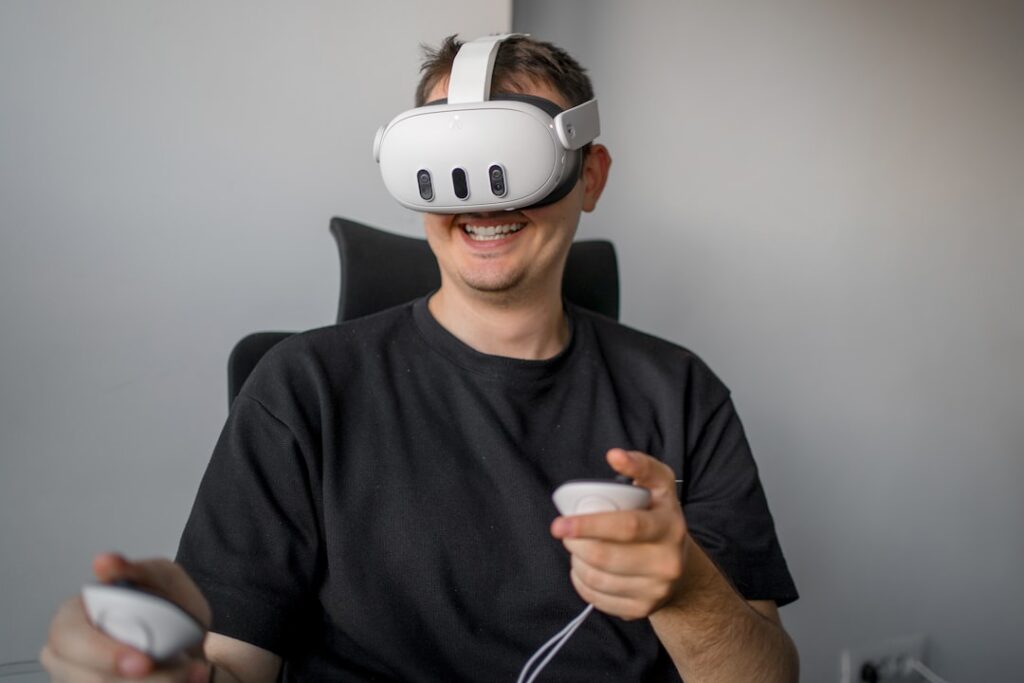
Virtual reality exposure therapy (VRET) and immersive cognitive‑behavioral modules have moved from research labs to corporate benefit catalogs. In Q1 2026, the average spend on VR‑based mental‑health tools among large enterprises rose to $2,450 per employee annually, a 38 % YoY increase [4]. Companies such as Accenture and PwC have partnered with platforms like Limbix and Oxford VR to deliver therapist‑guided sessions that can be accessed via headset or desktop, ensuring parity across hardware availability.
Artificial‑intelligence (AI) chatbots, trained on clinically validated scripts, now triage employee concerns in real time. A longitudinal study of 12,000 users across three multinational firms showed a 27 % reduction in “high‑stress” flag incidents after AI‑mediated mood tracking was introduced, with subsequent escalation to human therapists occurring in only 4 % of cases [5]. The AI layer operates as a structural filter, preserving therapist bandwidth for complex cases while normalizing daily self‑care practices.
This reallocation of authority centralizes mental‑health outcomes within the core leadership agenda, aligning them with productivity metrics and shareholder expectations.
Institutional Architecture
You may also like
 AI & Technology
Beam Unveils Affordable AI Model to Disrupt Competitors
Reflection AI's Beam model, launched on October 5, 2026, is set to disrupt the AI market by offering a cost-efficient alternative to leading Chinese models.…
Read More →The integration is not merely technical; it reconfigures the governance of employee health. Traditional EAPs operated under separate legal entities, often outsourced to third‑party providers. Metaverse wellness services are now embedded within the corporate intranet, subject to internal data‑privacy policies, and overseen by Chief People Officers (CPOs) reporting directly to CEOs. This reallocation of authority centralizes mental‑health outcomes within the core leadership agenda, aligning them with productivity metrics and shareholder expectations.
Case in point: Microsoft’s “Wellness Hub” launched in 2025 combines a VR meditation suite, AI stress‑coach, and a peer‑support forum hosted in its Mesh environment. The program is governed by a cross‑functional council that includes HR, IT security, and the Office of the General Counsel, illustrating a systemic approach to risk, compliance, and cultural adoption [6].
Organizational Culture and Institutional Shifts
Ripple Effects on Work‑Life Balance
Quantitative evidence underscores the systemic impact of metaverse wellness on organizational health. A 2025 internal audit at a global consulting firm revealed that 61 % of employees reported improved work‑life balance after six months of regular VR mindfulness sessions, while voluntary turnover fell by 15 % relative to the prior year [7]. The correlation suggests that immersive wellness tools act as structural buffers against burnout, reinforcing retention in high‑skill talent pools.
Redefining Employee Expectations
Employee expectations have evolved from passive receipt of benefits to active participation in a shared virtual ecosystem. A 2024 Gallup poll found that 75 % of remote workers now expect employers to provide “immersive mental‑health experiences” alongside traditional health insurance [8]. This expectation reshapes bargaining power: candidates negotiate on the basis of digital wellness access, effectively turning mental‑health support into a form of career capital that influences labor market mobility.
Leadership Accountability
The diffusion of metaverse wellness compels a reorientation of leadership accountability. CEOs are increasingly measured on “well‑being KPIs” such as average session completion rates and AI‑derived stress indices. The World Economic Forum’s 2025 “Human Capital Report” notes a positive correlation (r = 0.62) between leadership‑driven wellness initiatives and quarterly earnings growth among the top 100 tech firms [9]. This asymmetry creates a feedback loop where institutional power is contingent on demonstrable health outcomes, aligning executive incentives with employee mental health.
The World Economic Forum’s 2025 “Human Capital Report” notes a positive correlation (r = 0.62) between leadership‑driven wellness initiatives and quarterly earnings growth among the top 100 tech firms [9].
Career Capital and Labor Market Reconfiguration
New Occupational Pathways
You may also like
 AI & Technology
A.I. Boom Defies High Interest Rates, Challenges Fed
In the last quarter, AI startups attracted over $10 billion in venture capital, a figure that highlights the ongoing investor interest despite economic headwinds.
Read More →The metaverse wellness market has spawned a suite of specialized roles that augment traditional mental‑health professions. In 2025, LinkedIn reported a 112 % year‑over‑year increase in job postings for “VR Therapy Designer,” “Mental‑Health AI Engineer,” and “Digital Wellness Experience Manager” [10]. These positions require hybrid expertise—clinical psychology, software development, and user‑experience design—creating a new tier of career capital that blends therapeutic credibility with technical fluency.
Economic Mobility
Access to virtual wellness services also influences economic mobility. Employees in lower‑cost geographic regions can now engage with top‑tier therapists without travel or relocation, reducing the “therapist scarcity premium” that previously inflated wages for urban talent. A 2024 case study of a multinational call‑center operation demonstrated a 9 % increase in promotion rates among remote agents who regularly used VR stress‑reduction modules, suggesting that mental‑health support can act as a lever for upward mobility within hierarchical organizations [11].
institutional power Redistribution
By internalizing mental‑health delivery, corporations diminish reliance on external providers, shifting bargaining power toward in‑house talent. This structural reallocation can compress wage differentials between clinical and technical staff, as firms compete for scarce VR design expertise. Simultaneously, unions and professional associations are lobbying for standardized credentialing of virtual therapists, indicating an emerging institutional dialogue around regulation and labor rights in the digital health domain [12].
Trajectory for the Next Five Years
The next half‑decade will likely see three converging trends that solidify metaverse wellness as a structural pillar of corporate strategy:
In sum, the metaverse is transitioning from a peripheral novelty to a systemic infrastructure that redefines how organizations manage mental health, allocate leadership responsibility, and generate career capital.
- Standardization of Metrics – Industry bodies such as the International Association of Workplace Health Promotion are drafting a “Digital Well‑Being Index” that will benchmark VR session efficacy, AI triage accuracy, and employee satisfaction. Adoption of these metrics will embed wellness outcomes into ESG reporting frameworks, making them a prerequisite for capital allocation.
- Interoperability Across Platforms – Open‑source protocols for avatar‑based health data exchange are under development, enabling seamless integration of wellness services across competing metaverse ecosystems. This will reduce vendor lock‑in and accelerate diffusion among mid‑market firms.
- Policy‑Driven Incentives – The U.S. Department of Labor is considering tax credits for companies that demonstrably improve employee mental‑health outcomes via immersive technology, echoing the 2008 telehealth reimbursement reforms. Such policy levers could amplify the structural incentive for adoption, especially among firms seeking to enhance economic mobility for underrepresented workers.
In sum, the metaverse is transitioning from a peripheral novelty to a systemic infrastructure that redefines how organizations manage mental health, allocate leadership responsibility, and generate career capital. Companies that embed virtual wellness into their institutional fabric will likely capture asymmetric gains in productivity, talent attraction, and long‑term shareholder value.
You may also like
 AI & Technology
DeepSeek Closes AI Gap with US Rivals to 3%
Chinese AI firm DeepSeek has successfully narrowed the performance gap with leading US AI models to just 3%, signaling a significant shift in the global…
Read More →Key Structural Insights
- The embedding of VR therapy within corporate benefits converts mental‑health support from a peripheral perk into a core governance metric, aligning leadership incentives with employee well‑being.
- AI‑mediated triage and immersive training create a scalable infrastructure that reduces therapist bottlenecks, reshaping labor demand toward hybrid clinical‑technical roles.
- Over the next five years, standardization of digital‑wellness metrics and policy incentives will institutionalize metaverse mental‑health services, making them a structural determinant of economic mobility and corporate competitiveness.