No products in the cart.

Young Innovators at the Forefront of Climate Research
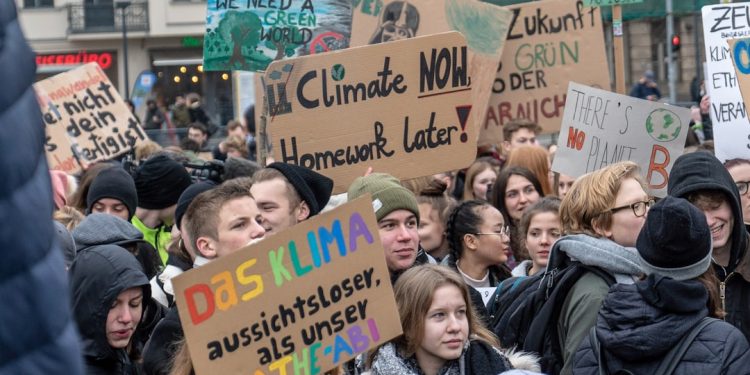
Young scientists are not just participants but leaders in climate research, driving innovative solutions through fellowships and collaborative projects.

Cambridge, UK — Young scientists are increasingly taking the reins in the battle against climate change. With an array of fellowships and collaborative initiatives, this new generation is redefining the landscape of climate research. As global temperatures rise and extreme weather events become commonplace, their contributions are more critical than ever.
This shift matters now more than ever as the world grapples with the urgency of climate action. According to the Intergovernmental Panel on Climate Change (IPCC), we have less than a decade to make substantial changes to avoid catastrophic climate impacts. Young researchers, equipped with fresh perspectives and innovative ideas, are spearheading efforts to address these challenges head-on.

Contextually, organizations like the National Science Foundation (NSF) and the European Commission are investing heavily in youth-led research programs. The NSF’s Graduate Research Fellowship Program, for example, awarded grants to over 2,000 students in 2023 alone, emphasizing the importance of innovative solutions to pressing environmental issues. Similarly, the European Commission’s Horizon Europe initiative allocates nearly €95 billion ($106 billion) for research and innovation, with a significant portion aimed at fostering young talent in climate science.[1]
These investments are yielding results. In the UK, a group of researchers from the University of Cambridge developed a novel method for carbon capture using biochar, a sustainable material produced from organic waste. Their approach not only reduces greenhouse gases but also enhances soil health, providing a dual benefit that aligns with sustainable development goals. This project, led by graduate student Emma Thompson, has attracted attention for its potential scalability and environmental impact.[2]
The NSF’s Graduate Research Fellowship Program, for example, awarded grants to over 2,000 students in 2023 alone, emphasizing the importance of innovative solutions to pressing environmental issues.
In the United States, the Climate Reality Project, founded by former Vice President Al Gore, has seen a surge in participation from young activists and scientists. Their training programs empower youth to present climate solutions and advocate for policy changes at local, national, and international levels. The 2023 cohort included over 1,500 participants, nearly 60% of whom were under 30, highlighting the urgency and passion of this demographic.[3]
Meanwhile, the rise of social media has allowed these young scientists to amplify their voices. Platforms like Twitter and Instagram serve as vital spaces for sharing research findings, mobilizing support for climate initiatives, and fostering community engagement. The hashtag #YouthForClimate has garnered millions of posts, creating a global dialogue about sustainability.
However, challenges remain. Many young researchers face funding constraints, limited mentorship opportunities, and institutional barriers that can stifle innovation. According to a survey by the American Association for the Advancement of Science, 65% of early-career researchers reported difficulties securing funding for climate-related projects. This highlights the need for systemic changes in how research funding is allocated, particularly for emerging scientists.[4]
In response, some organizations are adapting their strategies. The Global Youth Climate Network is working to connect young scientists with established researchers, fostering mentorship and collaboration. Programs aimed at bridging the gap between academia and grassroots activism are gaining traction, ensuring that innovative solutions reach those most affected by climate change.
You may also like
 Education & University Insights
Leadership Shifts at DES Pune Spark Educational Innovation
Leadership changes at DES Pune University reflect a commitment to innovation in higher education, emphasizing interdisciplinary research and modern curriculum development.
Read More →Looking ahead, the intersection of technology and climate research is poised to transform how we approach environmental challenges. The integration of artificial intelligence (AI) in climate modeling, for example, allows for better predictions and more effective solutions. Young scientists are at the forefront of this technological revolution, leveraging AI to analyze vast datasets and develop actionable insights.
According to a survey by the American Association for the Advancement of Science, 65% of early-career researchers reported difficulties securing funding for climate-related projects.
As the climate crisis escalates, the role of young scientists will only become more pivotal. Their fresh perspectives, coupled with advanced tools and a global network of support, position them to lead the charge in climate innovation. The future of our planet may very well depend on their efforts, and the time to support them is now.