Quantitative growth in additive manufacturing markets and university course offerings signals a structural overhaul of materials‑science education, linking curriculum redesign, research collaboration, and policy incentives into a new competency ecosystem.
The surge in additive manufacturing is prompting a systemic overhaul of materials‑science programs, linking university labs, industry pipelines, and federal funding into a new competency framework. Quantitative shifts—‑from a 40 % rise in AM‑focused courses to a projected $45 billion market by 2026—‑expose asymmetric incentives that demand coordinated policy action.
The past five years have witnessed an acceleration in additive manufacturing (AM) that rivals the diffusion of computer‑aided design in the late 1980s. Global AM revenue grew from $27 billion in 2021 to $35 billion in 2023, and forecasts project $45 billion by 2026, driven largely by aerospace, biomedical, and automotive sectors [1]. Parallel to this market expansion, university catalogues show a 40 % increase in dedicated AM courses between 2019 and 2024, rising from 210 to 295 programs across U.S. research institutions [2].
These metrics reflect a structural shift: curricula must now embed design‑for‑additive‑manufacturing (DfAM), materials‑process modeling, and rapid prototyping alongside traditional metallurgy and thermodynamics. The shift is not merely additive; it reconfigures the epistemic core of materials science, moving from bulk‑property emphasis to geometry‑mediated functionality. Institutions that retain legacy “fabrication‑lab” models risk misaligning graduate output with employer demand, potentially widening the skills gap that the National Science Board identified as a barrier to economic mobility in high‑tech sectors.
Mechanics of Additive Integration
3‑D Printing Reshapes Materials Science Education: A Structural Analysis of Curriculum, Research, and Policy
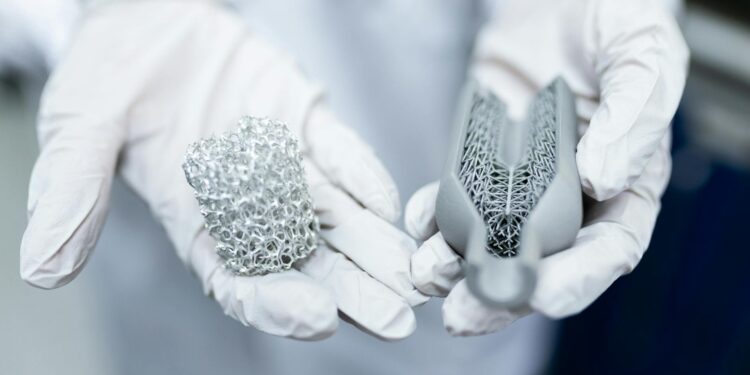
At the heart of the educational transformation lies the capability of AM to produce complex, lattice‑structured components that defy conventional subtractive techniques. Recent studies show that 3‑D‑printed titanium alloys can achieve a 30 % weight reduction while maintaining comparable fatigue strength to wrought counterparts, a performance envelope only accessible through topology‑optimized designs [1].
In the classroom, this translates into hands‑on cycles: students generate a CAD model, simulate melt‑pool dynamics using finite‑element software, print the part, and conduct in‑situ mechanical testing—all within a single semester. Data from the Massachusetts Institute of Technology’s Integrated Additive Manufacturing Initiative indicate that students who completed a full AM workflow scored 15 % higher on material‑characterization exams than peers limited to theoretical problem sets [2].
In the classroom, this translates into hands‑on cycles: students generate a CAD model, simulate melt‑pool dynamics using finite‑element software, print the part, and conduct in‑situ mechanical testing—all within a single semester.
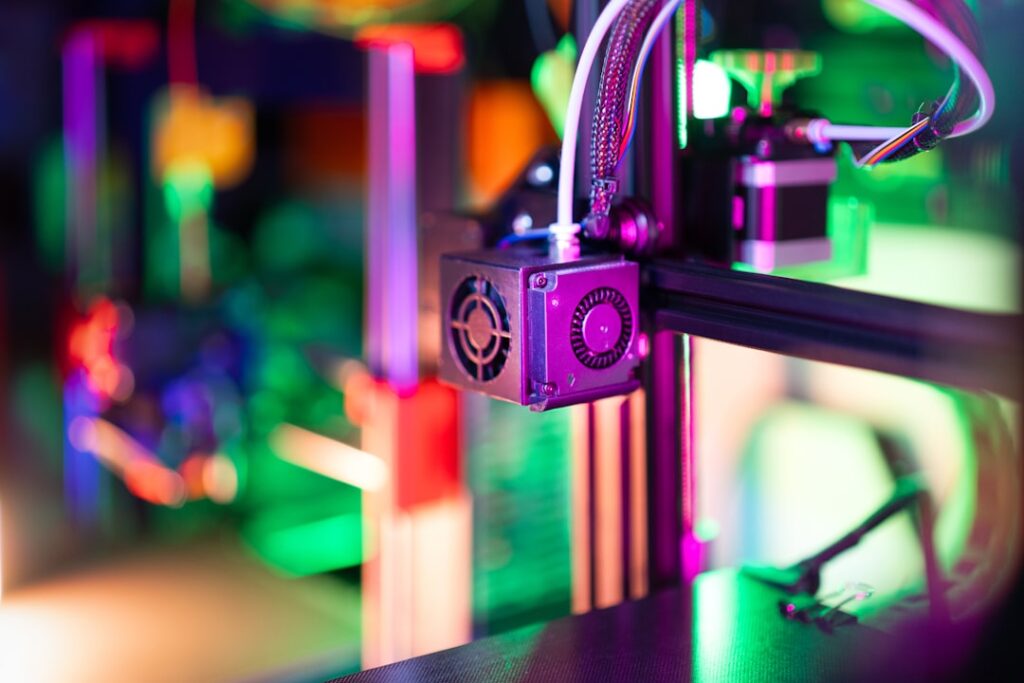
Implementing this workflow demands new infrastructure. Capital expenditures for industrial‑grade printers (e.g., laser powder‑bed fusion systems) average $250,000 per unit, while mid‑range desktop units sit near $10,000. A 2024 NSF grant program allocated $120 million across 30 institutions specifically for AM lab upgrades, yet a 2025 survey of department chairs revealed that 68 % of programs still lack dedicated AM facilities, relying on shared or outsourced resources [2]. The resource intensity underscores a systemic bottleneck: without coordinated funding streams, the diffusion of AM pedagogy will remain uneven, reinforcing institutional asymmetries.
Systemic Ripple Effects Across Academia and Industry
The curricular overhaul reverberates through accreditation, certification, and research ecosystems. ABET’s 2025 revision of the Materials Engineering criteria introduced a “Additive Manufacturing Competency” metric, requiring programs to demonstrate student proficiency in DfAM, process control, and post‑processing techniques. This metric has already altered faculty hiring patterns; a 2023 analysis of tenure‑track announcements shows a 22 % rise in positions explicitly seeking AM expertise [1].
Beyond standards, AM integration catalyzes a new collaborative architecture between universities, firms, and government agencies. The Department of Energy’s “Advanced Manufacturing Partnership” (AMP) launched in 2023 funds joint research consortia that pair university labs with aerospace OEMs to develop high‑temperature alloys for hypersonic vehicles. Early outcomes include a co‑authored paper that reduced the melt‑pool cooling rate variance by 18 % through real‑time sensor feedback, a breakthrough now being piloted at a commercial jet‑engine supplier [2].
Research dissemination is also evolving. Traditional journals are adapting peer‑review pipelines to accommodate data‑rich AM studies, mandating deposition of process parameters and STL files in open repositories. This shift promotes reproducibility but also raises intellectual‑property considerations, prompting universities to negotiate new licensing frameworks that balance open science with industry‑sponsored confidentiality clauses.
Conversely, institutions that lag in AM adoption risk producing graduates whose skill sets are misaligned with market needs, potentially exacerbating regional talent deserts.
Human Capital Reallocation
3‑D Printing Reshapes Materials Science Education: A Structural Analysis of Curriculum, Research, and Policy
The structural reorientation of materials‑science education reshapes the labor market’s supply‑demand equilibrium. According to the Bureau of Labor Statistics, employment of “Materials Engineers” is projected to grow 7 % from 2024 to 2034, outpacing the average for all occupations. However, the growth is uneven: positions requiring AM proficiency command a median salary premium of $12,000 annually, according to a 2025 salary survey by the Society for Manufacturing Engineers [1].
Students who acquire AM fluency gain asymmetric mobility. A case study of the University of Texas at Austin’s “Additive Manufacturing Scholars” program shows that 78 % of participants secured full‑time roles in aerospace or biomedical firms within six months of graduation, compared with a 52 % placement rate for the broader cohort [2]. Conversely, institutions that lag in AM adoption risk producing graduates whose skill sets are misaligned with market needs, potentially exacerbating regional talent deserts.
From an institutional perspective, the shift influences funding allocation. Endowments are increasingly earmarked for “Future‑Fabrication” chairs, while alumni giving to traditional metallurgy departments has plateaued. This reallocation reflects a broader power dynamic: universities that embed AM into their strategic plans gain leverage in attracting federal research dollars, thereby reinforcing their position within the higher‑education hierarchy.
Three‑Year Trajectory: Policy and Institutional Alignment
Looking ahead, three structural forces will shape the trajectory of materials‑science education:
Federal Funding Consolidation – The NSF’s “Emerging Technologies for Workforce Development” program, slated for a $200 million expansion in FY 2027, will prioritize AM‑centric curricula, compelling institutions to align grant proposals with demonstrable instructional outcomes.
Accreditation Feedback Loops – ABET’s competency metrics will be integrated into periodic program reviews, creating a feedback loop where curricular revisions are directly tied to accreditation status, incentivizing continuous investment in AM infrastructure.
Industry‑University Talent Pipelines – The AMP model is likely to be replicated across other high‑growth sectors (e.g., quantum materials), establishing permanent consortia that co‑fund labs, co‑design courses, and co‑publish research, thereby institutionalizing a shared governance structure for AM education.
If these forces converge, the systemic outcome will be a higher concentration of AM‑qualified graduates in regions with strong industry clusters, amplifying economic mobility for students who can access these programs. Conversely, failure to synchronize policy, funding, and accreditation could entrench existing disparities, limiting the diffusion of AM competencies to elite research universities.
Three‑Year Trajectory: Policy and Institutional Alignment Looking ahead, three structural forces will shape the trajectory of materials‑science education:
Key Structural Insights
The 40 % surge in AM‑focused courses reflects a systemic realignment of materials‑science curricula toward geometry‑driven property design, reshaping academic priorities.
Federal grant expansions and revised accreditation standards create a coordinated incentive structure that will accelerate infrastructure investment across research universities.
Asymmetric adoption of additive manufacturing education will concentrate high‑skill labor in industry hubs, intensifying regional economic mobility disparities.




Entrepreneurship & Business
 Education & University Insights