No products in the cart.

A blueprint for using AI to strengthen democracy
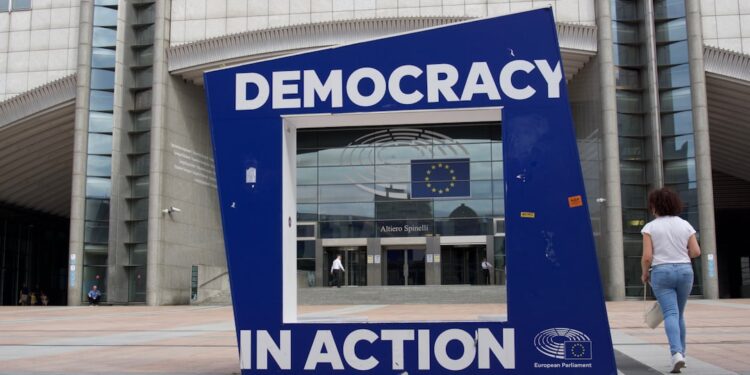
AI's Transformative Role in Democracy: As artificial intelligence reshapes civic engagement and transparency, it presents both opportunities and challenges for democratic processes.

AI’s Transformative Role in Democracy
The advent of artificial intelligence is reshaping the landscape of democracy. As technology advances, AI emerges as a pivotal force that can enhance civic engagement and improve the transparency of democratic processes. This shift is reminiscent of past technological revolutions that have redefined governance, such as the printing press and the telegraph. Today, AI has the potential to be the next great equalizer in how citizens interact with their governments.
According to a recent article by MIT Technology Review, AI is becoming the primary interface through which citizens form beliefs and engage in democratic processes. This evolution raises important questions about how we know what is true and whom to trust. As AI systems increasingly mediate information, they can either bridge divides or exacerbate polarization, depending on their design and implementation.
The Epistemic Layer: Constructing Knowledge with AI
At the core of AI’s impact on democracy lies the epistemic layer, which concerns how knowledge is constructed and disseminated. People are increasingly relying on AI tools to inform their views on candidates and policies. This reliance can lead to a more informed electorate if AI systems prioritize accuracy and diverse perspectives. However, if poorly designed, they could reinforce existing biases and create echo chambers.
Research indicates that AI-generated fact-checking can improve the quality of information available to the public. For instance, a study found that AI-written notes were perceived as more helpful than those produced by humans, suggesting that AI could enhance cross-partisan credibility in political discourse. This could be a game-changer in combating misinformation and fostering a more informed citizenry.
AI companies must prioritize transparency in how these systems operate and the sources they rely on.
However, the challenge remains: how can we ensure that AI systems provide truthful outputs? AI companies must prioritize transparency in how these systems operate and the sources they rely on. The risk of misinformation is heightened when AI systems prioritize engagement over accuracy, leading to a misinformed public.
The Agentic Layer: Enhancing Civic Participation
The agentic layer of AI involves how citizens act on the information provided by these systems. AI agents can assist individuals in making informed decisions, from voting to civic participation. These agents have the potential to enhance democratic engagement by simplifying complex information and providing tailored insights.
You may also like
 Entrepreneurship & Business
Bajaj Finance set to mop up Rs 17,500 crore via QIP, warrants
Bajaj Finance plans to raise ₹17,500 crore through a qualified institutional placement (QIP) and warrants, marking its first major capital raise since November 2023. This…
Read More →However, there is a significant risk that these agents may also manipulate user preferences, acting more as advocates than impartial advisors. If AI agents are designed to cater solely to existing beliefs, they could hinder open dialogue and critical thinking, essential components of a healthy democracy. The design of these agents must ensure they promote genuine engagement rather than merely reinforcing biases.
Moreover, the emergence of personalized AI agents raises concerns about accountability. If an agent misrepresents a user’s views or fails to present uncomfortable information, it undermines the very essence of informed decision-making. Policymakers must establish guidelines to ensure that AI agents faithfully represent user interests without promoting motivated reasoning.

Collective Governance in the Age of AI
As AI agents become more prevalent, they will inevitably interact in public forums, blurring the lines between human and machine participation. This phenomenon presents a unique challenge: how to maintain a cohesive public sphere in the face of personalized AI agents. If each individual engages with a tailored AI, the result could be a fragmented discourse lacking common ground.
If AI agents are designed to cater solely to existing beliefs, they could hinder open dialogue and critical thinking, essential components of a healthy democracy.
Even unbiased agents can generate collective biases at scale. This means that while individual AI agents may operate without prejudice, their interactions can lead to outcomes that no single user intended. The implications for democratic deliberation are profound, as a public sphere dominated by personalized agents may fail to facilitate the shared understanding necessary for effective governance.

To address these challenges, it is vital to integrate AI into democratic processes thoughtfully. Policymakers should consider strategies that promote collective engagement while ensuring that AI systems enhance rather than detract from democratic values. This requires a collaborative effort between technologists, policymakers, and civil society to create AI tools that support transparency and inclusivity.
You may also like
 Entrepreneurship & Business
Zoho Arattai Challenges WhatsApp Business Pricing | Career Outlook
Arattai for Business is designed to facilitate communication within organizations and with customers. According to Zoho's founder, Sridhar Vembu, the platform not only supports messaging…
Read More →Sources: Example, Infotechzy, Onmine.