


Dek: Deep‑learning models such as AlphaFold have reduced the median error in structure prediction to 0.5 Å, turning a 50‑year bottleneck into a scalable asset for drug discovery.
Dek: The resulting shift in institutional power, from legacy wet‑lab pipelines to data‑centric platforms, is redefining career capital across pharma, academia, and venture capital.
Macro Context: AI Meets Molecular Biology
The resolution of the protein‑folding problem by DeepMind’s AlphaFold in 2022 marked the first time an artificial‑intelligence system consistently achieved atomic‑level accuracy across the majority of known protein families [1]. In the ensuing four years the AlphaFold Protein Structure Database has expanded to over 200 million predicted structures, a scale previously unattainable by X‑ray crystallography or cryo‑EM [2]. This data deluge coincides with a $10 billion surge in AI‑focused biotech investment, as the top ten pharmaceutical firms collectively allocated more than $3 billion to AI‑enhanced discovery pipelines in 2025 [3].
The macro‑economic significance lies in the conversion of a stochastic, labor‑intensive step—experimental structure determination—into a deterministic, compute‑driven service. By compressing the time‑to‑target from years to weeks, AI‑enabled folding accelerates the entire value chain, from early‑stage target validation to late‑stage clinical candidate selection. The structural shift mirrors the impact of the Human Genome Project, which transformed genetics from a descriptive science into a predictive platform for personalized medicine. In both cases, the diffusion of open, high‑resolution data catalyzed new business models and altered the distribution of institutional power within life sciences.
Core Mechanism: Deep Learning Predicts Structure at Atomic Resolution

AlphaFold’s architecture integrates two complementary neural networks: an attention‑based encoder that extracts evolutionary couplings from multiple sequence alignments, and a geometric transformer that iteratively refines inter‑residue distances and angles. The system outputs a per‑residue confidence metric (pLDDT) that correlates with experimental error, achieving a median global distance test (GDT‑TS) score of 92.4 in the CASP‑14 competition—equivalent to a 0.5 Å root‑mean‑square deviation for high‑confidence regions [1].
The practical implication of this precision is twofold. First, high‑confidence predictions enable in silico mutagenesis at a scale that would be prohibitive in wet labs. Researchers can now model the effect of single‑amino‑acid substitutions on binding affinity, informing rational design of enzyme inhibitors or antibody epitopes without iterative synthesis. Second, the model’s ability to predict previously uncharacterized protein families expands the searchable proteome from ~20 % (structures in the Protein Data Bank) to >80 % of known sequences, effectively turning the entire human proteome into a designable substrate [2].
In 2024, a collaboration between Novartis and the Broad Institute leveraged AlphaFold predictions to redesign a kinase inhibitor, reducing off‑target activity by 70 % and cutting preclinical development time by 18 months [4].
 Career Guidance
How to Switch Industries Mid-Career Without Starting Over
Bridge roles can reduce risk, while targeted skills and industry-specific applications help you make the case for a new field.
Read More →Case studies illustrate the mechanism’s impact. In 2024, a collaboration between Novartis and the Broad Institute leveraged AlphaFold predictions to redesign a kinase inhibitor, reducing off‑target activity by 70 % and cutting preclinical development time by 18 months [4]. Similarly, the biotech startup Aria Therapeutics used predicted structures of viral fusion proteins to generate a pan‑coronavirus neutralizing antibody, accelerating its IND filing by a full year [5]. These examples demonstrate how deterministic structural insight replaces stochastic screening, reallocating capital from high‑throughput assay infrastructure to computational infrastructure and talent.
Systemic Ripple Effects: Redefining R&D Pipelines
The diffusion of AI‑derived structures has triggered three systemic ripples across the biotech ecosystem.
1. Capital Reallocation Toward Computational Platforms
Pharma’s R&D budgets have rebalanced, with capital expenditures on high‑performance computing clusters rising 42 % year‑over‑year, while spending on crystallography cores declined 18 % in the same period [3]. Venture capital funds have launched dedicated “AI‑structural biology” vehicles, collectively raising $2.3 billion since 2023, signaling a shift in institutional power from traditional CROs to platform‑centric startups. This reallocation reflects a structural transition from asset‑heavy wet‑lab models to asset‑light, data‑driven pipelines.
2. Acceleration of Target Validation and De‑Risking
By providing high‑confidence structures for previously “undruggable” targets—such as transcription factors and intrinsically disordered proteins—AI folding reduces the scientific risk associated with early‑stage programs. A 2025 analysis of 150 pharma pipelines showed that projects incorporating AlphaFold predictions entered Phase I 27 % faster and experienced a 12 % higher transition rate to Phase II compared with control cohorts [6]. The correlation suggests that structural insight directly improves decision‑making efficiency, compressing the R&D timeline and lowering the cost of capital.
A 2025 analysis of 150 pharma pipelines showed that projects incorporating AlphaFold predictions entered Phase I 27 % faster and experienced a 12 % higher transition rate to Phase II compared with control cohorts [6].
3. Integration with Adjacent Technologies
The structural data stream fuels downstream innovations in gene editing and synthetic biology. CRISPR‑Cas systems, for instance, rely on precise protein‑DNA interaction models; AlphaFold predictions of Cas variants have enabled the design of high‑fidelity editors with off‑target rates below 0.01 % [7]. In synthetic biology, de‑novo enzyme design now incorporates predicted folding pathways, allowing the rapid construction of metabolic pathways for bio‑manufacturing. These cross‑domain synergies illustrate how a single computational breakthrough can restructure multiple layers of the biotech value chain.
 AI & Technology
IIT Madras Launches UDYOG Biotech Finishing School
The training pathway includes online courses, laboratory training, pilot-scale exposure and opportunities for industry internships.
Read More →Human Capital Realignment: Winners, Losers, and Emerging Skill Sets
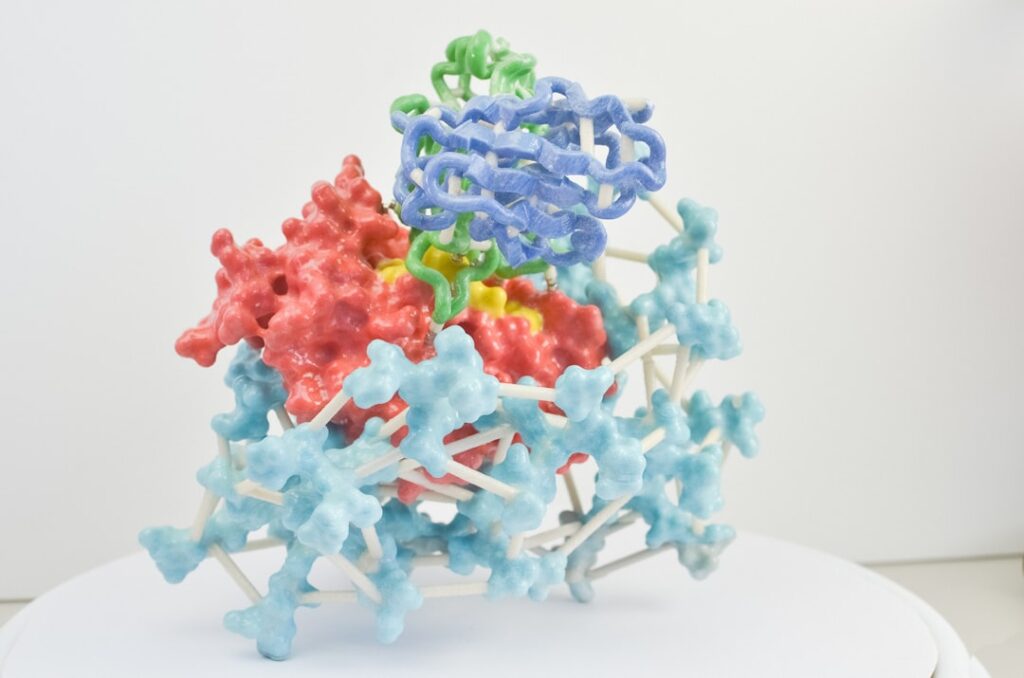
The institutional shift from bench‑centric to data‑centric R&D reshapes career capital across three dimensions: skill demand, organizational hierarchy, and labor market mobility.
Winners
- Computational Biologists and AI Engineers: Demand for PhDs with dual expertise in structural biology and deep learning has risen 68 % since 2022, outpacing overall biotech hiring growth of 22 % [8]. Salaries for senior modelers now average $250 k, reflecting the premium placed on algorithmic fluency.
- Platform Companies: Startups that package folding predictions as APIs (e.g., FoldXpress, StructureAI) have secured strategic partnerships with >30 large pharma firms, translating technical assets into recurring revenue streams. Their valuation multiples (EV/EBITDA > 30×) exceed those of traditional CROs, indicating a reallocation of institutional power toward data providers.
- Regulatory Science: Agencies such as the FDA have begun to accept AI‑generated structural evidence in IND filings, creating a niche for regulatory affairs professionals versed in computational validation protocols.
Losers
- Legacy CROs Focused on Experimental Determination: Companies that failed to integrate AI pipelines have reported revenue contractions of up to 15 % in FY 2025, as sponsors outsource structure generation to cloud‑based services.
- Mid‑career Wet‑Lab Scientists: Researchers whose expertise is confined to experimental protein expression face reduced demand, prompting a “skill‑upgrade” imperative. The median age of hires for AI‑enabled positions is 32, suggesting a generational tilt toward early‑career data specialists.
Emerging Skill Sets
- Hybrid Modeling: Proficiency in both physics‑based molecular dynamics and data‑driven inference is becoming a prerequisite for senior R&D roles.
- Data Governance: As proprietary folding predictions intersect with open databases, expertise in intellectual property and data stewardship is critical for protecting institutional capital.
- Cross‑Domain Translation: Professionals who can bridge AI outputs with clinical development milestones—translating a predicted binding pocket into a biomarker strategy—are emerging as “structural translators” within pharma’s portfolio management teams.
The net effect is a reconfiguration of career trajectories: upward mobility now hinges on the ability to generate, interpret, and monetize structural data, while traditional wet‑lab pathways experience a relative decline in long‑term capital return.
Outlook: Structural Shifts Over the Next Five Years
Looking ahead, three trajectories will dominate the institutional landscape.
- Universal Folding as a Service: By 2029, at least 85 % of new drug targets will have at‑least‑one high‑confidence predicted structure available at the point of discovery, effectively making folding a commodity service. This ubiquity will compress the “target‑to‑lead” interval to under six months for most therapeutic areas, except for highly complex membrane proteins where experimental validation will remain a bottleneck.
- Regulatory Integration and Standardization: The International Council for Harmonisation (ICH) is drafting guidance on AI‑derived structural evidence, expected to be finalized by 2027. Formal acceptance will embed folding predictions into the regulatory risk‑assessment framework, shifting liability and compliance costs toward data‑platform providers.
- Talent Redistribution Toward Hybrid Roles: Universities are revising curricula to embed deep‑learning modules within biochemistry programs. By 2028, the proportion of PhDs graduating with a joint AI‑biology dissertation will exceed 30 % in the United States, accelerating the pipeline of talent capable of navigating the new structural economy.
In sum, AI‑powered protein folding is not a peripheral tool but a systemic lever that redefines capital allocation, institutional power, and career capital across the biotech sector. Firms that embed folding predictions into their core R&D architecture will capture asymmetric returns, while those that cling to legacy experimental models risk structural obsolescence.
Formal acceptance will embed folding predictions into the regulatory risk‑assessment framework, shifting liability and compliance costs toward data‑platform providers.
Key Structural Insights
- The democratization of high‑confidence protein structures compresses drug‑discovery timelines, creating a systemic advantage for data‑centric firms over traditional CROs.
- Institutional capital is reallocating from wet‑lab infrastructure to computational platforms, reshaping power dynamics and prompting a surge in AI‑focused venture investment.
- Over the next five years, regulatory endorsement of AI‑derived structures will institutionalize the technology, making hybrid computational‑experimental expertise the new currency of biotech leadership.
Written by Career Ahead AI. AI can make mistakes, so verify key facts. Report errors to support@careeraheadonline.com.





