

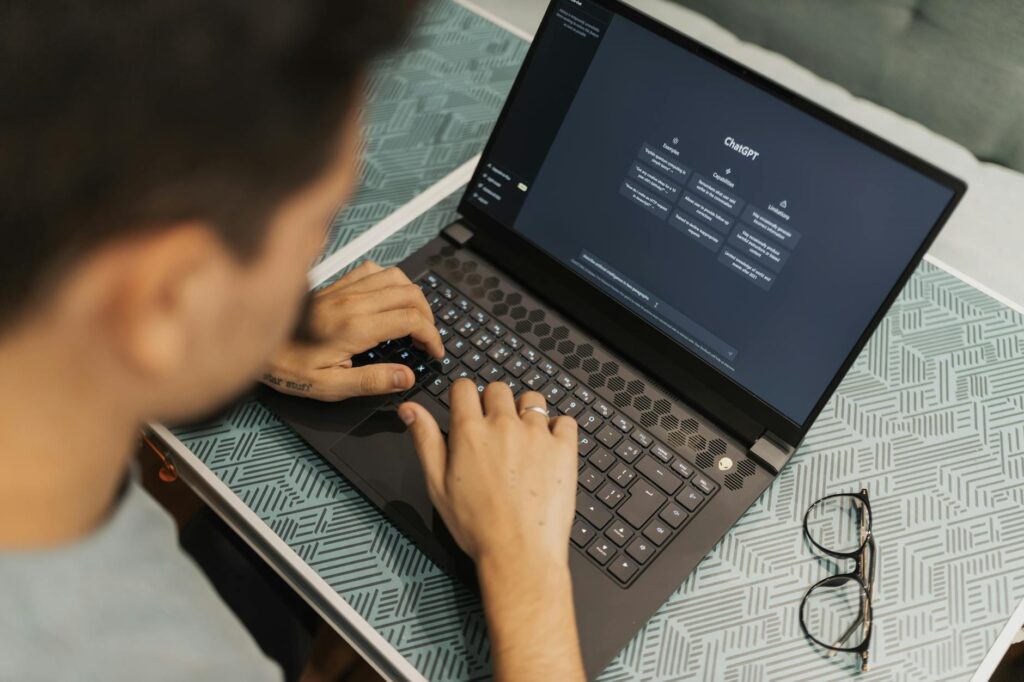
The surge in employee‑loneliness metrics has prompted a structural pivot toward AI‑driven conversational agents.
Early adopters report measurable gains in productivity, retention, and the redistribution of HR authority, signaling a durable shift in talent systems.
The Loneliness Epidemic and the Rise of Conversational Workplaces
Loneliness is no longer a peripheral wellness issue; it is a macro‑economic lever. The 2024 EY AI Pulse Survey found that 61 % of U.S. workers report feeling isolated at work, a condition correlated with a 12 % drop in discretionary effort and a 7 % increase in turnover intent [1]. Simultaneously, 71 % of Fortune 500 firms have deployed AI chatbots for employee engagement, up from 38 % in 2020 [2].
These converging data points reflect a structural shift in the employee experience architecture. Where earlier decades emphasized physical proximity and hierarchical communication, today’s digital scaffolding reconfigures the relational substrate of work. The institutional response—embedding conversational AI in HR ecosystems—signals a reallocation of power from siloed HR departments to platform‑mediated governance structures.
Mechanics of AI Chatbot Integration
AI chatbots operate at the intersection of natural language processing (NLP), machine‑learning‑driven intent detection, and enterprise data lakes. In practice, they automate routine HR transactions—benefits enrollment, leave requests, policy queries—while ingesting interaction logs to refine predictive models of employee sentiment [2].
Quantitative impact: A 2023 internal study at Unilever revealed a 15 % reduction in average resolution time for HR tickets after deploying its “U‑Buddy” chatbot, translating into a 0.4 % uplift in quarterly productivity measured by output per labor hour [3]. The same platform generated 2.3 million data points per month, enabling granular segmentation of engagement risk across functional units.
Case example: Accenture’s “myHR” assistant integrates with Workday and Slack, delivering personalized learning pathways based on skill‑gap analyses.
Case example: Accenture’s “myHR” assistant integrates with Workday and Slack, delivering personalized learning pathways based on skill‑gap analyses. Early results show a 23 % increase in voluntary enrollment for upskilling courses, suggesting that algorithmic nudges can rewire career capital acquisition at scale [4].
 Career Guidance
How to Switch Industries Mid-Career Without Starting Over
Bridge roles can reduce risk, while targeted skills and industry-specific applications help you make the case for a new field.
Read More →These mechanisms illustrate how conversational AI converts otherwise latent relational data into actionable intelligence, thereby reshaping the institutional calculus of talent development.
Systemic Ripple Effects Across the HR Value Chain
The automation of transactional tasks redefines the role of human HR professionals. Rather than serving as gatekeepers of policy, they become strategic architects of employee journeys. This reallocation of duties aligns with the “human‑in‑the‑loop” model advocated by the World Economic Forum, wherein AI handles routine execution while humans focus on design and empathy [5].
Structural implications:
- Redefined authority: HR decision‑making migrates from departmental committees to algorithmic dashboards, concentrating data‑driven power in centralized analytics teams.
- Leadership reorientation: Mid‑level managers receive AI‑generated “pulse” reports that surface team‑level loneliness indices, prompting proactive coaching interventions.
- Economic mobility pathways: Chatbot‑mediated mentorship matching—exemplified by IBM’s “Watson Career Coach”—has expanded access to senior mentors for remote and entry‑level staff, narrowing traditional geographic and hierarchical barriers [6].
These ripples echo the diffusion of enterprise resource planning (ERP) systems in the early 2000s, which similarly displaced manual processes and elevated data as the core asset of organizational control. The current wave, however, is distinguished by its direct engagement with employee affect, embedding well‑being metrics into the fabric of performance management.
Personalized learning trajectories: AI curates micro‑learning modules aligned with both individual aspirations and market demand, accelerating skill acquisition for high‑potential employees.
Human Capital Reconfiguration: Winners, Losers, and the Redistribution of Career Capital
The redistribution of career capital—knowledge, networks, and reputation—occurs through three observable channels.
 Entrepreneurship & Business
Vendor-Driven Changes Consume 28% of Enterprise Software Budgets
Origina and Thinkers50 say vendor-driven software changes consume 28 per cent of large enterprises’ budgets, limiting AI and innovation investment.
Read More →- Personalized learning trajectories: AI curates micro‑learning modules aligned with both individual aspirations and market demand, accelerating skill acquisition for high‑potential employees. A 2022 Deloitte analysis linked such personalization to a 12 % faster promotion cycle for participants relative to control groups [7].
- Mentorship democratization: Algorithmic pairing reduces reliance on informal networks, offering equitable access to senior expertise. This attenuates the “old boys’ club” effect that historically constrained upward mobility for underrepresented groups.
- Shift in bargaining power: As AI assumes routine advocacy (e.g., benefits clarification), employees gain leverage to negotiate for higher‑order value—project ownership, strategic input—thereby enhancing their institutional voice.
Conversely, workers whose competencies are tightly coupled with repetitive administrative tasks face displacement risk. The EY survey notes that 17 % of executives who realized AI‑driven productivity gains also reported targeted headcount reductions, though the majority (83 %) reinvested savings into talent development programs [1]. This asymmetry underscores the importance of proactive reskilling pipelines to prevent a bifurcated labor market within firms.
Outlook: Institutional Trajectory Over the Next Three to Five Years
Projection models from Gartner anticipate that by 2029, 60 % of Fortune 500 firms will embed AI chatbots in core talent‑management workflows, with a corresponding 5‑point increase in employee Net Promoter Scores (NPS) across sectors [8].
Key structural trends likely to shape this trajectory:
Hybrid governance frameworks: Companies will codify AI oversight committees, integrating ethicists, data scientists, and employee representatives to balance efficiency with autonomy.
Cross‑functional data ecosystems: HR analytics will fuse with finance, operations, and product data, creating a unified “employee health” index that informs capital allocation decisions.
Hybrid governance frameworks: Companies will codify AI oversight committees, integrating ethicists, data scientists, and employee representatives to balance efficiency with autonomy.
- Regulatory evolution: Anticipated EU AI Act provisions on “high‑risk” HR tools may compel transparent model documentation, reinforcing institutional accountability.
In aggregate, these dynamics suggest that AI‑mediated conversational interfaces will become a permanent stratum of the corporate hierarchy, redefining how leadership cultivates, monitors, and rewards human capital. Firms that institutionalize equitable algorithmic design and embed continuous upskilling loops will likely capture the majority of long‑term productivity gains, while those that treat chatbots as isolated efficiency tools risk reinforcing existing power asymmetries.
 Entrepreneurship & Business
India’s E-Invoice Rollout Has Passed: A Freelancer’s GST Guide
Threshold descriptions differ, and a mandated invoice needs IRP registration before a buyer can claim input tax credit.
Read More →Key Structural Insights
- The integration of AI chatbots converts employee loneliness from a soft‑skill concern into a quantifiable metric that reshapes institutional performance dashboards.
- Algorithmic mentorship and learning pathways redistribute career capital, creating asymmetric mobility advantages for workers who engage with the platform.
- Over the next five years, governance structures will evolve to embed AI oversight, turning conversational agents into a core lever of corporate power.
Written by Career Ahead AI. AI can make mistakes, so verify key facts. Report errors to support@careeraheadonline.com.





