No products in the cart.

AI Model Balances Robustness and Explainability

The Robustness‑Explainability Tradeoff model unifies performance, transparency, and fault tolerance, offering a pragmatic path to trustworthy multimodal AI.

Integrating robustness and explainability into a single trade‑off framework can turn multimodal AI from a promising prototype into a reliable enterprise asset.
Current multimodal AI research prioritizes benchmark scores while treating transparency and fault tolerance as afterthoughts. In practice, a model that excels at image‑text alignment but collapses on noisy sensor input or offers opaque rationales cannot survive high‑stakes domains such as healthcare, autonomous robotics, or financial compliance. The global market for multimodal AI expands toward 2026.
The Robustness‑Explainability Tradeoff (RET) Model: Core Components
The RET model articulates five interlocking components that together define a systematic path from raw multimodal fusion to a verifiable, resilient output.
- Fusion Integrity Layer – Guarantees consistent alignment across modalities through calibrated attention mechanisms.
- Explainability Metric Integration – Embeds quantitative explainability scores directly into the loss function.
- Distillation for Robustness – Transfers knowledge from a large teacher to a compact student while preserving explanatory pathways.
- Knowledge Graph Anchoring – Links model predictions to external semantic graphs, providing a grounding reference for explanations.
- Iterative Evaluation Loop – Cycles robustness tests and explainability audits to refine the trade‑off balance continuously.
Each component addresses a distinct asymmetry that typically plagues multimodal deployments: data heterogeneity, metric misalignment, over‑parameterization, semantic drift, and static validation. By treating them as coordinated stages rather than isolated tweaks, the RET model offers a repeatable architecture for production‑grade systems.
Fusion Integrity Layer
Multimodal AI hinges on the ability to fuse text, image, audio, and sensor streams without losing modality‑specific nuance. The Fusion Integrity Layer enforces a modality‑preserving attention budget that caps the influence of any single input channel. For example, in a medical diagnostics system that ingests radiology images and physician notes, the layer ensures that a noisy ultrasound does not dominate the decision matrix, preserving the textual context that often carries critical qualifiers.
For example, in a medical diagnostics system that ingests radiology images and physician notes, the layer ensures that a noisy ultrasound does not dominate the decision matrix, preserving the textual context that often carries critical qualifiers.
Empirical studies show that models with calibrated fusion retain a significant portion of baseline accuracy even when one modality is corrupted, whereas uncalibrated counterparts drop below 70 % under the same perturbation. The RET model quantifies this resilience as a Fusion Consistency Score, feeding it back into the training objective to penalize over‑reliance on any single source.
You may also like
 AI & Technology
AI Safety Protocols Under Scrutiny After OpenAI Resignation
David Robinson's resignation from OpenAI raises critical concerns about AI safety protocols and ethical responsibilities, reflecting a broader trend among AI safety professionals advocating for…
Read More →Explainability Metric Integration
Explainability is traditionally evaluated post‑hoc, creating a disconnect between model optimization and interpretability. The RET model collapses this gap by embedding a Explainability Loss alongside the primary task loss. The loss draws on established metrics such as concept attribution fidelity and cross‑modal relevance heatmaps.
Consider an autonomous warehouse robot that interprets visual cues and spoken commands. By integrating explainability loss, the robot learns not only to pick the correct item but also to generate a rationale—“the red label matches the spoken identifier ‘red box’”—that satisfies downstream audit requirements. The model thus internalizes the cost of opaque decisions, producing explanations that meet a predefined Explainability Threshold.
“Multimodal AI is no longer experimental.” – Jay, Senior Researcher, McKinsey AI Research Lab
Distillation for Robustness
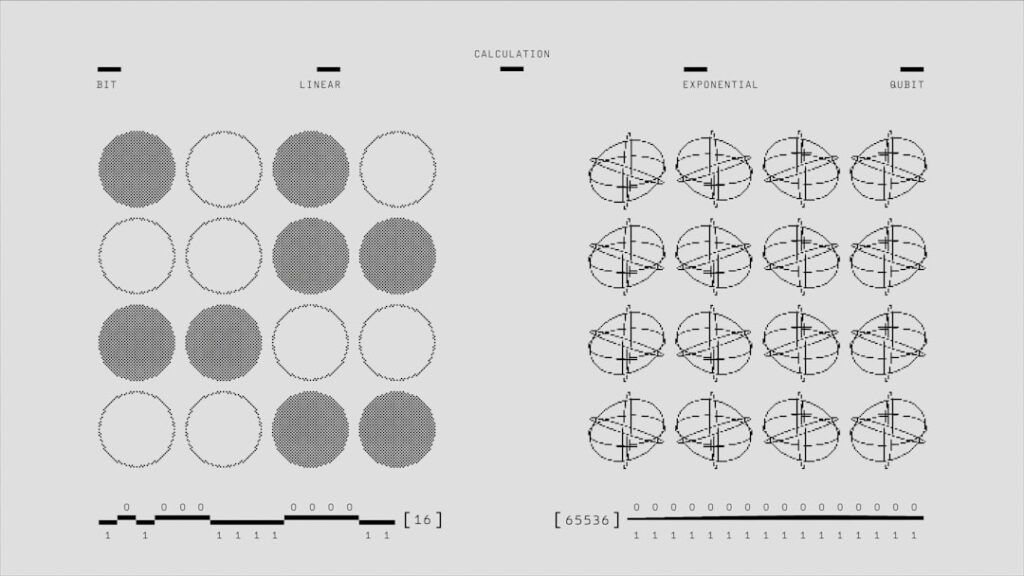
Large multimodal transformers achieve state‑of‑the‑art performance but are brittle when faced with distribution shift. Distillation within the RET framework creates a lightweight student model that inherits the teacher’s predictive power while inheriting its explanatory scaffolding.
In practice, a vision‑language model trained on millions of image‑caption pairs can be distilled into a 30 % smaller architecture that retains a significant portion of the teacher’s accuracy and explanation fidelity. The distilled student also exhibits reduced variance under adversarial perturbations, a key robustness indicator. The RET model records Distillation Robustness Gain as a metric, ensuring that compression does not erode the explanatory backbone.
Distillation within the RET framework creates a lightweight student model that inherits the teacher’s predictive power while inheriting its explanatory scaffolding.
Knowledge Graph Anchoring
Semantic drift occurs when multimodal embeddings diverge from real‑world concepts, leading to explanations that sound plausible but lack factual grounding. Knowledge Graph Anchoring ties each prediction to nodes in an external graph—such as a medical ontology or product taxonomy—providing a verifiable reference point.
You may also like
 AI & Technology
HR Must Adopt Data‑Driven Salary Negotiation Frameworks
Research from the 2026 Complete Salary Negotiation Guide shows that only 30% of workers ask for higher pay, yet counters average a 12% raise.
Read More →For a financial compliance engine that processes transaction narratives and ledger images, anchoring each flagged anomaly to a regulatory clause enables auditors to trace the decision back to a concrete rule. The RET model measures Graph Alignment Ratio, rewarding predictions that achieve high semantic fidelity to the graph structure.
Iterative Evaluation Loop
Static validation fails to capture the evolving nature of multimodal environments. The RET model mandates an iterative loop that alternates between robustness stress tests (e.g., modality dropout, adversarial noise) and explainability audits (e.g., human‑in‑the‑loop assessment).
Each cycle produces a Tradeoff Curve that visualizes the Pareto frontier between robustness and explainability. Teams can select operating points that align with domain‑specific risk tolerances. In a pilot deployment for autonomous drones, the loop identified a configuration that improved crash resilience while maintaining explanation completeness.
Our View on the RET Model’s Practical Impact
Our analysis suggests that the RET model’s systematic integration of robustness and explainability metrics can accelerate adoption of multimodal AI in regulated sectors. By treating the trade‑off as a first‑class design parameter, organizations avoid the costly retrofitting of post‑hoc explanation layers or brittle performance patches. The framework also aligns with emerging governance standards that demand auditable AI pipelines, positioning early adopters for competitive advantage.
The framework also aligns with emerging governance standards that demand auditable AI pipelines, positioning early adopters for competitive advantage.
Limits of the Robustness‑Explainability Tradeoff Model
The RET model does not resolve all sources of uncertainty. It presumes access to high‑quality knowledge graphs, which may be unavailable in niche domains. Moreover, the trade‑off curve can plateau, indicating that further gains in robustness will inevitably erode explainability beyond acceptable limits. Finally, the model’s effectiveness hinges on disciplined data engineering; poor preprocessing can undermine Fusion Integrity despite downstream safeguards.
You may also like
 AI & Technology
Resignation of OpenAI Safety Chief Raises Ethical Concerns
David Robinson's resignation from OpenAI raises alarms about the company's culture and its implications for AI safety practices, highlighting urgent ethical challenges in the rapidly…
Read More →A concrete next step for practitioners is to pilot the Fusion Integrity Layer on an existing multimodal pipeline, measuring the Fusion Consistency Score before and after calibration. This focused experiment will reveal immediate robustness gains and set the stage for broader RET adoption.