No products in the cart.

AI‑Powered Tutoring Platforms Expand Globally, Prompting Teacher‑Job Displacement Concerns
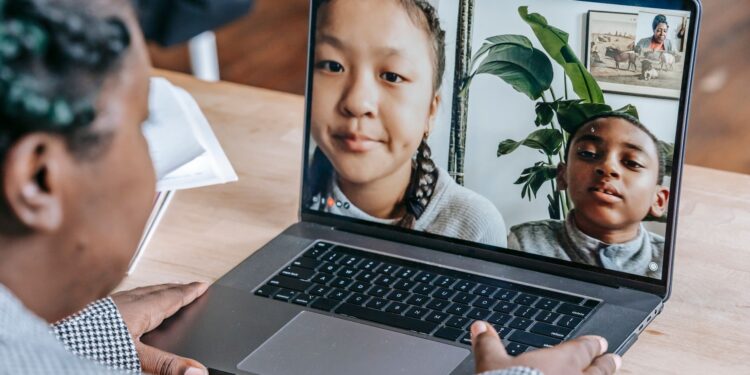
AI tutoring services are expanding worldwide, with market revenue doubling between 2024 and 2025 and prompting schools to reconsider teacher staffing levels.

Reports published in 2026 document rapid adoption and raise questions about employment effects for educators. Industry reports released in early 2026 document rapid adoption and raise questions about employment effects for educators.
The education sector is witnessing a surge in AI‑driven tutoring platforms that deliver personalized instruction through generative‑AI algorithms. The trend is documented in multiple 2026 reports released between January 27 and July 1, covering data from more than 70 primary sources [1]. The expansion is occurring across primary, secondary, and higher‑education institutions in North America, Europe, Asia, and emerging markets, as noted by the International Journal of Teaching and Learning in Education (IJTLE) and the Brookings Institution [2][3].
Developers of AI tutoring solutions, large EdTech firms, and a coalition of researchers and policy groups are the primary actors. World Metrics compiled industry statistics, IJTLE provided a pedagogical overview, Brookings analyzed generative‑AI performance, and LinkedIn published a commentary linking the rise of these platforms to the global teacher shortage [1][2][3][4]. The platforms are being integrated through school contracts, direct‑to‑consumer subscriptions, and government‑sponsored pilots, employing machine‑learning models that adapt content to individual learner profiles [2][3].
Growth of AI‑Powered Tutoring Platforms
World Metrics reported that the global AI tutoring market grew from $1.2 billion in 2024 to $2.4 billion in 2025, representing a compound annual growth rate of 34 % [1]. The report attributes this growth to increased investment in generative‑AI models capable of generating explanations, practice problems, and feedback in real time.
The IJTLE article dated March 26 2026 outlines how schools have adopted adaptive platforms for subjects ranging from mathematics to language arts, citing pilot programs in 12 U.S. districts and three European countries [2]. The platforms employ data from student interactions to refine recommendation engines, thereby reducing the need for one‑on‑one human tutoring in routine skill‑building activities.
Brookings’ January 27 2026 analysis confirms that generative‑AI tutoring can achieve learning gains comparable to low‑to‑moderate‑skill human tutors in controlled studies, prompting districts to allocate budget lines for AI subscriptions [3]. The analysis also notes that several multinational EdTech firms launched new products in Q1 2026 that integrate large language models with curriculum standards.
The platforms employ data from student interactions to refine recommendation engines, thereby reducing the need for one‑on‑one human tutoring in routine skill‑building activities.
Concerns About Teacher Job Displacement

You may also like
 News
NewsCars24 and India’s DPIIT Sign MoU to Back AI-Driven Mobility and Road-Safety Startups
Cars24 and India’s DPIIT have signed an MoU to fund and mentor AI-driven mobility and road-safety startups, creating new opportunities for students and entrepreneurs.
Read More →LinkedIn’s July 1 2026 commentary links the acceleration of AI tutoring to the ongoing global teacher shortage, which the organization estimates at 69 million unfilled positions worldwide [4]. The piece argues that schools may replace supplemental teaching roles with AI services to mitigate staffing gaps, potentially reducing demand for entry‑level and part‑time teaching positions.
World Metrics identified that 42 % of surveyed school administrators plan to increase AI tutoring usage within the next 12 months, citing cost‑effectiveness and scalability as primary drivers [1]. The same survey found that 28 % anticipate a reduction in hiring of new teachers for support roles such as remedial instruction and after‑school tutoring [1].
Brookings highlighted three risk factors: (1) the accuracy of AI‑generated explanations, (2) the loss of professional pedagogical judgment, and (3) student dependence on automated feedback [3]. The institution’s research notes that while AI can handle repetitive instructional tasks, it does not replace the mentorship, classroom management, and nuanced assessment capabilities of certified teachers.
Implications for Students and Institutions
Student outcomes are reported to improve in areas where AI tutoring provides immediate, personalized feedback, according to the IJTLE guide, which cites a 12 % increase in test scores for math students using adaptive platforms for at least six weeks [2]. However, the same guide warns that over‑reliance on AI may limit development of critical thinking skills if students do not engage with human instruction.
Institutions are adapting policies to balance AI integration with teacher roles. Several school districts in Canada and Australia announced hybrid models in June 2026, pairing AI tutors with human educators who focus on higher‑order learning activities [2][4]. These models allocate AI resources for drill‑and‑practice while preserving teacher time for discussion, project‑based learning, and assessment design.
However, the same guide warns that over‑reliance on AI may limit development of critical thinking skills if students do not engage with human instruction.
Funding agencies are also responding. The U.S. Department of Education allocated $150 million in FY 2026 for research on AI‑teacher collaboration, emphasizing the need for evidence‑based guidelines on AI deployment in K‑12 settings [3].
Impact on Readers

Students currently enrolled in schools that have adopted AI tutoring may experience more immediate feedback and customized practice sets, potentially accelerating mastery of foundational concepts. Teachers in districts expanding AI use should anticipate shifts in workload, with routine instruction increasingly automated and professional focus moving toward curriculum design, mentorship, and complex problem solving.
You may also like
 News
NewsMicrosoft Study Identifies 40 U.S. Jobs Likely to Face AI Automation by 2026
Microsoft’s AI applicability study lists 40 occupations most vulnerable to automation by 2026, prompting curriculum updates and hiring reviews.
Read More →School administrators evaluating budget allocations can reference the 2026 market data to assess cost‑benefit ratios of AI subscriptions versus traditional staffing models. Policymakers reviewing teacher‑workforce strategies may need to consider AI as a factor in addressing the projected 69 million vacancy gap, while ensuring safeguards for instructional quality.
Key Facts
What: AI‑driven tutoring platforms are expanding globally, prompting concerns about teacher job displacement.
Impact: Students gain personalized learning tools; teachers may see routine instruction automated, influencing hiring and role definitions.
When: Reports published between January 27 2026 and July 1 2026 document the trend.
Impact: Students gain personalized learning tools; teachers may see routine instruction automated, influencing hiring and role definitions.
Sources
You may also like
 News
NewsFood Prices Surge Amid Heatwaves and Conflict
The FAO noted that prices for essential commodities like cereals, sugar, and vegetable oils all increased in July.
Read More →- Ai In The Tutoring Industry Statistics | Fact‑Checked 2026 – World Metrics
- How Artificial Intelligence is Transforming Classroom Teaching in 2026 – IJTLE
- What the research shows about generative AI in tutoring – Brookings
- The Global Teacher Shortage Crisis: Implications for AI and EdTech – LinkedIn