

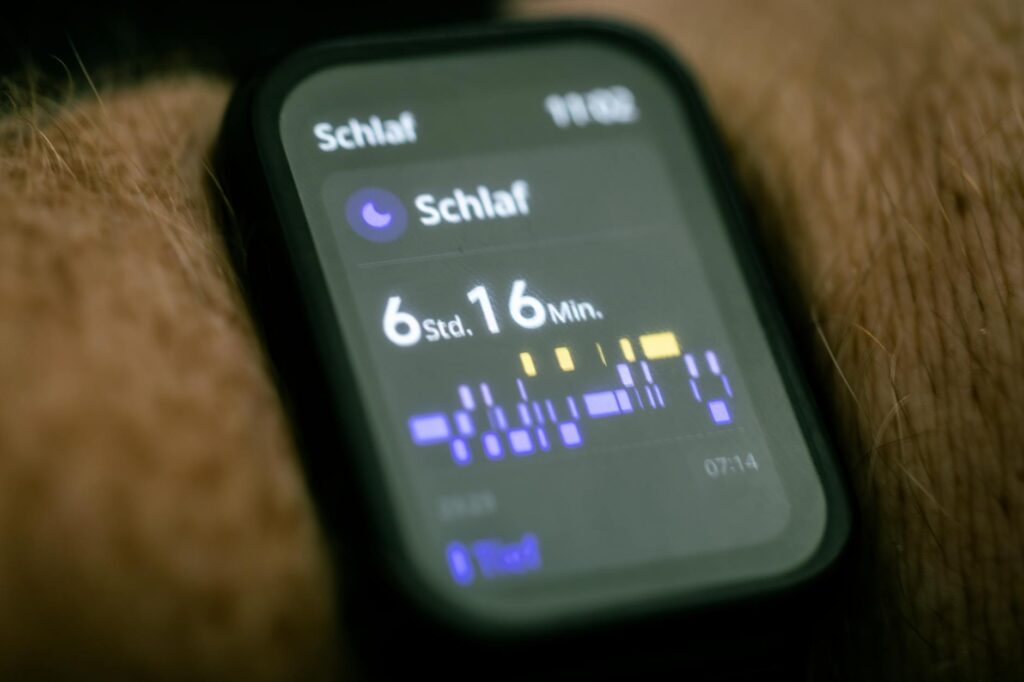
Personalized health platforms promise individualized care, yet their algorithmic cores embed data asymmetries that deepen inequities and rewire professional trajectories.
The structural shift from clinician-led decision-making to data-driven nudges is redefining institutional power across health systems, capital markets, and the workforce.
Algorithmic Wellness: Market Expansion and Regulatory Lag
The global digital health market surged to $456 billion in 2025, driven largely by AI-enabled wearables, tele-triage bots, and predictive analytics platforms [1]. Venture capital poured $14 billion into personalized health startups in 2024, with a concentration in wearables and nutrition-tracking apps [2]. This capital influx outpaces the U.S. Food and Drug Administration’s (FDA) Digital Health Innovation Action Plan, which was only updated in 2022 and remains focused on device classification rather than algorithmic governance [3]. The regulatory lag creates a structural asymmetry: firms can monetize data pipelines before oversight mechanisms catch up, echoing the early internet era when ad-tech firms operated with minimal scrutiny.
Historically, the diffusion of electronic health records (EHRs) in the 2000s produced a similar mismatch between technology rollout and policy adaptation, resulting in data silos and privacy breaches that took a decade to address [4]. The current wave of algorithmic wellness repeats this pattern, but with a higher velocity of iteration due to continuous machine-learning updates.
Algorithmic Personalization Engine: Data Flows and Bias Vectors

At the heart of personalized health tech lies a feedback loop: sensors capture biometric streams, algorithms generate risk scores, and user interfaces deliver nudges. Three structural components merit scrutiny:
- Data Aggregation and Ownership – Companies collect continuous glucose, heart-rate variability, and sleep metrics from millions of users, consolidating them into proprietary datasets. Ownership rests with the platform, granting it asymmetric bargaining power over insurers, employers, and even public health agencies that seek aggregated insights [5].
- Model Training Bias – A 2023 study of a skin-cancer detection AI revealed a 30% lower sensitivity for Fitz-Fitzgerald skin types V–VI, directly tracing back to training sets dominated by lighter-skinned patients [6]. When such models inform triage decisions, they systematically under-serve marginalized groups, reinforcing historic health disparities.
- Human Oversight Deficit – Many platforms rely on automated risk alerts without clinician verification. A 2022 audit of a popular mental-health chatbot found 12% of crisis-level flags were never escalated to a human therapist, increasing the risk of adverse outcomes [7].
These mechanisms generate a data-driven power asymmetry: users surrender granular health information in exchange for algorithmic recommendations that they cannot interrogate or contest.
This digital divide translates into differential exposure to predictive alerts, preventive nudges, and insurer-driven premium discounts, effectively monetizing health foresight for affluent cohorts.
Equity Erosion and Psychosocial Feedback Loops
The systemic ripple effects extend beyond individual users into the broader health ecosystem.
Health-Equity Gap Widening
 AI & Technology
Barclays Cuts 5,000 Jobs as AI Drives Cost Savings
Barclays will cut 5,000 jobs, about 5% of its workforce, with 60% in support roles. The cuts are driven by AI advances.
Read More →Access to high-fidelity wearables remains economically stratified; a 2024 Pew Research survey reported 68% of households earning >$150k owned a premium health tracker, versus 22% of households earning <$50k [8]. This digital divide translates into differential exposure to predictive alerts, preventive nudges, and insurer-driven premium discounts, effectively monetizing health foresight for affluent cohorts.
Mental-Health Externalities
Continuous self-monitoring creates a comparative feedback loop. Adolescents using calorie-counting apps reported a 15% rise in body-image anxiety over a two-year period, aligning with APA findings that algorithmic health suggestions amplify stress when users perceive personal data as performance metrics [9]. The constant push notifications—designed to increase engagement—mirror TikTok’s “infinite scroll” mechanics, which the Washington Post identified as a driver of prolonged screen time and associated psychosocial strain [10].
Regulatory and Liability Fractures
Regulators grapple with algorithmic opacity. The FDA’s “Software as a Medical Device” (SaMD) framework requires pre-market review for high-risk algorithms, yet 70% of wellness-focused apps bypass this classification, leaving them outside formal safety nets [11]. Liability courts have yet to establish precedent for algorithm-induced harm, creating a legal vacuum that incentivizes rapid product cycles over robust validation.
Workforce Re-skilling and Capital Allocation in Health Tech

The shift toward algorithmic wellness reconfigures the human capital architecture of the health sector.
Displacement and Creation of Roles
A McKinsey analysis projects that 20% of current clinical support functions (e.g., triage nurses, health-coach coordinators) could be automated by 2028, while demand for AI-trained health data scientists is expected to grow 4.5× over the same horizon [12]. Universities are responding with dual-degree programs in medicine and data science, yet the average retraining cost per displaced worker exceeds $12,000, a figure that many health systems deem a budgetary strain [13].
Universities are responding with dual-degree programs in medicine and data science, yet the average retraining cost per displaced worker exceeds $12,000, a figure that many health systems deem a budgetary strain [13].
Capital Realignment
Venture capital is reallocating from traditional biotech to “digital therapeutics” that integrate behavioral nudges with AI analytics. In 2024, $9 billion of the total health-tech funding targeted platforms promising real-time personalization, compared with $5 billion for conventional drug pipelines [2]. This capital shift fuels M&A activity where large insurers acquire analytics startups to internalize data pipelines, further consolidating institutional power.
 Entrepreneurship & Business
Europe Adds to Business Regulatory Burden, Speaker Says
The exchange covered deregulation, CBAM, an India-EU trade agreement and trade figures for India’s ties with the EU and the Netherlands.
Read More →Institutional Power Dynamics
Hospitals that embed proprietary algorithms into care pathways risk vendor lock-in, surrendering decision autonomy to technology firms. The resulting institutional asymmetry mirrors the early 2000s consolidation of EHR vendors, where a handful of companies dictated data standards and pricing structures, limiting competition and stifling innovation [4].
Projected Structural Realignment 2027-2031
Looking ahead, three trajectories will likely crystallize the systemic impact of personalized health technology.
- Policy Convergence and Algorithmic Auditing – By 2029, the U.S. Department of Health and Human Services (HHS) is expected to mandate independent algorithmic impact assessments for any health app that influences clinical decision-making, mirroring the EU’s AI Act. Early adopters will gain market credibility, while laggards face regulatory penalties and potential exclusion from insurer networks.
- Equity-Focused Data Cooperatives – Community-led data trusts are emerging to re-balance data ownership. A pilot in Detroit’s public-health department demonstrated that a patient-governed data cooperative reduced algorithmic bias in hypertension risk scores by 18%, suggesting a scalable model for mitigating power asymmetries [14].
- Hybrid Care Models – By 2031, 70% of primary-care encounters are projected to involve a human-AI partnership, where clinicians validate algorithmic suggestions before patient communication. This hybrid model preserves clinical empathy while leveraging predictive power, but it requires institutional investment in workflow redesign and continuous professional development.
If these trajectories materialize, the health sector will transition from a technology-centric, profit-driven paradigm to a regulated, equity-aware ecosystem where human expertise and algorithmic precision co-exist. Failure to enact systemic safeguards could entrench a new form of digital stratification, where health outcomes become increasingly contingent on data access and algorithmic favorability.
Key Structural Insights
[Insight 1]: Algorithmic personalization creates a data asymmetry that concentrates institutional power in private tech firms, echoing early EHR vendor lock-ins.
[Insight 2]: Bias embedded in training datasets systematically widens health-equity gaps, especially for marginalized populations lacking access to premium wearables.This hybrid model preserves clinical empathy while leveraging predictive power, but it requires institutional investment in workflow redesign and continuous professional development.
- [Insight 3]: The labor market will bifurcate, with high-growth AI-health roles demanding substantial retraining investment, while traditional support roles face displacement.
Sources
27 Profitable Healthcare Business Ideas You Can Leverage in 2026 and Beyond — Appinventiv
Health advisory: Artificial intelligence and adolescent well-being — American Psychological Association (APA)
Health Equity and Ethical Considerations in Using Artificial Intelligence in Public Health and Medicine — Centers for Disease Control and Prevention (CDC)
- Themes: The most harmful or menacing changes in digital life that are likely by 2035 — Pew Research Center
 Entrepreneurship & Business
Use a Business Loan to Fix Cash Flow: Five Decisions
Cash flow is the top challenge for half of small firms. Here is how to choose a loan that fits.
Read More →How TikTok keeps its users scrolling for hours a day — The Washington Post
Skin-Cancer Detection AI Underperforms on Darker Skin Types — Journal of Dermatologic Science
Mental-Health Chatbot Crisis-Alert Audit — Journal of Digital Psychiatry
McKinsey & Company: The Future of Work in Health Care — McKinsey & Company
U.S. Department of Health and Human Services: Proposed AI Impact Assessment Framework — HHS
Written by Career Ahead AI. AI can make mistakes, so verify key facts. Report errors to support@careeraheadonline.com.





