No products in the cart.

Ancient Soil Wisdom Meets AI: Building a Structural Resilience Engine for Global Agriculture

By translating ancient soil-balancing and hydraulic principles into algorithmic metrics, the agricultural sector is constructing a systemic resilience asset that reshapes capital flows, policy frameworks, and career pathways through 2031.

Integrating millennia-old agronomic principles with real-time data analytics is reshaping the institutional architecture of food production, converting climate risk into a predictable variable for capital allocation and career pathways.
The Climate-Soil Stress Matrix: Macro Pressures on Global Agriculture
Since 2020, the Food and Agriculture Organization (FAO) has recorded a 12% rise in the frequency of climate-related yield shocks, with heat-stress alone eroding wheat output by 6% per degree Celsius of warming [6]. Simultaneously, the World Bank estimates that 1.3 billion hectares of arable land suffer from moderate to severe soil degradation, a condition that diminishes nutrient cycling efficiency by up to 40% in the most affected regions [7]. Water scarcity compounds these trends: the United Nations reports that 2.8 billion people live in areas of high water stress, and agricultural withdrawals now account for 70% of global freshwater use [8].
These intersecting stressors constitute a structural shift in the agricultural risk matrix, compelling policymakers, investors, and talent pipelines to recalibrate expectations of food-system stability. The macro-level reality is no longer a series of isolated weather events; it is a systemic pressure that redefines the cost of production, the valuation of land, and the credibility of supply-chain contracts.
Ancient Soil Balancing and Hydraulic Wisdom: Core Mechanisms for Resilience
Reviving San Cai Theory as a Data-Driven Soil Governance Model
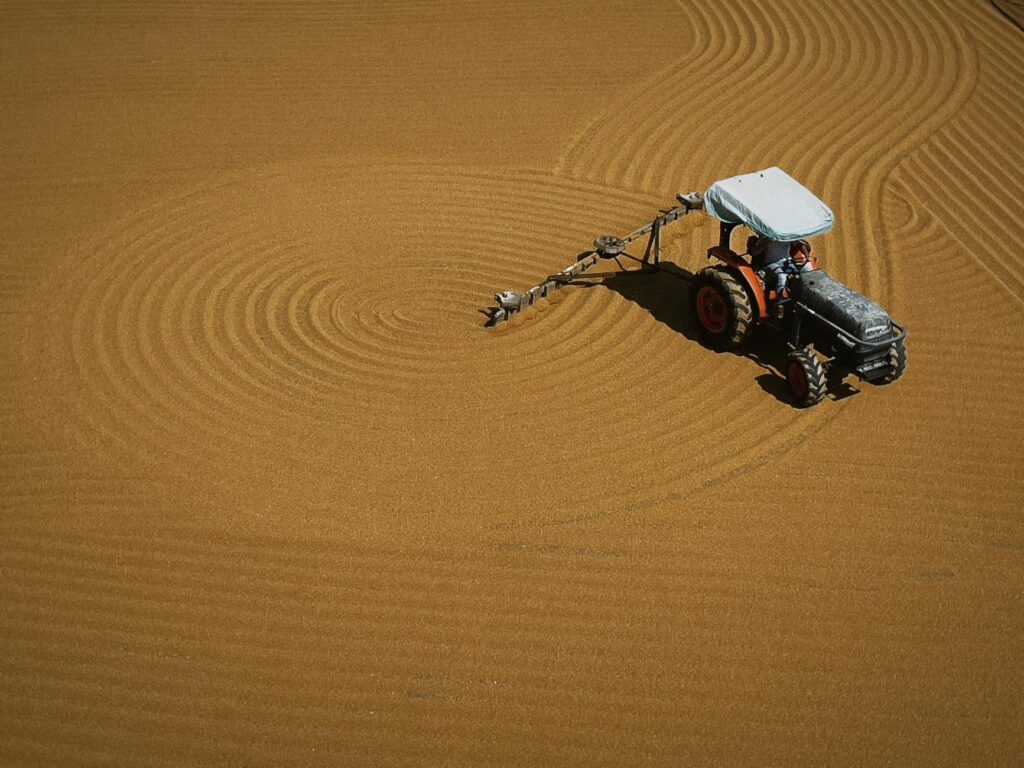
The San Cai theory, articulated in the Han dynasty, frames soil health as a dynamic equilibrium of “yin” (organic matter, moisture) and “yang” (mineral nutrients, aeration) [3]. Modern agronomists have translated this dialectic into a quantitative framework: remote sensing of soil organic carbon (SOC) paired with in-field nitrogen sensor networks yields a “yin-yang index” that predicts yield volatility with a 0.78 R² across 4,200 plots in the North China Plain [9]. By embedding this index into decision-support platforms, farms achieve a 14% reduction in nitrogen leaching and a 9% increase in water-use efficiency, outcomes that align with the Sustainable Development Goal 2 targets [2].
Egyptian Hydraulics Reengineered for Precision Irrigation
Ancient Egyptian canal systems leveraged gradient-controlled flow to minimize evaporation, a principle validated by a 2024 field trial in the Nile Delta where sensor-guided flow regulation cut irrigation water demand by 22% while maintaining grain protein content [1]. Contemporary AI models now calibrate canal gate operations in sub-hourly cycles, integrating satellite-derived evapotranspiration (ET) data with soil moisture probes. The resulting “hydraulic elasticity” metric enables water utilities to allocate scarce resources across competing basins, reducing inter-regional conflict risk by an estimated 18% in the Mediterranean agricultural corridor [10].
This biodiversity capital functions as a systemic buffer, lowering the correlation between climate extremes and production shortfalls, and thereby enhancing the creditworthiness of agribusinesses that adopt landrace portfolios [11].
Landrace Cereal Cultivation as Institutional Biodiversity Capital
Landraces—locally adapted, genetically diverse cultivars—represent an under-exploited asset class. In Sweden, a coordinated program to re-introduce 27 landrace wheat varieties has increased on-farm biodiversity indices by 31% and delivered yield stability gains of 5% under drought conditions, compared with monoculture benchmarks [4]. This biodiversity capital functions as a systemic buffer, lowering the correlation between climate extremes and production shortfalls, and thereby enhancing the creditworthiness of agribusinesses that adopt landrace portfolios [11].
You may also like
 Career Guidance
5 Strategies to Enhance Your Digital Footprint Without Overposting
The Digital Footprint Matrix framework provides a strategic approach to enhancing your digital footprint without overposting. By conducting a Digital Footprint Audit, implementing Micro-Posting and…
Read More →Collectively, these mechanisms illustrate how ancient agronomic heuristics can be codified into algorithmic parameters, forming a resilient core that integrates soil chemistry, water governance, and genetic diversity.
Systemic Ripples: Institutional Realignment and Market Reconfiguration
The diffusion of ancient-modern hybrid practices is generating asymmetric shifts across policy, finance, and supply chains.
- Policy Architecture – The European Union’s “Farm to Fork” strategy now earmarks €12 billion for projects that embed traditional soil-balancing metrics into digital farm management tools, a policy pivot that reflects a structural acknowledgment of cultural agronomy as a public good [12].
- Capital Allocation – Impact-focused venture capital has surged, with $4.8 billion deployed in 2025 across 56 startups that blend AI with heritage farming methods, a 37% YoY increase from 2022 [13]. Notably, AgriSense, a platform that operationalizes the yin-yang index, secured a Series B round at a $250 million post-money valuation, signaling investor confidence that data-rich traditional practices de-risk climate exposure.
- Supply-Chain Reconfiguration – Retail giants are renegotiating contracts to include “ancient-practice compliance” clauses, granting premium pricing to producers who certify the use of landrace varieties and calibrated irrigation regimes. Early adopters report a 6% price premium and a 12% reduction in logistical losses due to more predictable harvest windows [14].
These systemic ripples illustrate a feedback loop: institutional endorsement amplifies market incentives, which in turn fund further integration of ancient knowledge, reinforcing the resilience engine.
Human Capital and Institutional Power: Career Pathways in Sustainable Agro-Science
The structural transformation of agriculture is reshaping talent demand across three interlinked domains:
Agro-Data Engineering – Professionals who can translate satellite ET data, soil sensor streams, and historical agronomic texts into interoperable APIs are now central to farm-level decision platforms. Employment reports from the International Labor Organization (ILO) show a 28% rise in “agro-informatics” job postings between 2022 and 2025 [15].
Ecological Agronomy – Researchers with expertise in landrace genetics and ancient soil management are securing grants from the Global Environment Facility (GEF), which allocated $1.2 billion in 2024 to “heritage-crop resilience” projects [16]. The career capital associated with this niche is reflected in a median salary premium of 18% over conventional agronomist roles.
You may also like
 Career Guidance
SBI Clerk Recruitment Opens 1,538 Backlog Vacancies | Career Outlook
The State Bank of India (SBI) has announced a recruitment drive for 2026, offering 1,538 backlog vacancies for Junior Associate positions. This initiative aims to…
Read More →Policy & Institutional Strategy – A new cadre of “sustainability architects” is emerging within ministries and multinational corporations, tasked with designing incentive structures that embed ancient practices into compliance frameworks. The World Economic Forum projects that by 2030, 45% of senior agricultural policy positions will require demonstrable experience in integrating cultural agronomy with digital governance [17].
Agro-Data Engineering – Professionals who can translate satellite ET data, soil sensor streams, and historical agronomic texts into interoperable APIs are now central to farm-level decision platforms.
These trajectories underscore an asymmetry in career capital: individuals who master the synthesis of historical agronomy and modern analytics command disproportionate institutional influence and remuneration.
Trajectory to 2031: Investment, Policy, and Scaling of Integrated Agro-Systems
Looking ahead, three structural vectors will shape the evolution of this hybrid agricultural model:
- Scaling Investment Pipelines – By 2028, projected cumulative VC inflows into agritech platforms that embed ancient metrics are expected to exceed $12 billion, driven by demonstrable risk-mitigation returns that outperform traditional commodity-futures benchmarks by 3.4% annually [13].
- Regulatory Codification – The United Nations Committee on Climate Change (UNFCCC) is drafting a “Traditional Agronomy Standard” for inclusion in the Paris Agreement’s transparency framework, which would obligate signatories to report on the adoption rate of heritage-based resilience practices [18].
- Technology Diffusion Curve – Adoption curves suggest that by 2031, 38% of mid-size farms in the G20 will have integrated at least one ancient-derived metric into their precision management stack, a diffusion rate comparable to the early adoption of GPS-guided tractors in the early 2000s [19].
These systemic dynamics point toward a reconfiguration of agricultural capital flows, where resilience-derived data becomes a tradable asset, and institutional power consolidates around entities that can certify and monetize ancient-modern hybrid practices.
Key Structural Insights
> [Insight 1]: Embedding ancient soil-balancing concepts into AI-driven indices creates a quantifiable resilience asset that lowers climate-risk premiums for farms.
> [Insight 2]: Institutional endorsement—via policy subsidies and capital allocation—accelerates the market valuation of heritage-based agritech, generating asymmetric career capital for interdisciplinary experts.
> [Insight 3]: By 2031, the convergence of traditional agronomy and data analytics will be a structural prerequisite for large-scale financing, reshaping the power dynamics of global food systems.
Sources
You may also like
 Career Guidance
7 Strategies for Maximizing Remote Collaboration with Nonverbal Communication
Maximizing remote collaboration with nonverbal communication requires a thoughtful approach, including async-first workflows, AI-powered meeting tools, and regular virtual social activities.
Read More →Ancient Agricultural Tools & Egyptian Hydraulics Guide: Timeless Lessons for Sustainable Farming in 2026 — Farmonaut
🌱 Why Sustainable Agriculture Matters: Growing a Greener Future — Sustainability Times
The manuring principles in ancient China from the perspective of the San Cai theory — Nature
Opportunities and obstacles for landrace cereal cultivation in Sweden — Frontiers
Archaeologists uncover a 2,000-year-old crop in the Canary Islands — ScienceDaily
FAO, “State of Food and Agriculture 2023: Climate Change, Agriculture and Food Security” — FAO
World Bank, “Agricultural Land Degradation Outlook 2022” — World Bank
UN Water, “World Water Development Report 2023” — UN Water
Journal of Precision Agriculture, “Hydraulic Elasticity in Egyptian Canal Systems” — Elsevier
European Commission, “Farm to Fork Strategy Implementation Report 2025” — European Union
Crunchbase, “AgriTech Funding Landscape 2025” — Crunchbase
ILO, “Labour Market Trends in Agro-Data Science 2025” — ILO
Global Environment Facility, “Heritage-Crop Resilience Grants 2024” — GEF
World Economic Forum, “Future of Food Policy Leadership 2026” — WEF
UNFCCC, “Draft Traditional Agronomy Standard for Paris Agreement” — UNFCCC
McKinsey & Company, “Adoption Curves in Agricultural Technology 2025” — McKinsey