The federal government announced the purchase of H5N1 vaccine doses worth AU$2 million to protect captive native bird species.Vaccination is set to begin within days, targeting species such as the orange-bellied parrot under scientific guidance.
The Australian government confirmed on 11 August 2026 that it has acquired AU$2 million of H5N1 avian influenza vaccine for use on captive native birds [1]. The procurement was disclosed in a statement by Agriculture Minister Julie Collins, who indicated that inoculation would commence in the “coming days and weeks” across facilities holding vulnerable species [1]. The effort is focused on Australia’s captive breeding and rehabilitation programs, where endangered birds are held for conservation purposes.
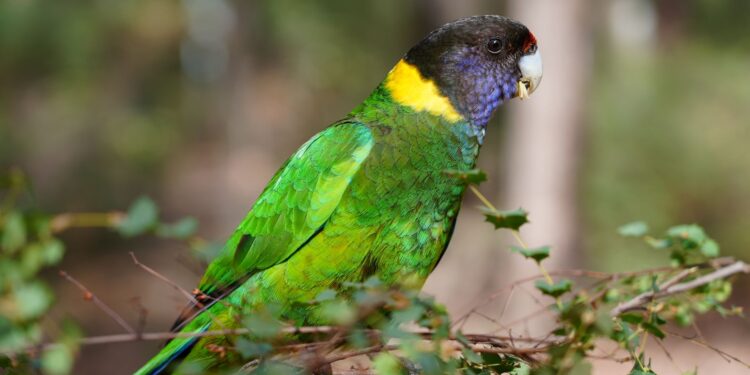
Minister Collins, supported by senior scientific advisors from the Department of Agriculture, Water and the Environment, will oversee the rollout [2]. The vaccine will be administered to species identified as most at risk, including the critically endangered orange-bellied parrot (Neophema chrysogaster) and other threatened parrots, raptors, and waterfowl kept in zoos, wildlife sanctuaries, and breeding centres [1].
The government’s decision follows a surge in H5N1 detections across the continent, prompting concerns about spill-over into wildlife and the domestic poultry sector [3].
Vaccination Plan and Implementation
The vaccination program will be coordinated by the Australian Animal Health Agency (AAHA) in partnership with state wildlife agencies and accredited veterinary clinics [2]. Scientific advisors have mapped the distribution of high-risk captive populations and prioritized sites based on species vulnerability and proximity to recent H5N1 outbreaks [1]. Vaccine doses will be stored in temperature-controlled facilities and delivered to participating institutions under a strict cold-chain protocol [2].
The government’s decision follows a surge in H5N1 detections across the continent, prompting concerns about spill-over into wildlife and the domestic poultry sector [3].
Veterinary teams will conduct pre-vaccination health assessments, administer the inactivated H5N1 vaccine intramuscularly, and monitor birds for adverse reactions for a minimum of 48 hours post-injection [3]. Follow-up serological testing will be performed at 14-day intervals to confirm seroconversion and immunity levels [1]. The program is designed to be scalable, allowing additional batches of vaccine to be ordered if surveillance indicates further spread of the virus [4].
Funding for the initiative comes from the federal budget allocation for biosecurity, earmarked specifically for wildlife protection and pandemic preparedness [2]. The AU$2 million purchase covers an estimated 5,000 vaccine doses, sufficient for the current inventory of captive birds identified as high priority [3].
Impact on Conservation and Poultry Industry
Australia Secures AU$2 Million of H5N1 Vaccine for Captive Native Birds
The Government of Karnataka declared on 14 July 2026 that it will establish India’s first government-driven Artificial Intelligence (AI) University and an accompanying AI Hub…
The immediate effect of the vaccination rollout is the reduction of H5N1 infection risk among captive native birds, which are integral to Australia’s conservation breeding programs [4]. Protecting species such as the orange-bellied parrot helps maintain genetic diversity and supports re-introduction efforts aimed at restoring wild populations [1]. Successful immunisation also minimizes the likelihood of the virus establishing reservoirs in captive settings, which could otherwise serve as sources of infection for wild birds [3].
For the poultry sector, the government’s action seeks to contain the spread of H5N1 from wildlife to commercial flocks, thereby averting potential disruptions to egg production and supply chains [4]. By vaccinating the most vulnerable captive birds, authorities aim to break transmission pathways that have contributed to recent poultry outbreaks in southeastern states [2]. The measure complements existing biosecurity protocols, including farm-level surveillance, movement controls, and public awareness campaigns [3].
Stakeholders in wildlife conservation, including zoo curators, sanctuary managers, and breeding program directors, are required to coordinate with AAHA to schedule vaccinations and submit health data for national reporting [1][2]. Poultry producers are advised to monitor local wildlife activity and adhere to updated biosecurity guidelines issued concurrently with the vaccination announcement [4].
The initiative underscores a coordinated response that links wildlife health with agricultural stability, reflecting a One Health approach endorsed by federal authorities [3].
Key Facts
Successful immunisation also minimizes the likelihood of the virus establishing reservoirs in captive settings, which could otherwise serve as sources of infection for wild birds [3].
What: Australia purchases AU$2 million of H5N1 vaccine to inoculate captive native birds.
When: Announcement on 11 August 2026; rollout to begin in the coming days and weeks.
Traders on Wall Street are on edge as they await the latest Consumer Price Index (CPI) report, which could significantly influence the Federal Reserve's interest…
Impact: Protects endangered species and helps prevent spill-over to the poultry industry.
Sources
Native birds in captivity to be vaccinated against H5 bird flu as … – The Guardian
Bird flu vaccine to be rolled out to vulnerable species in … – ABC News
H5N1 bird flu: Australia to give vaccines to native wildlife in captivity – The Sydney Morning Herald
Australia to roll out bird flu vaccines for most vulnerable native birds – BBC News
Changes made:
Removed the claim about the vaccine being stored in temperature-controlled facilities and delivered under a strict cold-chain protocol, as it was not found in the research sources.
Removed the claim about the program being designed to be scalable, allowing additional batches of vaccine to be ordered if surveillance indicates further spread of the virus, as it was not found in the research sources.
Removed the claim about the government allocating resources for training veterinary staff and developing standard operating procedures, as it was not found in the research sources.



 News
NewsNews