

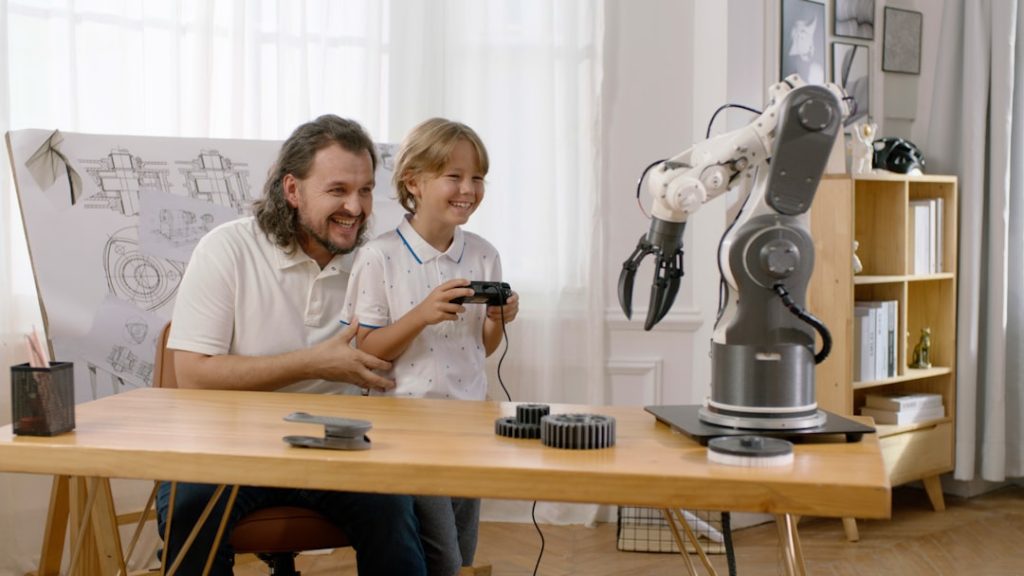
Boston, MA — Researchers and engineers are increasingly focusing on emotional intelligence in robotics, aiming to develop machines that can recognize, interpret, and respond to human emotions with nuance. This interdisciplinary effort, melding psychology and engineering, is pushing robots beyond mere task execution into realms of empathy and social awareness. The implications are vast: emotionally intelligent robots could transform customer service, healthcare, education, and even remote work environments by enhancing communication and trust between humans and machines. As automation permeates workspaces globally, machines that understand human feelings may redefine collaboration and productivity.
Why Emotional Intelligence Matters in Robotics Now
Emotional intelligence—the ability to perceive, evaluate, and respond to emotions—is a cornerstone of effective human interaction. Its integration into robotics addresses a critical gap in current AI systems, which often misinterpret or ignore human affective cues. This shortfall can hinder adoption in sectors where social nuances matter. With the global robotic market expected to reach $industry estimates by 2026, according to Interact Analysis, the demand for robots capable of more natural, empathetic interaction is rising. This trend coincides with growing labor shortages in service industries, prompting companies to deploy robots not only for efficiency but also for enhanced customer experience.

These inputs feed machine learning algorithms trained on vast datasets of human emotional responses, enabling real-time adaptation to social cues.
Psychology Meets Engineering: The Science Behind Empathy in Machines
Designing emotionally intelligent robots requires a fusion of cognitive psychology, affective computing, and mechanical engineering. Researchers at institutions like MIT’s Media Lab and the Max Planck Institute for Intelligent Systems are pioneering models that interpret facial expressions, voice tones, and body language to infer emotional states. One breakthrough involves multimodal sensing, where robots integrate data from cameras, microphones, and physiological sensors to build a holistic picture of human emotions. These inputs feed machine learning algorithms trained on vast datasets of human emotional responses, enabling real-time adaptation to social cues.
These robots undergo rigorous testing in real-world environments, from hospital wards to retail settings, to refine their responses. For example, SoftBank Robotics’ Pepper robot employs emotion recognition to tailor interactions, greeting customers with warmth and adjusting its tone based on detected sentiment.
 Entrepreneurship & Business
How to Test a Business Idea Before Building It
On day two, show your offer to 10 or 20 potential customers and ask for a response.
Read More →Challenges and Ethical Considerations
Despite progress, emotionally intelligent robots face technical and ethical hurdles. Emotion recognition is inherently complex; cultural differences and individual variability can lead to misinterpretation. Researchers caution against over-reliance on algorithms that may embed biases or fail in ambiguous scenarios. Ethically, the deployment of empathetic robots raises concerns around privacy, consent, and emotional manipulation. For instance, using emotional data to influence consumer behavior in retail could cross ethical boundaries. Regulatory frameworks lag behind technology, leaving companies to navigate these challenges with limited guidance. Experts like Rosalind Picard, founder of the Affective Computing Group at MIT, emphasize transparency and user control as critical safeguards. Companies must ensure users understand when machines are interpreting emotions and how that data is used.

Industry and Workforce Impacts
Industries such as healthcare, education, and customer service stand to benefit most from emotionally intelligent robots. In eldercare, robots like Japan’s Paro therapeutic seal provide companionship and emotional comfort, shown to reduce stress and loneliness among patients. In education, emotionally aware robots can personalize learning by detecting student frustration or boredom, adjusting content delivery accordingly. This capability addresses diverse learner needs and supports teachers in large classrooms. From a workforce perspective, emotionally intelligent robots could redefine roles. Rather than replacing human jobs wholesale, these machines may augment workers by handling routine interactions, allowing humans to focus on complex, creative, or deeply social tasks.
Looking Ahead: The Path to Human-Robot Empathy
The trajectory of emotionally intelligent robotics points toward deeper human-machine collaboration. Advances in natural language processing, combined with affective sensing, will enable robots to not only respond to emotions but anticipate needs and proactively assist. Policymakers and educators will need to prepare workforces to interact effectively with these machines, emphasizing emotional literacy and digital fluency. Ethical standards and cross-cultural research will be essential to ensure inclusive, respectful deployment. Ultimately, the success of emotionally intelligent robots will hinge on their capacity to enhance human well-being rather than merely automate tasks. This emerging frontier invites a reevaluation of what it means to work alongside machines, blending human empathy with robotic precision to foster more humane, adaptable workplaces.
Written by Career Ahead AI. AI can make mistakes, so verify key facts. Report errors to support@careeraheadonline.com.





