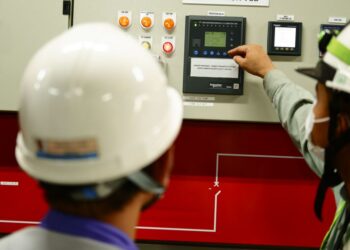
As China rapidly adopts AI technologies, workers face significant job displacement fears, particularly in manufacturing and customer service sectors. The integration of AI is reshaping employment landscapes, raising concerns about job security and the need for new skills.
China is witnessing a significant shift in its job market as the rapid adoption of artificial intelligence (AI) raises concerns about job security among its workforce. Recent events have highlighted the fears of many workers, particularly in the manufacturing and customer service sectors, about being replaced by AI technologies. Reports indicate that many employees are adapting to this new reality, but uncertainty looms large over their future.
In a notable case, computer programmer Fei Zhaojun was laid off from his job in Beijing after his employer questioned the potential of AI to replace human coders. This scenario is becoming increasingly common as AI tools are integrated into various industries, reshaping the landscape of employment in China. According to a recent report, the share of Chinese industrial enterprises using AI models surged from 9.6% in 2024 to 47.5% in 2025, reflecting the rapid pace of technological change. This dramatic increase indicates a shift not only in technology but also in the very nature of work, as companies prioritize efficiency and cost-cutting measures.
Workers like Fei are not alone in their concerns. Many are grappling with the implications of AI on their job prospects. A part-time translator, Du Qinchun, noted that while he has found temporary work training AI models for translations, the pay in the industry has dropped significantly. This trend is pushing workers to reconsider their career paths as they navigate a landscape increasingly dominated by AI. The situation is compounded by reports from the International Labor Organization, which emphasize that women, who often occupy roles in sectors more susceptible to automation, face a heightened risk of job loss. This demographic trend underscores the need for targeted support and retraining programs to help displaced workers transition into new roles that leverage AI technologies.
AI’s Transformative Impact on Employment
AI is not just a tool; it is transforming entire job categories. In the manufacturing sector, for instance, humanoid robots are beginning to take over tasks traditionally performed by humans, such as sorting parcels and performing physical labor. This shift raises questions about the future of jobs that require specialized training, as tasks that once needed skilled labor can now be performed by anyone with access to AI tools. The Economic Times reports that many workers in roles such as coding, translation, and customer service are finding their jobs increasingly replaceable as companies seek to cut costs and improve efficiency through automation. This trend is particularly alarming for mid-level positions, which are often the first to be targeted for replacement.
This shift raises questions about the future of jobs that require specialized training, as tasks that once needed skilled labor can now be performed by anyone with access to AI tools.
Schneider Electric's aggressive investments in automation are reshaping the industry landscape in Europe. This shift is set to create significant job opportunities for automation engineers…
The ongoing integration of AI into various industries is likely to exacerbate job displacement risks. The Chinese government is actively promoting AI through its “AI Plus” initiative, aiming to enhance productivity across sectors. This push for AI adoption is seen as a means to compete with other global powers, particularly the United States. However, the rapid implementation of AI technologies may lead to significant job losses, particularly for those in roles that are easily automated. As companies increasingly rely on AI to streamline operations, the traditional workforce may find itself sidelined, leading to a growing divide between those who can adapt and those who cannot.
Strategies for Adapting to AI Integration
As workers face the reality of job displacement, many are seeking ways to adapt to the changing landscape. For instance, some individuals who have lost their jobs are exploring independent ventures or AI-enabled businesses. Fei Zhaojun, after being laid off, has started creating vlog-style short videos, hoping to carve out a new path in the digital space. This shift towards independent work reflects a broader trend among workers who are experimenting with AI tools to enhance their productivity and creativity. However, the transition is not without challenges. Many workers are finding it difficult to make a living from these new endeavors, as the competition in the digital space intensifies.
Moreover, the skills required in the job market are evolving rapidly. Workers in manufacturing and customer service sectors are increasingly expected to possess AI literacy and digital skills. This shift necessitates a reevaluation of educational and training programs to ensure that workers are equipped to thrive in an AI-driven economy. The demand for skills related to AI and automation is expected to grow, making it essential for workers to adapt and upskill accordingly. Despite the challenges, there is a sense of optimism among some workers who view AI as a tool that can enhance their capabilities rather than a direct threat. As Wang Zhicheng, a former scriptwriter, noted, AI can be seen as a tool like any other, assisting in brainstorming and fact-checking. This perspective highlights the importance of embracing AI as a complement to human skills rather than a replacement.
Addressing Gender Disparities in Job Displacement
The impact of AI on job displacement is not uniform across demographics. Reports indicate that women, who often occupy roles in sectors more susceptible to automation, face a heightened risk of job loss. This demographic trend underscores the need for targeted support and retraining programs to help displaced workers transition into new roles that leverage AI technologies. The International Labor Organization emphasizes the importance of addressing these disparities to ensure equitable opportunities in the evolving job market.
Frequently Asked Questions
What skills should manufacturing workers in China develop to stay relevant?
Manufacturing workers in China should focus on developing AI literacy and digital skills to remain competitive. As automation becomes more prevalent, understanding how to work alongside AI technologies will be crucial for job security.
The Indian stock market experienced a notable boost as the Sensex surged by 473 points and the Nifty gained 134 points, driven by softer-than-expected US…
The demand for skills related to AI and automation is expected to grow, making it essential for workers to adapt and upskill accordingly.
How can customer service agents adapt to AI technologies?
Customer service agents can adapt by enhancing their technical skills and learning to use AI-driven tools effectively. This will enable them to complement AI systems rather than compete against them, ensuring their roles remain relevant.
What steps can I take to secure my job in the face of AI advancements?
To secure your job amidst AI advancements, consider upskilling in areas related to AI and automation. Staying informed about industry trends and continuously improving your skill set will help you navigate the changing job landscape.



Industry & Global Trends

 Industry & Global Trends