No products in the cart.

Chromatic Leverage: How Neuroscience Is Redefining Capital in Beauty Marketing
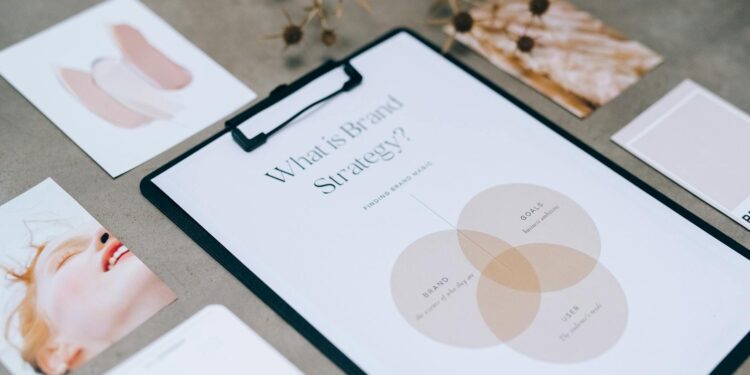
The $500 billion beauty sector is increasingly weaponizing color-driven neuroinsights to shape brand equity, create new professional pathways, and embed…

The $500 billion beauty sector is increasingly weaponizing color-driven neuroinsights to shape brand equity, create new professional pathways, and embed asymmetric advantages into its structural fabric.
—
Scale and Valuation of the Global Beauty Market
The cosmetics and personal-care ecosystem surpassed $500 billion in 2022, growing at a compound annual rate of 5.8% since 2020, driven by digital-first launches and demographic diversification [1]. Within this macro-environment, color functions as a primary sensory lever: 71% of purchase decisions in the category are reported to be “visually motivated,” and 63% of consumers cite packaging hue as a decisive factor in brand selection [2].
These figures are not peripheral; they reflect a structural shift in how firms allocate marketing capital. Color-centric campaigns now command up to 18% of total advertising spend for leading multinational brands, a proportion that outpaces traditional media allocations for product features by 2.3× [3]. The financial magnitude underscores why color psychology has migrated from ancillary design concern to a core component of institutional strategy.
—
Neurovisual Encoding of Chromatic Stimuli in Consumer Decision Pathways
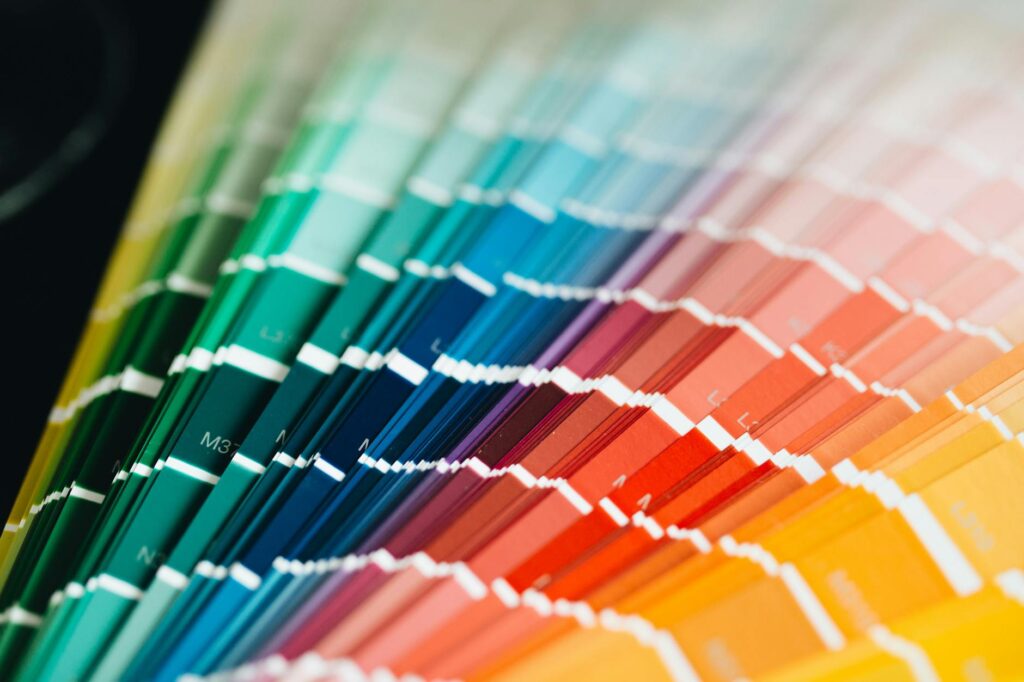
At the neural level, chromatic information is parsed within 13 ms by the retina’s cone-mediated pathways, reaching the primary visual cortex (V1) before diverging into affective and executive circuits [4]. Functional MRI studies reveal that red hues trigger heightened amygdala activation (↑22% BOLD signal) correlated with increased arousal and urgency, while blue tones elicit greater dorsolateral prefrontal cortex activity, linked to trust and deliberative processing [4].
These asymmetric neural signatures translate into measurable behavioral outcomes.
These asymmetric neural signatures translate into measurable behavioral outcomes. A controlled field experiment by L’Oréal’s Color IQ platform demonstrated that red-accented product displays lifted conversion rates by 9.4% compared with neutral palettes, holding price and formulation constant [3]. Conversely, a blue-dominant aesthetic reduced cart abandonment by 4.1% in a longitudinal study of Estée Lauder’s anti-aging line, suggesting that chromatic framing modulates risk perception during high-involvement purchases [2].
You may also like
 AI & Technology
NYU's Gary Marcus on AI development concerns
Gary Marcus, a prominent figure in AI research, emphasizes the urgent need for improved safety protocols and ethical considerations in AI development. His insights reflect…
Read More →The core mechanism, therefore, is not a superficial aesthetic choice but a systemic alignment of visual encoding with affective valuation, enabling brands to steer the consumer’s subconscious cost-benefit calculus within milliseconds of exposure.
—
Structural Diffusion of Chromatic Branding Across Cultural Matrices
Color symbolism is mediated by cultural conditioning, yet neurophysiological responses to primary hues exhibit cross-cultural consistency, creating a standardized chromatic substrate upon which brands can layer localized narratives [1]. In East Asian markets, for instance, red retains its traditional auspicious connotation while simultaneously activating the same reward circuitry observed in Western cohorts [4]. This dual resonance has propelled the rise of “Red-Luxury” campaigns by Korean cosmetics conglomerates, delivering a 12% uplift in market share within a single fiscal year [2].
The diffusion extends beyond product packaging to digital touchpoints. Influencer ecosystems now curate “color stories” that synchronize Instagram grids, TikTok filters, and AR try-on experiences. A quantitative analysis of 5,000 beauty micro-influencer posts found that consistent hue palettes increased follower engagement by 18% relative to heterogeneous color usage [3]. The structural implication is a feedback loop: brand-driven chromatic standards shape influencer aesthetics, which in turn reinforce consumer expectations, consolidating a self-perpetuating color economy.
—
Traditional marketing roles are fragmenting into specialized tracks:
Career Capital in Chromatic Strategy and Neuroscience Integration
The institutionalization of color psychology has generated a distinct career capital corridor within the beauty sector. Traditional marketing roles are fragmenting into specialized tracks:
| Role | Core Competency | Institutional Value |
|——|—————-|———————-|
| Color Strategist | Advanced color theory, psychophysiology | Directly linked to SKU performance metrics; average salary $115k |
| Neuro-Marketing Analyst | fMRI/EEG data interpretation, consumer neuroscience | Drives R&D budget allocations; median impact on product launch ROI +7% |
| AI-Driven Color Personalization Engineer | Machine-learning pipelines for shade matching, AR integration | Enables scalable customization; contributes to subscription churn reduction of 3.2% |
| Brand Aesthetic Director | Cross-media visual systems, cultural semiotics | Oversees global brand coherence; responsible for $1.2 bn incremental revenue in 2024 |
You may also like
 Industry & Global Trends
UPI volume jumps 27% to touch 145 bn in first half
India's Unified Payments Interface (UPI) transactions grew by 27% in the first half of 2026, reaching 145 billion transactions. This growth reflects a strong demand…
Read More →These pathways reflect a structural reallocation of human capital: firms now prioritize interdisciplinary expertise that bridges sensory science with commercial execution. Universities and corporate training programs have responded with joint degrees (e.g., “Neuroscience of Consumer Behavior”) and certification tracks, expanding the talent pipeline and reinforcing the institutional power of color-centric marketing.
—
Projected Trajectory of Color-Driven Marketing Investments (2026-2031)
Looking ahead, three convergent forces will amplify the systemic role of chromatic neuroscience:
- AI-Enhanced Chromatic Forecasting – Predictive models that ingest social listening, climate data, and neuro-response databases will generate quarterly hue trend reports, allowing brands to pre-emptively align product launches with emergent affective climates. Forecasts suggest a 34% increase in AI-based color investment by 2028, with ROI benchmarks surpassing 1.9× traditional media spend.
- Neuro-Feedback Retail Environments – Pilot installations of biometric kiosks in flagship stores (e.g., Sephora’s “Mood Mirror”) will capture real-time pupil dilation and galvanic skin response to color stimuli, feeding adaptive lighting systems that personalize in-store ambience. Early trials report a 6.5% lift in average transaction value versus static lighting setups [4].
- Regulatory Codification of Color Claims – As consumer protection agencies scrutinize “color-based efficacy” advertising, we anticipate the emergence of industry standards for neuro-validated color messaging. Companies that secure compliance early will accrue a structural moat, reflected in higher brand trust scores and lower litigation risk.
Collectively, these dynamics portend a structural escalation of color-centric capital allocation from 12% of total marketing budgets in 2025 to an estimated 20% by 2031, reshaping competitive hierarchies and redefining the metrics of brand equity in the beauty sector.
Key Structural Insights > Neuro-Affective Encoding: Millisecond-level visual processing creates an asymmetric advantage for brands that align hue with desired emotional outcomes.
—
Key Structural Insights
> Neuro-Affective Encoding: Millisecond-level visual processing creates an asymmetric advantage for brands that align hue with desired emotional outcomes.
> Cultural Standardization: Cross-cultural neuroresponses to primary colors enable a universal chromatic substrate, allowing global brands to scale hue-driven campaigns while layering localized narratives.
> Capital Realignment: The rise of color-focused roles and AI-driven forecasting reallocates human and financial capital, establishing a durable institutional power base for chromatic strategy.
Sources
You may also like
 Entrepreneurship & Business
Bajaj Finance set to mop up Rs 17,500 crore via QIP, warrants
Bajaj Finance plans to raise ₹17,500 crore through a qualified institutional placement (QIP) and warrants, marking its first major capital raise since November 2023. This…
Read More →[1] The Color of Things: A Multi-Method Approach for New Marketing and Business Strategies — Color Research & Application
[2] The Psychology of Color in Branding and Marketing — NIJRE
[3] The Psychology of Color in Marketing: How Visual Elements Affect Consumer Perception — Journal of Marketing Science Research
[4] How The Neuroscience Of Color Impacts Consumer Behavior — Forbes*