As climate disruptions become a structural determinant of supply‑chain continuity, firms that embed AI‑driven risk mapping, diversified sourcing, and resilient infrastructure into their core strategy will secure asymmetric advantages in financing, talent, and market share.
Supply‑chain leaders now confront climate disruption as a structural determinant of operational continuity, prompting a sector‑wide pivot toward data‑driven risk mapping and resilient capital allocation.
Macro Context: Escalating Exposure and Economic Stakes
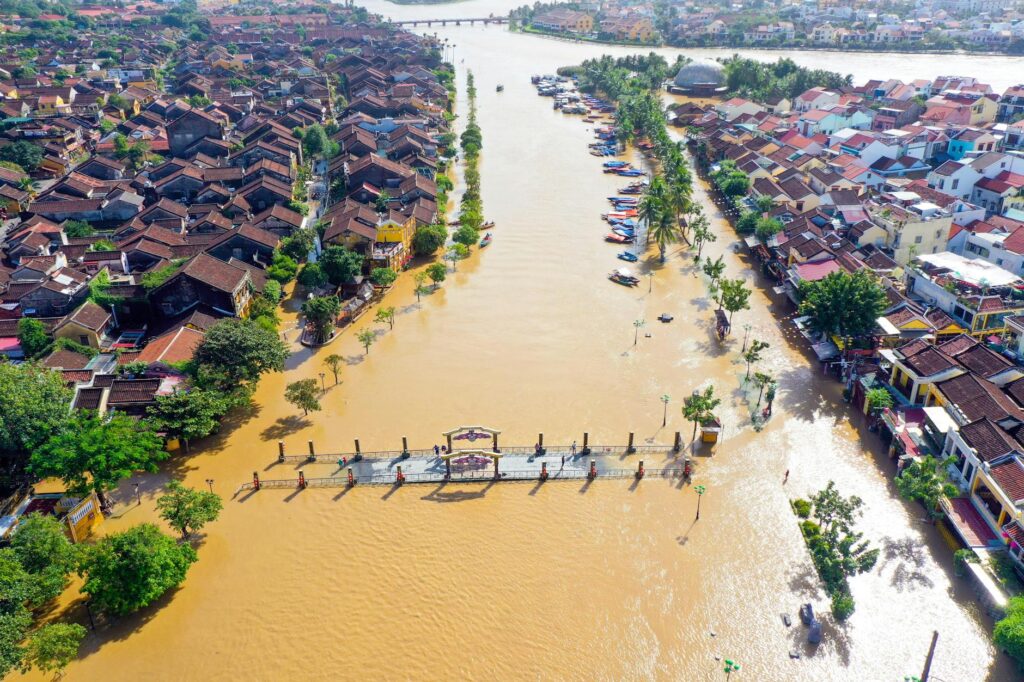
Since 2020, the frequency of climate‑related extreme events—floods, heatwaves, and hurricanes—has risen by roughly 15% [1]. The cumulative cost of supply‑chain interruptions linked to these events exceeded $100 billion in 2025, a figure that dwarfs the 2018 disruption losses from the same sources. A 2026 Global Supply‑Chain Survey found that 70% of senior executives rank climate change as a primary threat, while 40% report at least one climate‑induced disruption in the past year[2].
The World Economic Forum’s long‑term macro‑forecast warns of a 10% contraction in global GDP by 2050 if climate trajectories remain unchecked [3]. The implication for corporate capital formation is stark: firms that cannot safeguard the flow of inputs risk both market share erosion and heightened financing costs. The convergence of physical risk, regulatory pressure, and investor scrutiny signals a systemic shift in how firms conceive “operational risk”—from a peripheral contingency to a core component of strategic planning.
Climate Risk Reshapes Supply‑Chain Architecture in 2026
Structured Climate‑Risk Frameworks
In response, 60% of Fortune 500 firms have institutionalized climate‑risk assessment protocols within their enterprise risk management (ERM) suites, up from 35% in 2020 [2]. These frameworks draw on the Task Force on Climate‑Related Financial Disclosures (TCFD) recommendations, integrating scenario analysis (e.g., 2 °C vs. 4 °C pathways) directly into supply‑chain KPIs such as on‑time delivery and inventory turnover.
Case example:Toyota Motor Corp. retrofitted its North American parts network with a climate‑scenario overlay in 2024, quantifying exposure to riverine flooding for 120 supplier sites. The model projected a potential 8% increase in lead‑time variance under a 2 °C warming scenario, prompting the automaker to diversify 15% of its critical components to alternative hubs in the Midwest.
AI‑Driven Mapping and Real‑Time Visibility
Advanced analytics now translate raw sensor data into hyper‑granular supply‑chain maps. AI algorithms ingest IoT telemetry, satellite imagery, and weather forecasts to flag “hot spots” where climate stress intersects with logistical bottlenecks. According to the Center for Climate and Energy Solutions (C2ES), 78% of firms using AI‑enabled mapping reported a reduction in disruption response time from an average of 72 hours to 24 hours[4].
retrofitted its North American parts network with a climate‑scenario overlay in 2024, quantifying exposure to riverine flooding for 120 supplier sites.
Case example:Walmart’s 2025 “Resilience Hub” integrates real‑time flood alerts from the National Oceanic and Atmospheric Administration (NOAA) with its inventory management system, automatically rerouting shipments away from at‑risk nodes. The pilot saved an estimated $12 million in avoided spoilage and expedited shipping costs during the 2025 Gulf Coast floods.
Resilience Planning: Diversification and Infrastructure Investment
Beyond detection, firms are operationalizing scenario‑based resilience plans that embed diversification, redundancy, and climate‑hardening of assets. The 2026 industry benchmark notes that 45% of surveyed firms have increased capital expenditures on climate‑resilient infrastructure by an average of 12% YoY[1]. This includes elevated warehouses, flood‑resistant logistics hubs, and renewable‑energy microgrids that reduce dependence on vulnerable external power supplies.
Historical parallel: The 1970s oil crisis forced manufacturers to shift from single‑source oil‑dependent inputs to diversified energy portfolios, reshaping procurement strategies for decades. Similarly, today’s climate disruptions are catalyzing a structural reallocation of capital toward diversified, climate‑robust supply networks.
Systemic Implications: Regulatory, Collaborative, and Investor Dynamics
Expanding Regulatory Landscape
Governments worldwide are codifying climate resilience into supply‑chain governance. The European Union’s Supply‑Chain Due Diligence Directive (effective 2024) mandates that firms assess and mitigate environmental risks across Tier‑2 suppliers, with non‑compliance attracting fines up to 2% of global turnover [3]. In the United States, the Infrastructure Investment and Jobs Act (2021) allocated $15 billion for climate‑resilient freight corridors, incentivizing private investment in flood‑proof rail and highway segments.
Collectively, 80% of OECD economies have enacted or announced climate‑related supply‑chain regulations[3]. The systemic effect is a shift from voluntary ESG reporting to legally enforceable risk mitigation, altering the calculus of cost‑benefit analyses for supply‑chain managers.
Collectively, 80% of OECD economies have enacted or announced climate‑related supply‑chain regulations [3].
Industry‑Wide Collaboration Platforms
Faced with cross‑border exposure, firms are co‑creating resilience standards through consortia such as the Global Supply Chain Resilience Initiative (GSCRI), launched in 2023. By 2026, GSCRI members have shared over 1,200 climate‑risk data points, enabling benchmarking across sectors. Collaborative pilots—such as the “Blue Ocean” project linking European shipbuilders with Asian component suppliers to model sea‑level rise impacts—demonstrate the value of pooled intelligence in reducing duplicated assessment costs.
Investor Expectations and Capital Allocation
Investor pressure has crystallized into a pricing of climate risk. The 2026 Sustainable Investment Survey indicates that 90% of institutional investors consider climate‑related supply‑chain exposure a material factor in portfolio decisions[4]. Green‑bond issuances tied to resilience projects have surged, with $45 billion raised in 2025 alone for climate‑hardening of logistics assets.
A recent memo from the Biden administration regarding Covid-19 guidelines for schools has ignited a significant legal dispute within the Justice Department, raising questions about…
The net effect is an asymmetric capital flow: firms with transparent, quantifiable resilience metrics secure lower cost of capital, while those lagging face higher discount rates and tighter covenant structures.
Human Capital and Career Capital: Winners, Losers, and Emerging Skill Sets
Climate Risk Reshapes Supply‑Chain Architecture in 2026
Talent Acquisition and Retention
Millennial and Gen‑Z professionals increasingly prioritize sustainability in employer choice. A 2025 talent pulse found that 75% of respondents would favor firms with demonstrable supply‑chain resilience over peers lacking such commitments [2]. Companies that embed climate risk into their operational narrative attract engineers, data scientists, and sustainability analysts whose career capital is anchored in systemic risk expertise.
Access to Capital and Executive Advancement
Executives who champion resilience initiatives are accruing “climate leadership capital”, a new dimension of executive value. In Fortune 500 firms, CEOs who publicly disclosed climate‑risk mitigation plans saw a 5% higher market valuation premium relative to peers without such disclosures [1]. This premium translates into greater board influence and accelerated promotion pathways for senior managers overseeing climate‑risk functions.
Innovation and Competitive Edge
Resilience investments are spawning innovation ecosystems. For instance, Siemens’ “Eco‑Logistics” platform, launched in 2024, offers modular, climate‑adaptable warehousing solutions that integrate renewable energy storage and AI‑driven demand forecasting. Early adopters report average cost reductions of 3–5% and revenue uplift of 2% linked to enhanced service reliability during extreme weather events [4]. Firms that fail to integrate such technologies risk obsolescence as customers gravitate toward resilient suppliers.
Capital Reallocation: Green‑bond frameworks will expand to include “resilience bonds,” earmarked for climate‑hardening of logistics assets.
Outlook: Structural Trajectory Through 2029
Over the next three to five years, three converging forces will crystallize the systemic shift:
Regulatory Convergence: The EU, US, and Asia‑Pacific will harmonize climate‑risk disclosure standards, creating a de‑facto global baseline that eliminates “regulatory arbitrage.” Firms that pre‑emptively align with the most stringent regime will enjoy a first‑mover advantage in market access and financing.
Technology Maturation: AI‑enabled supply‑chain twins will become mainstream, delivering predictive disruption alerts with sub‑hour latency. The cost of high‑resolution satellite data is projected to fall by 40% by 2028, democratizing access for mid‑size firms.
Capital Reallocation: Green‑bond frameworks will expand to include “resilience bonds,” earmarked for climate‑hardening of logistics assets. Institutional investors will increasingly tie interest rates to resilience performance metrics, embedding climate risk into the cost of debt.
Firms that embed climate risk into the core of supply‑chain strategy—through data‑driven mapping, diversified sourcing, and resilient infrastructure—will capture asymmetric upside in market share, talent, and financing. Those that treat resilience as a peripheral compliance checkbox will confront escalating disruption costs, tighter credit terms, and talent attrition. The structural trajectory points toward a new operating model where climate resilience is inseparable from competitive advantage.
As public concerns about artificial intelligence grow, officials are under scrutiny for their lack of transparency and accountability. This article examines the implications for policy…
Key Structural Insights
> [Insight 1]: Climate‑risk assessment has moved from voluntary ESG reporting to a legally mandated component of supply‑chain governance, reshaping capital allocation and operational decision‑making.
> [Insight 2]: AI‑driven supply‑chain twins and real‑time climate data are compressing disruption response times, creating a systemic advantage for firms that invest in digital resilience.
> * [Insight 3]: Investor and talent markets are rewarding firms with transparent, quantifiable resilience metrics, establishing climate leadership as a new vector of career and corporate capital.




 Entrepreneurship & Business
 Government & Policy
Government & Policy