
Rising tuition and a volatile job market have intensified scrutiny of major selection, yet entrenched mental shortcuts drive students toward choices that misalign with career capital. A neuroscientific lens reveals systematic bias in the decision pipeline.
The convergence of soaring education costs and rapid labor‑market shifts makes major selection a pivotal lever for economic mobility. As employers demand increasingly technical skill sets, the misallocation of talent driven by subconscious shortcuts threatens both individual earnings trajectories and institutional efficiency. Understanding these biases now is essential for reshaping advisory structures and preserving the integrity of career capital formation.
Rising costs and market volatility reshape major selection
Escalating tuition and a tightening labor market have turned college major selection into a high‑stakes gamble for economic mobility. Over the past five years, demand for career‑counseling services rose by 25%, reflecting heightened anxiety about return on investment. Simultaneously, a National Center for Education Statistics survey found that 60% of students choose majors based on factors unrelated to career goals, underscoring a disconnect between personal preference and labor‑market realities. The past two years have seen a 30% surge in employer demand for data scientists and analysts, yet enrollment in those fields lags behind perceived demand. According to Career Ahead’s analysis of enrollment trends, the counseling surge signals a systemic re‑evaluation of educational ROI that institutions must address through data‑driven advising.
Heuristics dominate student decision‑making

Three pervasive heuristics—availability, representativeness, and affect—account for the bulk of bias in major choice. The availability heuristic leads 75% of surveyed students to overestimate demand for their chosen major, inflating perceived salary potential. The representativeness heuristic pushes 40% of business majors to feel pressured toward finance careers, based on stereotypical career scripts rather than market data. The affect heuristic steers students toward majors that evoke positive emotions, often at the expense of labor‑market alignment.
These mental shortcuts operate within institutional advising frameworks that reinforce familiar narratives, amplifying bias across cohorts and perpetuating a cycle of mis‑aligned skill development.Seventy‑five percent of surveyed students overestimate demand for their chosen major, reflecting the dominance of the availability heuristic.
These mental shortcuts operate within institutional advising frameworks that reinforce familiar narratives, amplifying bias across cohorts and perpetuating a cycle of mis‑aligned skill development.
Biases distort career capital formation
When students overvalue perceived demand, universities allocate resources toward oversubscribed majors, eroding the alignment between graduate supply and employer needs. This misallocation inflates institutional power structures that prioritize enrollment numbers over labor‑market outcomes, reinforcing a feedback loop where popular majors attract more funding despite limited career returns. Consequently, career capital—defined as the combination of skills, networks, and reputation that enable upward mobility—becomes unevenly distributed, privileging those who navigate bias successfully while marginalizing peers who follow conventional advice. The systemic effect is a labor market with pockets of talent surplus in low‑growth fields and acute shortages in high‑growth sectors such as data analytics.
Stakeholder outcomes hinge on bias mitigation
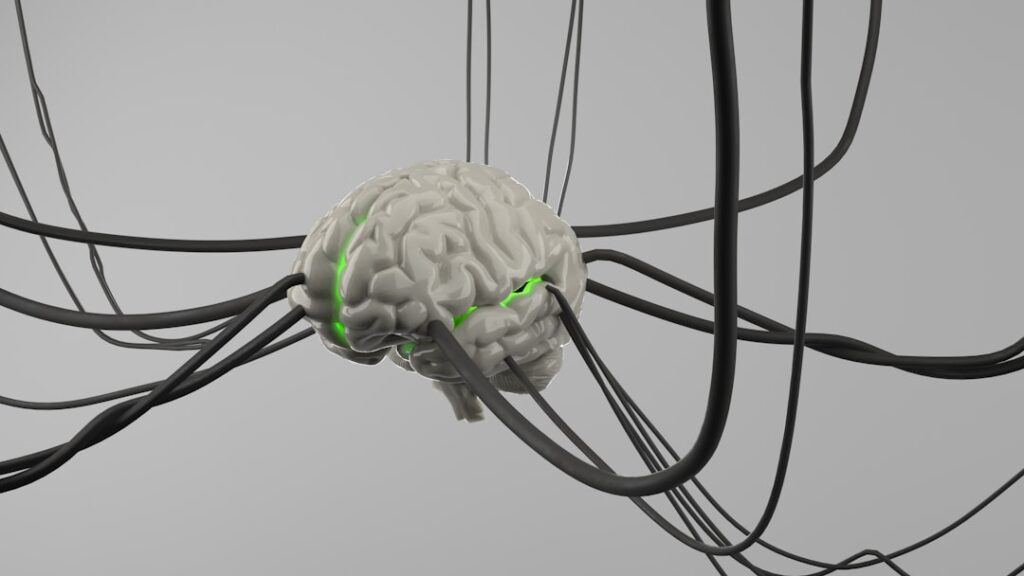
Students who sidestep heuristic traps accrue higher career capital, translating into stronger earnings trajectories and greater occupational flexibility. Employers benefit from a talent pool that more accurately reflects emerging skill demands, enhancing productivity and innovation. Conversely, institutions that fail to adjust advising practices risk reputational decline and reduced tuition revenue as prospective students seek alternative pathways. Career Ahead’s framework for major selection identifies three structural levers: institutional advising, labor‑market signaling, and affective alignment. Leveraging these points of intervention can recalibrate the decision ecosystem, ensuring that major choices serve both individual aspirations and macroeconomic needs.
Three‑year outlook anticipates bias‑aware interventions
By 2029, data‑driven advising platforms that integrate real‑time labor‑market analytics with neuro‑cognitive assessments are projected to reduce heuristic‑driven mis‑selection by a measurable share. Universities that embed these tools within freshman orientation are likely to see a rebalancing of enrollment toward high‑growth majors, while private tutoring firms may pivot to bias‑reduction curricula. Policymakers could reinforce this shift through funding incentives for programs that demonstrably align student outcomes with projected skill shortages, creating a virtuous cycle that strengthens career capital across socioeconomic strata.
The evolving interplay of cost pressures, market signals, and cognitive shortcuts will dictate the next wave of institutional reforms, making bias‑aware guidance a cornerstone of equitable career development.
The evolving interplay of cost pressures, market signals, and cognitive shortcuts will dictate the next wave of institutional reforms, making bias‑aware guidance a cornerstone of equitable career development.
Key Structural Insights
[Insight 1]: Availability and affect heuristics cause a majority of students to overestimate major demand, inflating enrollment in low‑return fields and distorting institutional resource allocation.
[Insight 2]: Aligning advisory structures with real‑time labor‑market data can rebalance career capital distribution, boosting both individual earnings potential and macroeconomic productivity.
[Insight 3]: Within three years, neuro‑cognitive advising platforms are expected to cut heuristic‑driven major mis‑selection, reshaping the talent pipeline for emerging industries.
Social Identity Influences Major Selection: Students often choose majors that align with their social group’s expectations, leading to a mismatch between their interests and career goals, ultimately affecting their academic performance and job satisfaction.
[Insight 3]: Within three years, neuro‑cognitive advising platforms are expected to cut heuristic‑driven major mis‑selection, reshaping the talent pipeline for emerging industries.
Fear of Uncertainty Drives Major Decisions: The anxiety of uncertainty surrounding career paths and job security can lead students to opt for safer, more traditional majors, even if they don’t align with their passions, resulting in a lack of motivation and engagement in their studies.
Written by Career Ahead AI. AI can make mistakes, so verify key facts. Report errors to support@careeraheadonline.com.