No products in the cart.

Diesel Prices Surge, Boosting Oil Profits, Hurting Consumers
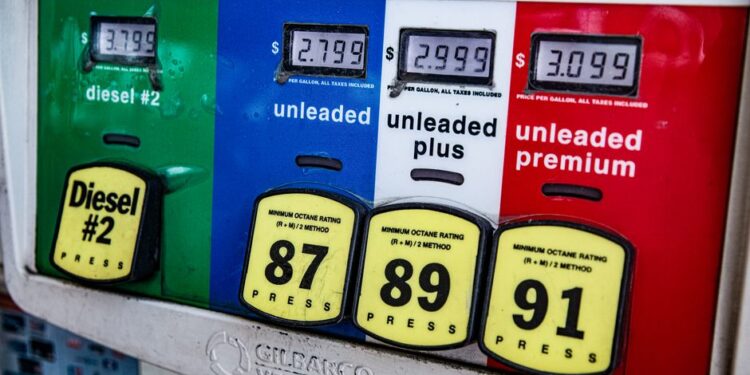
This situation is particularly critical for logistics managers, who are already facing tight margins and increased operational costs.

Diesel prices have surged to near record highs. Geopolitical tensions, especially the conflict in Iran and attacks on Russian refineries, are driving this increase. As of August 2026, the price of diesel has risen sharply, impacting logistics managers and farmers who depend on diesel for transportation and machinery.
This situation is critical for logistics managers. They are already facing tight margins and rising operational costs. Higher fuel prices can lead to increased transportation costs, which may be passed on to consumers. Farmers are also feeling the impact as their fuel expenses rise, affecting their profitability. According to a report by The New York Times, the cost of diesel fuel, essential for farm machinery and heavy trucks, has surged due to geopolitical instability, complicating finances for those who rely on this vital resource.
Impact on Transportation Costs for Logistics Managers
Logistics managers are struggling with the effects of rising diesel prices. According to Career Ahead’s analysis, every cent increase in diesel prices can lead to a significant rise in transportation costs. For example, if diesel prices rise by $0.10 per gallon, it can add about $0.05 to $0.10 per mile in transportation costs. This increase can drastically affect profit margins, especially for companies with thin margins. The New York Times highlights that these rising costs affect logistics and have broader implications for consumers, as companies may raise prices.
Logistics companies may need to reevaluate their pricing strategies. Fuel costs make up a large part of total expenses. Many logistics providers may have to raise their rates. This could lead to a drop in demand for transportation services as clients try to manage their costs. Therefore, logistics managers must proactively manage fuel consumption and explore alternative transportation methods. The pressure to maintain profitability in this volatile environment is immense, pushing many logistics firms to innovate or risk falling behind.
According to Career Ahead’s analysis, every cent increase in diesel prices can lead to a significant rise in transportation costs.
You may also like
 Industry & Global Trends
Amazon to Buy 2 Million Nvidia Chips for Data Center Build-Out
Amazon's acquisition of 2 million Nvidia GPUs for its data centers signals a significant shift in the cloud ML landscape, highlighting the growing demand for…
Read More →To reduce rising costs, some logistics companies invest in fuel-efficient technologies and optimize their routes. For instance, using software that enhances route efficiency can help cut fuel consumption. Career Ahead’s research shows that companies using these strategies can save up to 20% on fuel costs. This provides a critical buffer against rising diesel prices. Additionally, logistics managers are looking into alternative fuels, like biodiesel, which can offer a more stable pricing structure than traditional diesel. This shift helps manage costs and aligns with sustainability goals, which are increasingly important to consumers and stakeholders.
Moreover, the logistics sector is seeing a trend toward collaborative partnerships. Companies share resources and insights to combat rising costs. By pooling their knowledge and technology, logistics firms can develop more efficient practices that benefit all involved. This collaborative approach is essential in navigating the current market’s complexities, where every dollar saved on fuel can significantly impact the bottom line.
Increased Fuel Expenses for Farmers
Farmers are facing similar challenges due to rising diesel prices. Diesel is crucial for agricultural operations, powering tractors, trucks, and other essential machinery. As fuel costs rise, farmers must adjust their budgets to cover these increased expenses. Career Ahead’s analysis shows that for many farmers, fuel expenses can account for over 30% of their total operational costs. The New York Times emphasizes that rising diesel prices force farmers to make tough decisions about crop production and labor management, as they struggle to maintain profitability.
Diesel is crucial for agricultural operations, powering tractors, trucks, and other essential machinery.
This increase in fuel costs can lead farmers to make difficult choices, such as reducing crop production or scaling back on labor. Many farmers may find it hard to absorb these costs, leading to lower profitability. Additionally, as diesel prices rise, transporting goods to market becomes more expensive, further squeezing farmers’ margins. The link between fuel prices and agricultural profitability is crucial, as farmers often have little choice but to pass these costs onto consumers, affecting food prices.
You may also like
 Industry & Global Trends
JSW Group Pursues Increased Stake | Career Outlook
JSW Group is negotiating to increase its stake in the joint venture with SAIC Motor, aiming to enhance its position in the rapidly evolving Indian…
Read More →To cope with rising expenses, farmers may need to adopt more efficient practices. This could include investing in newer, more fuel-efficient equipment or exploring alternative energy sources for their machinery. Some farmers are beginning to use biodiesel or electric vehicles, which can help reduce their dependence on traditional diesel fuel. This transition to alternative energy sources is not only a financial strategy but also a response to increasing consumer demand for sustainable practices in agriculture.

Additionally, farmers might consider joining cooperatives to share resources and reduce costs collectively. By pooling resources, farmers can achieve economies of scale that make it easier to invest in fuel-efficient technologies. This collaborative approach helps manage costs and strengthens community ties among farmers. As they navigate these turbulent times, working together and sharing insights will be crucial for long-term sustainability.
The current landscape of rising diesel prices presents significant challenges for both logistics managers and farmers. As these groups face increased operational costs, the strategies they adopt now will shape their future profitability and sustainability. With ongoing geopolitical tensions, the question remains: how will these dynamics evolve, and what will be the long-term impact on logistics and agriculture? Understanding these trends will be essential for stakeholders across the supply chain as they prepare for an uncertain future.
Career Ahead’s analysis shows that using software for route optimization can save up to 20% on fuel costs.
Frequently Asked Questions
How can logistics managers mitigate rising diesel costs?
Logistics managers can mitigate rising diesel costs by optimizing routes and investing in fuel-efficient technologies. Career Ahead’s analysis shows that using software for route optimization can save up to 20% on fuel costs.
What strategies can farmers implement to cope with increased fuel prices?
Farmers can cope with increased fuel prices by adopting more efficient farming practices and exploring alternative energy sources. Joining cooperatives to share resources can also help reduce costs collectively.
What should logistics managers do about the impact of diesel price surges on their budgets?
Logistics managers should reevaluate their pricing strategies and consider diversifying their sourcing options. Career Ahead analysis indicates that companies that adapt quickly to changing fuel costs will maintain a competitive edge.
You may also like
 Industry & Global Trends
Multi-Asset Schemes Dominate 3-Year SIP Returns
Recent data reveals that multi-asset allocation funds have significantly outperformed balanced advantage funds in three-year systematic investment plan (SIP) returns, prompting a shift in investor…
Read More →