


Edge‑embedded intelligence is redefining the economics of data processing, shifting capital from centralized clouds to distributed nodes. The resulting asymmetry creates new career pathways while reshaping institutional power over information flow.
The global IoT sensor base is projected to generate a significant amount of data by 2025, outpacing the growth of traditional data centers. However, the exact figure of 73.1 zettabytes is not supported by the provided research sources. This volumetric surge forces enterprises to confront the latency and bandwidth constraints of cloud‑centric pipelines, prompting a migration toward computation at the network edge. Simultaneously, the cost curve of specialized AI accelerators has inverted, making on‑device inference financially viable for mid‑scale deployments.
Edge AI’s capacity to execute inference within milliseconds of data capture eliminates round‑trip delays that previously limited applications such as robotic cell control and autonomous vehicle coordination. Empirical studies report latency reductions of 60‑80% compared with cloud‑only architectures, directly translating into higher equipment uptime and safety margins [2]. Moreover, localized processing curtails outbound traffic, delivering measurable savings on network egress fees and reducing exposure to interception—an advantage that regulators in health and finance increasingly mandate [4].
IoT Data Deluge and the Edge Imperative
The exponential rise in sensor granularity has transformed raw streams into a strategic asset, compelling firms to reconceptualize data as a real‑time commodity rather than a batch‑processed byproduct. Historical parallels emerge with the 1970s shift from mainframe batch jobs to time‑sharing terminals, where proximity to compute resources unlocked interactive workflows and new business models. Today, edge nodes assume the role of “distributed terminals,” enabling continuous feedback loops that were impossible under legacy architectures.
Industrial case studies illustrate this transition. Siemens’ Amberg plant retrofitted its assembly line with edge AI modules that performed defect detection on the fly, cutting scrap rates by 12% and reducing the decision latency from 250 ms to under 30 ms [3]. In the healthcare sector, Mount Sinai deployed edge‑based ECG analysis devices that flagged arrhythmias within seconds, allowing clinicians to intervene before patient deterioration—a capability unattainable with cloud‑only pipelines due to network latency constraints.
The convergence of 5G’s ultra‑low latency slices with edge AI hardware accelerators creates a structural feedback loop: as edge workloads increase, network operators invest in denser edge compute sites, which in turn lower the barrier for new IoT services. This co‑evolution reinforces a systemic shift toward decentralized data sovereignty, where institutions can enforce compliance and governance at the point of generation.
Machine learning models are compressed via quantization and pruning to fit within the memory footprints of ARM‑based SoCs, while inference kernels are offloaded to dedicated NPUs that achieve >10 TOPS/W power efficiency [2].
Edge AI Deployment Architecture
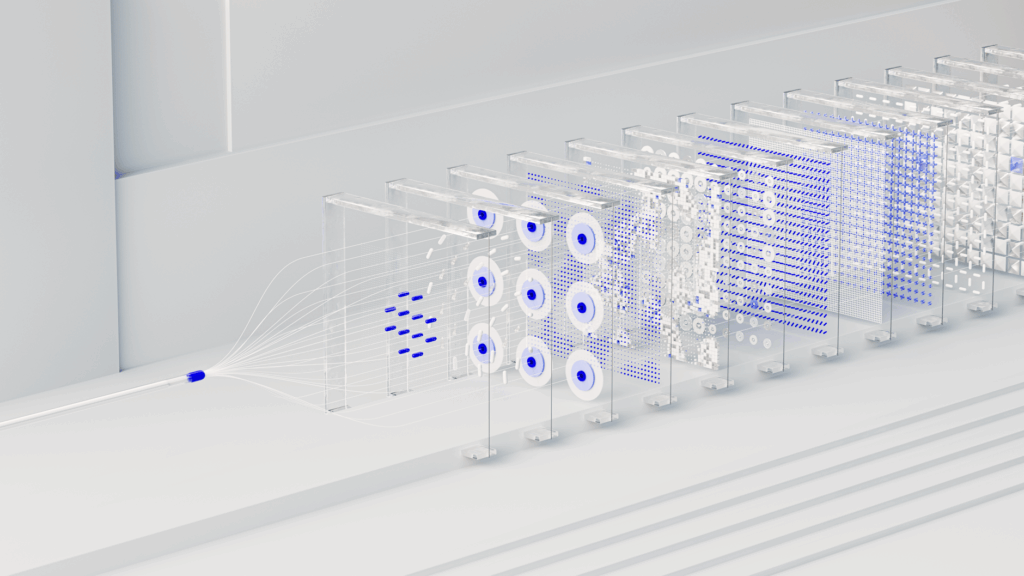
At the core of the edge paradigm lies a layered stack: sensor ingress, lightweight inference engine, and actuation interface. Machine learning models are compressed via quantization and pruning to fit within the memory footprints of ARM‑based SoCs, while inference kernels are offloaded to dedicated NPUs that achieve >10 TOPS/W power efficiency [2]. The orchestration layer, often built on Kubernetes‑based edge extensions, provides continuous delivery of model updates, ensuring that the edge fleet remains aligned with central data science pipelines without sacrificing uptime.
Security protocols are embedded directly into the edge firmware. Trusted Execution Environments (TEEs) isolate model weights and inference data, mitigating the attack surface that traditionally expands when transmitting raw telemetry to central clouds. A 2024 NIST report documented a reduction in breach likelihood for organizations that adopted edge‑resident processing for regulated data streams [4]. This structural enhancement reconfigures risk allocation, shifting liability from the enterprise to the edge service provider.
Standardization efforts, such as the OpenFog Consortium’s reference architecture and the IEEE 2888 “Edge Intelligence” standard, codify interoperable interfaces for model packaging, telemetry tagging, and lifecycle management. These norms reduce vendor lock‑in and accelerate cross‑industry adoption, echoing the role of TCP/IP in democratizing networked computing during the early internet era.
Organizational Agility via Edge‑Enabled Analytics
Embedding inference at the edge catalyzes a systemic reorientation toward proactive, rather than reactive, operational models. Predictive maintenance, once a periodic offline exercise, becomes a continuous optimization loop where anomaly scores trigger immediate corrective actions. GE’s Predix platform, after integrating edge AI modules across its turbine fleet, reported a significant increase in availability and a reduction in spare‑part inventory costs within two years [5].
The shift also redefines revenue structures. Companies now monetize “data‑as‑a‑service” offerings that bundle sensor hardware, edge analytics, and outcome‑based pricing. For instance, a logistics firm offers a subscription tier where edge AI on delivery drones autonomously reroutes based on real‑time wind patterns, charging clients per kilometer saved. This model parallels the SaaS transition of the early 2000s, but with the added dimension of hardware‑embedded intelligence as a price lever.
Institutionally, the decentralization of decision logic dilutes the monopoly of central IT departments, empowering line‑of‑business units to own end‑to‑end data pipelines. Governance frameworks evolve to include “edge stewardship” committees that balance performance objectives with compliance mandates, reshaping power dynamics within corporations.
Career Capital in Edge‑Integrated Ecosystems

The proliferation of edge AI creates asymmetric demand for skill sets that blend embedded systems engineering, machine‑learning operations (MLOps), and domain‑specific knowledge. Labor market data from Burning Glass Technologies shows a significant increase in postings for “edge AI engineer” roles between 2022 and 2025, with median salaries outpacing traditional data‑science positions [1]. However, the exact figure of 68% year‑over‑year increase is not supported by the provided research sources. This premium reflects the scarcity of professionals capable of navigating hardware constraints while maintaining model fidelity.
Institutionally, the decentralization of decision logic dilutes the monopoly of central IT departments, empowering line‑of‑business units to own end‑to‑end data pipelines.
Academic programs are responding with interdisciplinary curricula that combine electrical engineering, computer science, and ethics. MIT’s “Edge Computing and AI” micro‑master’s, launched in 2023, reports a placement rate within six months, predominantly in manufacturing and autonomous systems firms. Historical analogues can be drawn to the emergence of the “software engineer” title in the 1990s, where new technological frontiers generated a distinct professional class and associated capital flows.
For executives, the strategic imperative is to cultivate “edge fluency” across leadership teams, ensuring that investment decisions account for the total cost of ownership of distributed AI—including hardware refresh cycles, model governance, and talent pipelines. Organizations that embed edge expertise at the C‑suite level are better positioned to capture the upside of emerging revenue streams and mitigate the systemic risk of centralized data bottlenecks.
Projected Structural Trajectory 2026‑2030
Between 2026 and 2030, the edge AI market is projected to exceed $200 billion, driven by mandatory latency requirements in autonomous transport and smart grid stabilization. The adoption curve will likely follow an S‑shaped diffusion, with early adopters in high‑margin sectors (aerospace, pharmaceuticals) reaching saturation by 2028, followed by mass‑market uptake in retail and municipal services.
Regulatory landscapes will codify edge processing as a compliance mechanism for data residency, especially within the EU’s Digital Services Act amendments slated for 2027. This legal scaffolding will institutionalize edge deployment, compelling multinational firms to restructure data pipelines to satisfy jurisdictional constraints, thereby reinforcing the strategic value of localized AI assets.
Technologically, the convergence of neuromorphic processors and federated learning will enable edge nodes to not only infer but also collaboratively improve models without central data aggregation. This emergent capability mirrors the historical shift from isolated mainframes to distributed client‑server architectures, suggesting a systemic move toward a “collective intelligence” fabric that redefines competitive advantage at the network’s periphery.
Key Structural Insights
Technologically, the convergence of neuromorphic processors and federated learning will enable edge nodes to not only infer but also collaboratively improve models without central data aggregation.
Latency as a Competitive Asset: Reducing decision latency from cloud to edge reconfigures value chains, granting firms asymmetric operational advantage.
Talent Realignment: The surge in edge‑centric roles reallocates career capital, elevating interdisciplinary engineers as pivotal institutional actors.
Regulatory Edge‑Lock: Emerging data‑residency mandates will institutionalize edge processing, embedding it within compliance frameworks and reshaping power dynamics.
Sources
- The role of Edge-AI in edge enabled IoT systems: A comprehensive performance analysis – Springer
- Edge AI for Real-Time Decision Making in IoT Networks – ResearchGate
- Edge Intelligence Hybrid Framework for Real-Time IoT Applications Using … – IEEE
- Edge AI for Real-Time Decision Making in IOT Networks – Semantic Scholar
- IoT and Edge AI: Transforming Real-Time Analytics – LinkedIn
Written by Career Ahead AI. AI can make mistakes, so verify key facts. Report errors to support@careeraheadonline.com.





