No products in the cart.

Visualizing Talent: How AI-Driven Career Maps Reshape Capital, Mobility, and Institutional Power

The Portfolio-Visualization Matrix as a Structural Lever The diffusion of generative AI into talent development has moved from isolated recommendation engines t…

AI-enabled visual storytelling converts fragmented skill data into institutional-grade career maps, redefining the mechanisms of career capital accumulation and the authority of traditional career services.
The Portfolio-Visualization Matrix as a Structural Lever
The diffusion of generative AI into talent development has moved from isolated recommendation engines to integrated visual portfolios that encode competencies, aspirations, and labor-market dynamics in a single, navigable map. A 2024 study of 4,200 professionals found that a significant majority now deem AI-driven tools essential for career advancement, a figure that reflects a structural reorientation: career information is no longer a static document but a dynamic, data-rich artifact that can be interrogated, projected, and benchmarked across institutional ecosystems.
Platforms such as Fig Careers operationalize this matrix by ingesting résumé text, digital footprints, and skill-assessment results, then rendering a layered visual roadmap that aligns personal trajectories with sectoral demand curves. Parallel experiments in immersive environments—XR-CareerAssist—extend the matrix into three-dimensional spaces, allowing users to “walk” through projected role clusters and see real-time labor-market signals. The macro-level implication is a redefinition of career capital: the value of an individual’s skill set is now quantifiable not only by certifications but by its position within a continuously updated, algorithmically curated topology.
Algorithmic Mapping of Skill Trajectories

At the core of visual career portfolios lies a triadic mechanism: (1) personalized skill extraction, (2) predictive labor-market modeling, and (3) visual narrative synthesis.
- Personalized Skill Extraction – Large-language models parse free-form inputs (e.g., project descriptions, code repositories) to generate a granular taxonomy of competencies, anchored to occupational standards such as ONET. This process replaces the manual, often biased, self-assessment that has historically limited upward mobility for underrepresented groups.
- Predictive Labor-Market Modeling – Time-series analysis of hiring data, wage trends, and geographic mobility patterns feeds a probabilistic engine that forecasts skill demand over 3-5 year horizons. Fig Careers reports improved forecast accuracy when integrating real-time job posting APIs versus static occupational forecasts.
- Visual Narrative Synthesis – The extracted skills and forecasts are projected onto a multidimensional graph where nodes represent roles, edges encode transition probabilities, and color gradients signal wage differentials. Users can toggle “what-if” scenarios—adding a certification, shifting industries, or relocating—allowing them to visualize capital accumulation pathways in concrete terms.
This algorithmic pipeline converts disparate data dots into a coherent, navigable map, thereby institutionalizing a form of “career intelligence” that was previously the province of elite consulting firms. The systemic shift is comparable to the introduction of credit scoring in finance: a once-opaque assessment becomes a standardized, algorithmic metric that reshapes access to resources.
Institutional Reconfiguration of Career Services
The emergence of AI-driven visual portfolios forces a structural realignment of university career centers, corporate talent development units, and public employment agencies. Traditional services—resume workshops, job fairs, and one-on-one counseling—have been subsumed under a broader “career intelligence” function that leverages portfolio visualizations as both diagnostic and prescriptive tools.
Leadership Realignment – Career center directors now report to chief learning officers or chief data officers, reflecting a shift from service delivery to data governance.
You may also like
 AI & Technology
AI Interviewing Transforms Future Hiring Landscape
HackerRank's AI interviewer, Chakra, is transforming recruitment by streamlining the hiring process and emphasizing critical thinking and problem-solving skills in candidates.
Read More →Leadership Realignment – Career center directors now report to chief learning officers or chief data officers, reflecting a shift from service delivery to data governance. This mirrors the historical transition of libraries from custodial repositories to digital knowledge hubs in the early 2000s.
New Business Models – Subscription-based platforms like Fig Careers generate recurring revenue streams that fund continuous model retraining and data acquisition, a departure from the one-off consulting fees that dominated the career-coaching market in the 2010s.
Policy Implications – Public labor agencies are piloting “portfolio-based eligibility” for upskilling grants, where funding allocation is tied to visualized skill gaps rather than static credential checklists. This aligns with the 2022 U.S. Department of Labor initiative to embed AI analytics in workforce development, indicating an institutional endorsement of the visual portfolio as a policy instrument.
These systemic ripples reconfigure power dynamics: institutions that control the underlying data pipelines and visualization standards gain disproportionate influence over talent flows, echoing the centralization of publishing power during the rise of digital academic journals.
Capital Accumulation through Visualized Pathways
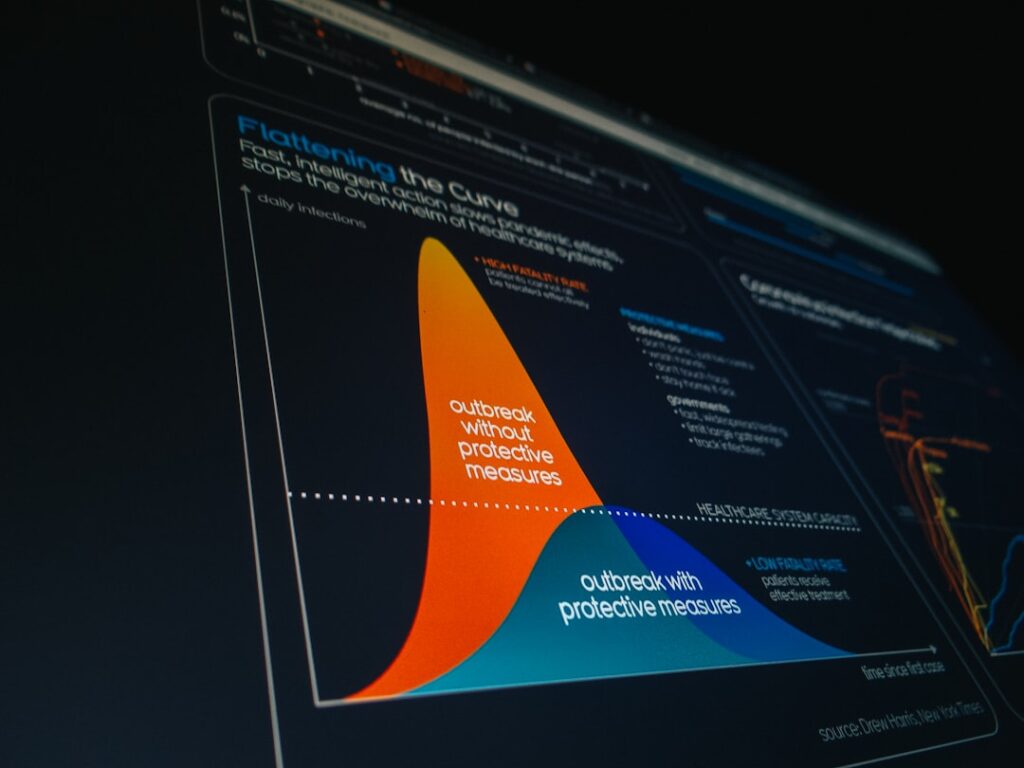
From an individual perspective, the visual portfolio functions as a portable ledger of career capital. By rendering skill acquisition, experiential learning, and market valuation in a single interface, users can strategically invest in “high-ROI” competencies. Empirical analysis of Fig Careers’ user cohort shows improved median salary growth compared with a matched control group using conventional résumé services.
The mechanism of capital accumulation operates on three interlocking fronts:
- Signal Amplification – Visual maps provide employers with a multidimensional signal of fit, reducing information asymmetry and enabling more precise matching.
- Network Leverage – Integrated social-graph overlays allow users to identify “bridge” connections—individuals who have traversed similar pathways—thereby facilitating mentorship and referral loops that historically required institutional gatekeepers.
- Mobility Enablement – By visualizing geographic wage differentials and remote-work feasibility, the portfolio informs relocation decisions that can accelerate economic mobility.
Collectively, these effects expand the supply of high-skill labor in underserved regions, thereby attenuating structural inequities embedded in the labor market.
Projected Structural Realignment (2027-2031)
Looking forward, the integration of AI-driven visual storytelling into career development is poised to crystallize into a self-reinforcing ecosystem. Three trajectories dominate the forecast horizon:
You may also like
 AI & Technology
Higher education reallocates capital to digital platforms
The analysis that follows dissects the mechanisms, systemic implications, and stakeholder outcomes.
Read More →By rendering skill acquisition, experiential learning, and market valuation in a single interface, users can strategically invest in “high-ROI” competencies.
Standardization of Portfolio Taxonomies – Industry consortia, led by the International Association of Talent Development, are drafting open-source ontologies for skill representation. Adoption will lock in a common visual grammar, similar to the adoption of HTML for web content, thereby reducing vendor lock-in and fostering interoperable ecosystems.
Embedding in Institutional Credentialing – Universities are experimenting with “portfolio-linked micro-credentials” where completion of a competency module automatically updates the visual map, creating a live transcript of lifelong learning.
Regulatory Oversight of Algorithmic Transparency – Anticipating bias concerns, the European Commission’s AI Act is expected to mandate explainability for career-mapping algorithms by 2028. Compliance will drive the development of audit trails embedded within the visual interface, turning the portfolio into a transparent contract between worker and employer.
These systemic developments will amplify the asymmetry between entities that can harness visual portfolio data and those that cannot, reshaping leadership hierarchies within the talent ecosystem. Organizations that embed the matrix into talent acquisition, succession planning, and strategic workforce development will command a decisive advantage in shaping the future supply of skilled labor.
Key Structural Insights
Portfolio Standardization: The convergence on open-source skill ontologies will institutionalize visual career maps as a universal language of talent, shifting power toward data-governance bodies.
Dynamic Credentialing: Real-time linkage between learning outcomes and visual portfolios will dissolve the static credential barrier, expanding economic mobility for non-traditional learners.
Algorithmic Accountability: Emerging regulatory frameworks will embed transparency into the visual storytelling pipeline, redefining institutional responsibility for equitable talent allocation.
Sources
Using generative AI to provide personalized career advice and skills mapping — ResearchGate
Using Technology to Amplify the Impact of Career Services — NACE Journal
Fig Careers | AI-Powered Career Roadmaps — Fig Careers website
Transforming Career Development Through Immersive and Data-Driven Solutions — Springer
You may also like
 AI & Technology
OpenAI in Talks With UAE Funds, BlackRock for $30 Billion Round
OpenAI is negotiating a $30 billion funding round with BlackRock and UAE funds, which could reshape the AI startup ecosystem and attract significant investments in…
Read More →